
Insect ID: Indoors (in a house, greenhouse, garage, shed, etc.)


Return to
Kitchen and Food Storage Areas:
-
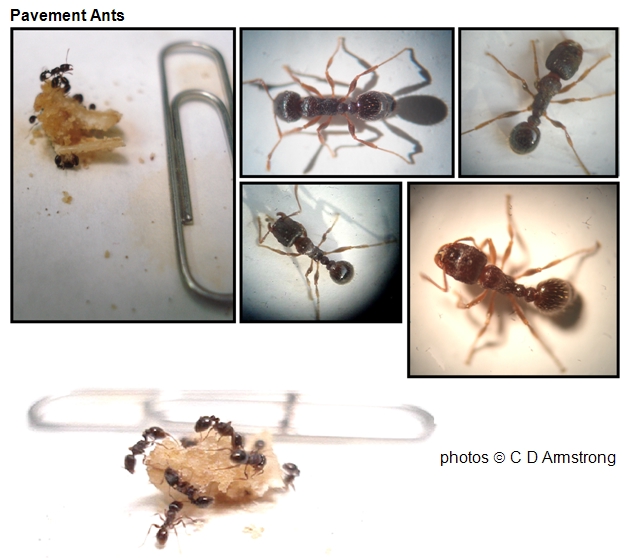
- Ants (especially Pavement Ants which are pictured here)
-
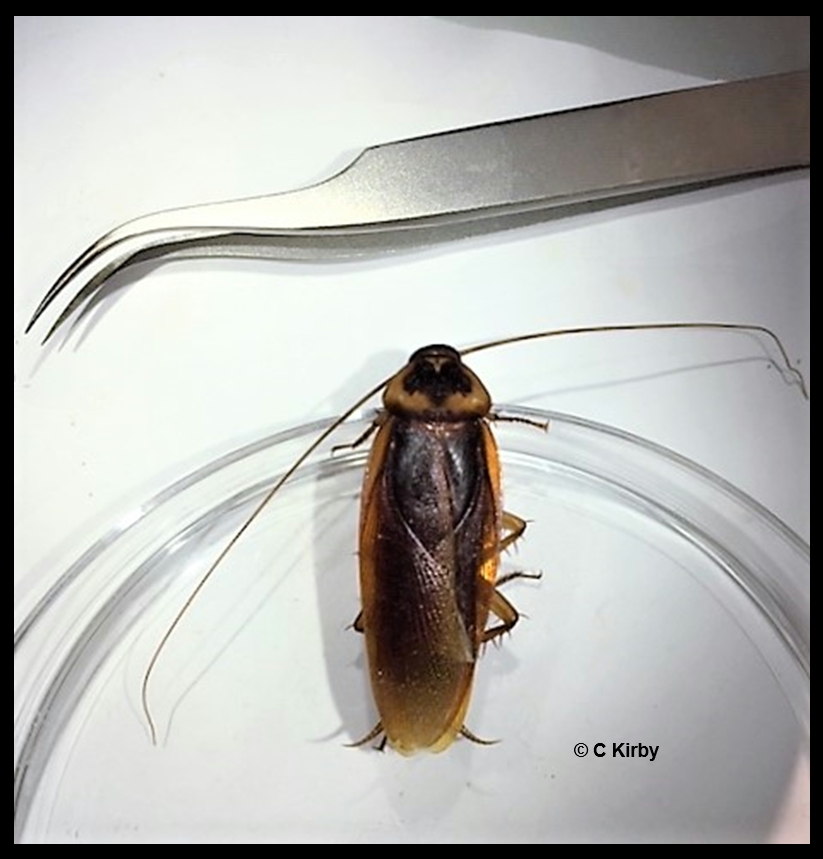
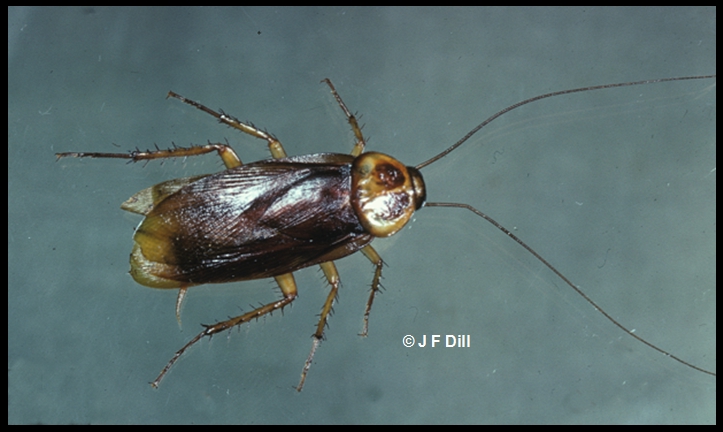
- American Cockroach (female) (Periplaneta americana)
-
- American Cockroach (female)
-
-
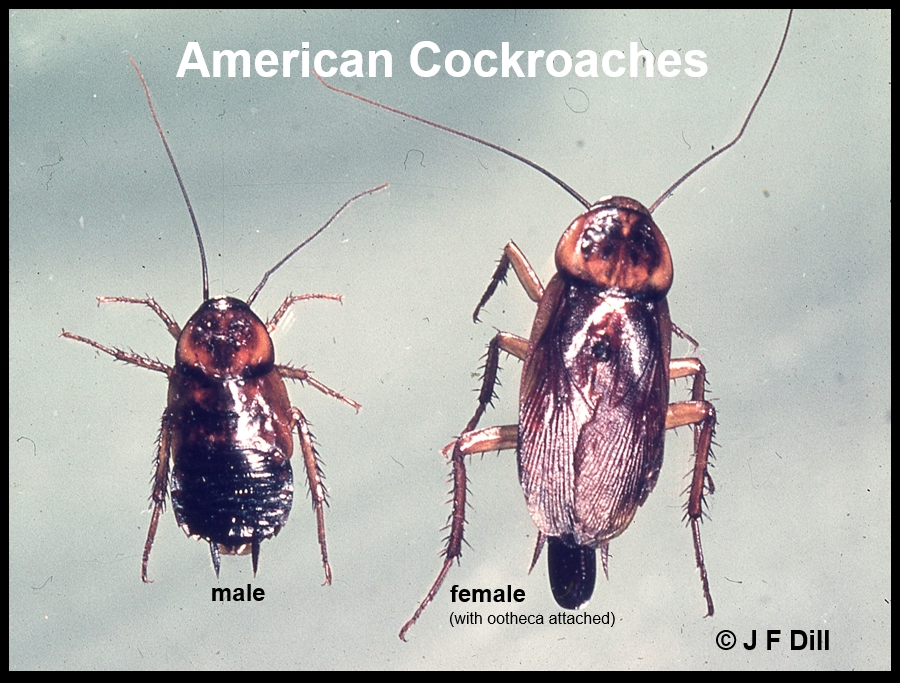
American Cockroaches
(Male versus Female)
-

- Brown-banded Cockroaches

-

- Brown-banded Cockroaches (Supella longipalpa) (female: left; male: right)

-

- German Cockroaches

-
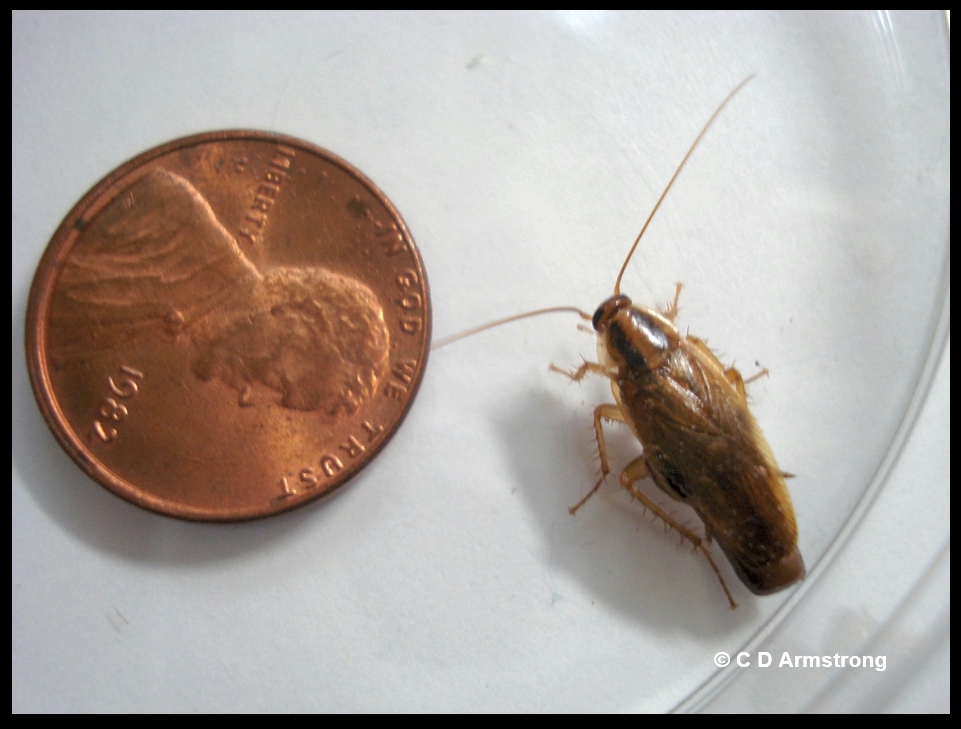
- German Cockroach (female) (Blattella germanica)
-

- Ventral view of a female German cockroach, revealing her egg case called an ootheca

-

- Female German cockroach with ootheca (egg case) attached to her abdomen

-

- Blow Fly (genus Calliphora)

-

- Blow Fly

-

- A type of blow fly commonly called a Green Bottle Fly.

-

- Cluster Fly

-

- Drain Fly (also called a Moth Fly)

-

- Drugstore Beetles (Stegobium paniceum) (Alton, Maine; 8/2/2021)

-

- Drugstore Beetle (Stegobium paniceum) (Alton, Maine; 8/2/2021)

-

- Confused Flour Beetles and larvae

-

- Confused Flour beetle

-

- Flour Beetles (Left: Confused Flour Beetle; Right: Red Flour Beetle)

-

- Flour beetles (pair of Broadhorned Flour beetles shown here; Gnatocerus cornutus)

-

- A Broad-horned Flour Beetle and a larva of the same species

-

- Larva of a Broad-horned Flour Beetle

-

- Flour Beetles

-

- Comparison of three different beetle pests of stored grains

-

- Grain beetle example (adult and larva/grub) (shown here is a Sawtoothed Grain Beetle (Oryzaephilus surinamensis)

-

- Lesser Grain Borers (Rhyzopertha dominica)

-

- Lesser Grain Borer damage to a grain of millet

-

- Lesser Grain Borers and a Merchant Grain Beetle

-

- Grain Beetles


-

- House Fly larvae

-

- House Fly (Musca domestica)

-
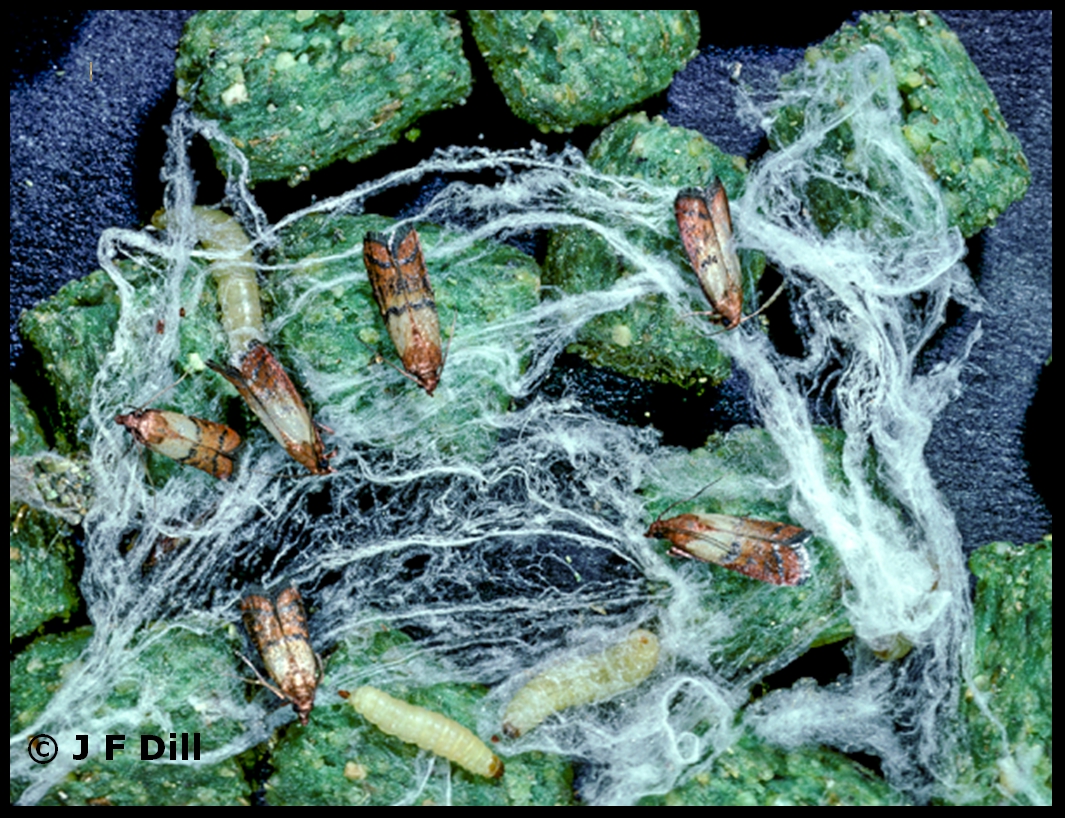
- Pantry Moths / Flour Moths (Plodia interpunctella) (with larvae and the webbing that the larvae spin, shown with one of their more unusual food sources: rodenticide pellets)
-

- Pantry Moth / Flour Moth (Plodia interpunctella)

-

- Larder Beetle larva

-

- Larder Beetle larvae

-

- Larder Beetle (Dermestes lardarius)

-

- Larder Beetle (Dermestes lardarius)

-

- Larder Beetle (Dermestes lardarius)

-

-
Mealworms
(larvae and adults)

-

- Silverfish (Family Lepismatidae)

-

- Four-lined Silverfish (Ctenolepisma lineatum)

-

- Example of a wood roach (Dusky Cockroach, Ectobius lapponicus) (male) (Stetson, Maine; 7/13/2015)

-

- Example of a wood roach (Tawny Cockroach, Ectobius pallidus) (male) (Acadia National Park, Maine; 10/11/2009)

Kitchen and Food Storage Areas:
- Ants (especially Pavement Ants)
- Blow Flies
- Broadhorned Flour Beetle
- Cluster Flies
- Cockroaches
- American Cockroach
- Brown-banded Cockroach
- German Cockroach
- Wood roaches (they only live outdoors but are attracted to lights at night so sometimes find their way indoors accidentally; visit our Cockroaches page for more information about them)
- Drugstore Beetles (Univ. of Florida) | See also Drugstore Beetle (BugGuide.net) and Drugstore Beetles (Univ. of Wisconsin)
- Flour Beetles
- Flour Moth
- Four-lined Silverfish
- Fruit Flies
- Grain Beetles
- Grain / Flour Mites (University of Kentucky)
- House Flies
- Indian Meal Moth
- Larder Beetles
- Lesser Grain Borers
- Lesser Mealworms
- Mealworms
- Pantry Moth
- Pavement Ants
- Sawtoothed Grain Beetles
- Silverfish
Sink, Tub, Pet Dish, Toilet, Etc.
-
- American Cockroach (female) (Periplaneta americana)
-
-
American Cockroaches
(Male versus Female)
-
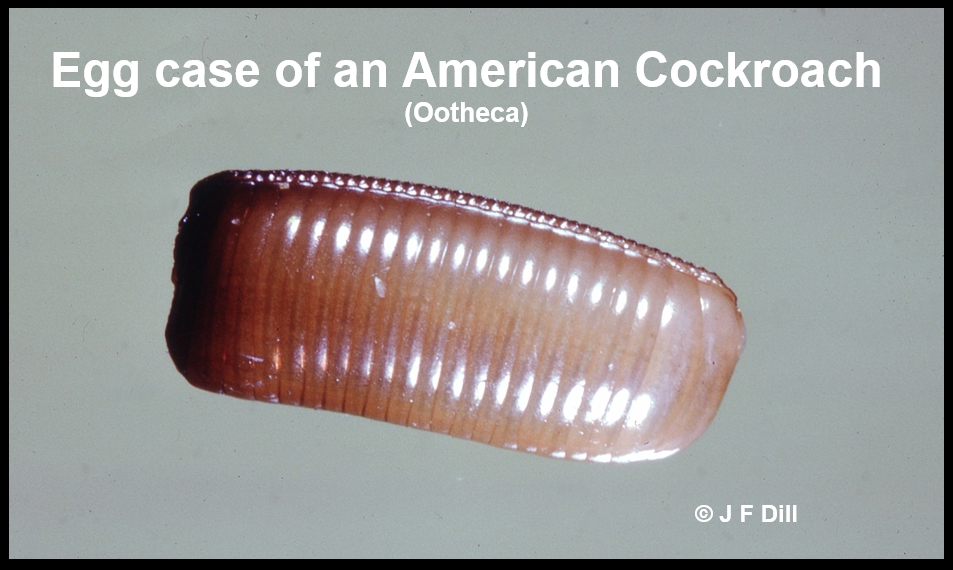
- Egg Case (Ootheca) from an American Cockroach
-

- American Cockroach

-
- Brown-banded Cockroaches
-
- Brown-banded Cockroaches (Supella longipalpa) (female: left; male: right)
-

- female German cockroach with ootheca egg case attached to abdomen

-
- Ventral view of a female German cockroach, revealing her egg case called an ootheca
-
- German Cockroaches
-

- German Cockroach

-

- Crickets (such as the Camel Cricket shown here)

-
- Drain Fly (also called a Moth Fly)
-
- Four-lined Silverfish (Ctenolepisma lineatum)
-
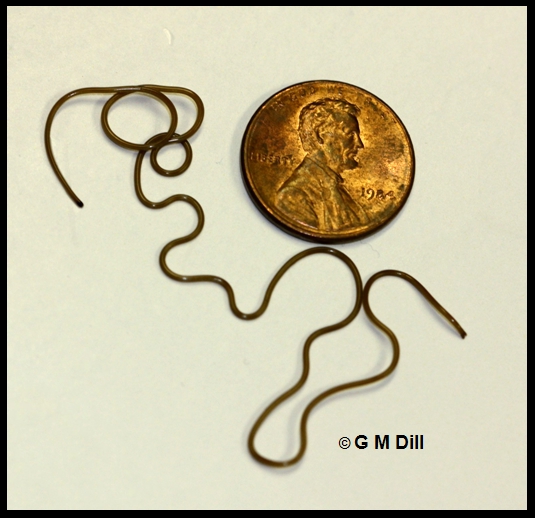
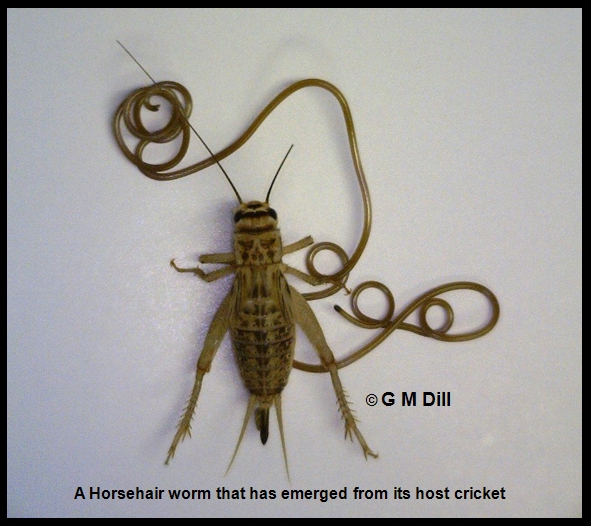
- Horsehair Worm (these are not insects, of course)
-
- A Horsehair worm that has emerged from its host cricket
-

- Horsehair worm inside a 3.5″ diameter petri dish

-

- House Centipede

-
- House Fly (Musca domestica)
-
- House Fly larvae
-

- Mealworms (larvae and adults) (Found commonly in areas with dry pet food) (Tenebrio molitor, the Yellow Mealworm, is the most common and widely encountered mealworm species in New England and throughout the world.)

-

-
Millipedes
(considered an ‘Occasional Household Invader’)

-

- Millipede

-
- Larder Beetle larva
-
- Larder Beetle larvae
-
- Larder Beetle (Dermestes lardarius)
-

- Sowbugs

-

- Sow Bug

-

- Varied Carpet Beetle (Anthrenus verbasci) next to a U.S. penny for scale purposes (specimen from Orono, ME; 5/3/2023)

-
- Example of a wood roach (Dusky Cockroach, Ectobius lapponicus) (male) (Stetson, Maine; 7/13/2015)
-
- Example of a wood roach (Tawny Cockroach, Ectobius pallidus) (male) (Acadia National Park, Maine; 10/11/2009)
Sink, Tub, Pet Dish, Toilet, Etc.
- Carpet Beetles
- Cockroaches
- American Cockroach
- Brown-banded Cockroach
- German Cockroach
- Wood roaches (they only live outdoors but are attracted to lights at night so sometimes find their way indoors accidentally; visit our Cockroaches page for more information about them)
- Crickets (most often in basements and garages)
- Drain Flies (also called Moth Flies) (around sewage or other wet areas)
- Four-lined Silverfish
- Horsehair Worm
- House Centipede
- House Flies
- Larder Beetles
- Mealworms
- Millipedes
- Silverfish
- Sowbugs (Univ. of Maryland / UMD Cooperative Extension)
Carpet / Clothing / Fabric:
-
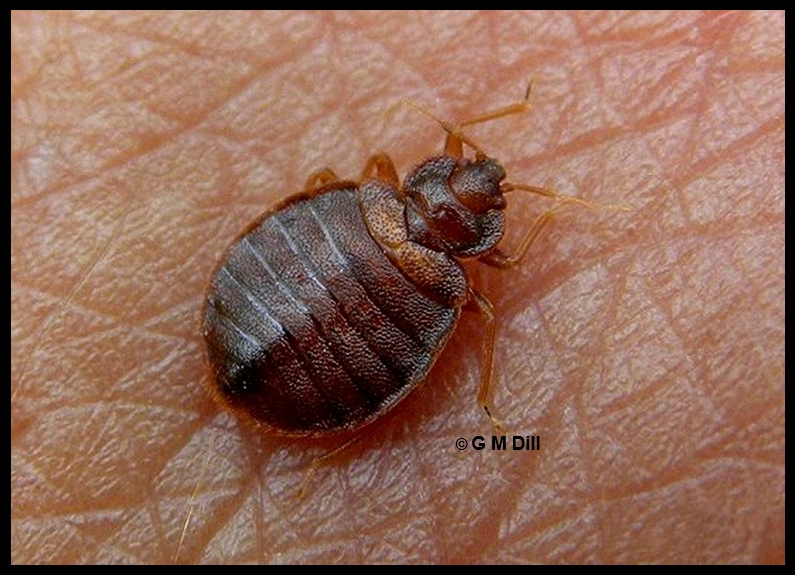
- Bed Bug (adult female)
-
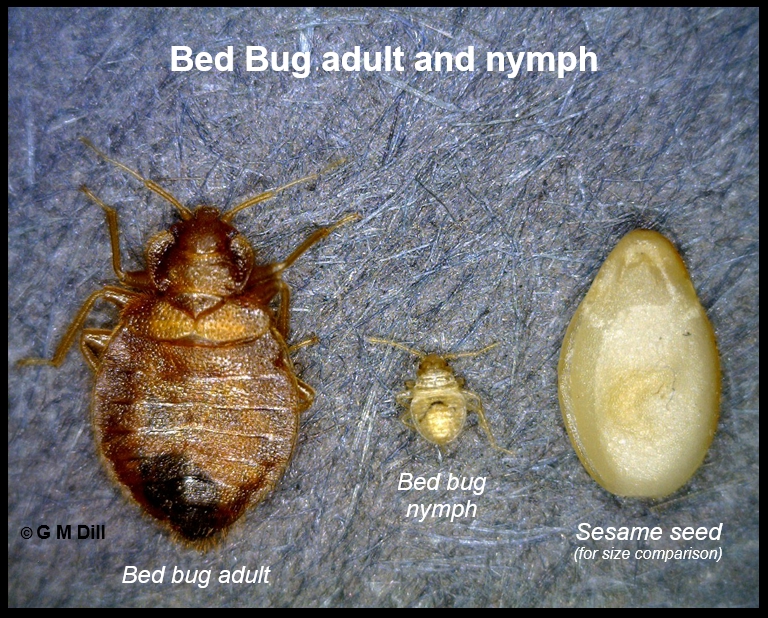
- Size Comparisons: Adult Bed Bug (Left), Bed Bug Nymph (Middle), and Sesame Seed (Right)
-

- (additional example) Bed Bug (adult)

-

- Carpet Beetles and Carpet Beetle larvae

-
- Larder Beetle larva
-
- Larder Beetle larvae
-
- Larder Beetle (Dermestes lardarius)
-
- Larder Beetle (Dermestes lardarius)
-
- Varied Carpet Beetle (Anthrenus verbasci) next to a U.S. penny for scale purposes (specimen from Orono, ME; 5/3/2023)
-

- Varied Carpet Beetle (Anthrenus verbasci) (magnified view; playing dead as they are apt to do)

-

- Brown-dotted Clothes Moths / European House Moths (Niditinea fuscella) (they do not feed on clothing or fabrics; captured on a pheromone trap intended for fabric-damaging clothes moths; Peaks Island, ME; 6/28/2024) (Photo courtesy of Jean Hoffman)

-

- Case-bearing Clothes Moth (Tinea pellionella)

-
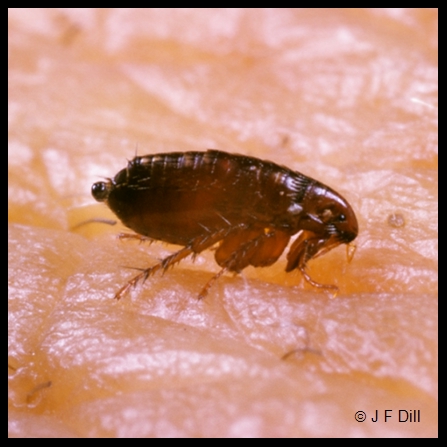
- Fleas (Cat Flea shown here; Ctenocephalides felis)
-

- Mites (Dust Mites) (Parasitic Mites of Humans)

Carpet / Clothing / Fabric:
- Bed Bugs
- Carpet Beetles (including Larder Beetles)
- Clothes Moths
- Fleas
- Non-insect Possibilities:
- Mites
- Bird Mites [will bite people in the absence of their bird host(s)] (University of Minnesota Extension)
- Dust Mites
- Mold Mites / Tyroglyphid Mites (Iowa State University)
- Grain / Flour Mites (University of Kentucky)
- Parasitic Mites of Humans (University of Kentucky)
- Mites
Mattress / Sofa / Furniture (Etc.):
-
- Bed Bug (adult female)
-
- Size Comparisons: Adult Bed Bug (Left), Bed Bug Nymph (Middle), and Sesame Seed (Right)
-
- (additional example) Bed Bug (adult)
-
- Fleas (Cat Flea shown here; Ctenocephalides felis)
-
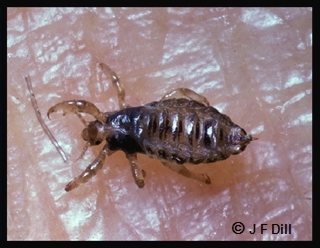
- Head Louse
-
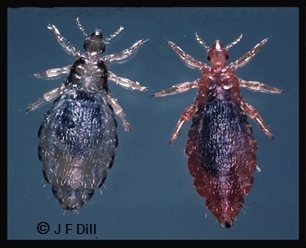
- Head Lice
-

- Masked Hunter (A type of Assassin Bug)

-
- Varied Carpet Beetle (Anthrenus verbasci) next to a U.S. penny for scale purposes (specimen from Orono, ME; 5/3/2023)
Mattress / Sofa / Furniture:
- Bed Bugs
- Carpet Beetles (sometimes mistaken for ticks due to their small size)
- Fleas
- Head Lice
- Masked Hunter
- Non-insect Possibilities: Mites (not pictured)
- Bird Mites [will bite people in the absence of their bird host(s)] (University of Minnesota Extension)
- Dust Mites
- Parasitic Mites of Humans (University of Kentucky)
Firewood (On or Near):
See also the Maine Forest Service’s Insects From Firewood publication, and please remember: Don’t transport firewood!
-

- Blood-Colored Checkered Beetle (Zenodosus sanguineus) (These beetles are predators of woodboring insects) (Bridgton, ME; 10/20/2023) (Photo courtesy of Rebecca Long, UMaine Extension)

-

- Carpenter Ants (workers) (one of the workers is feeding on a drop of honey)

-

- Queen Carpenter Ant (wingless stage)

-
-
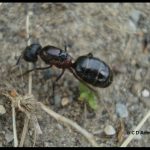
Carpenter Ant Queen
(wingless stage) (the wings fall off subsequent to mating)

-

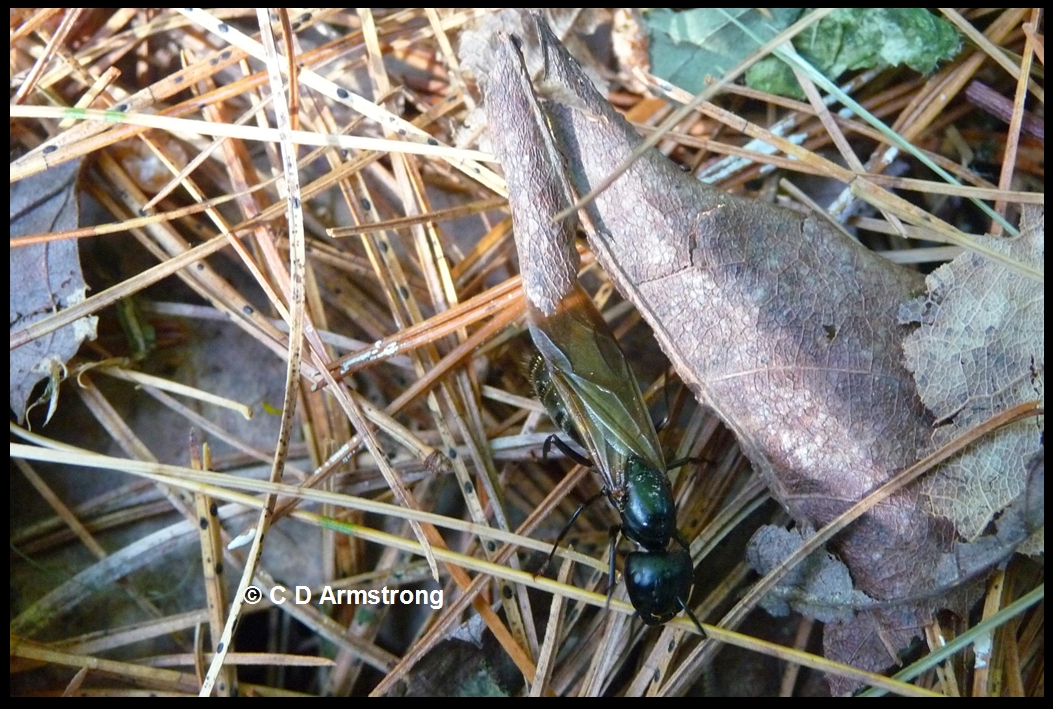
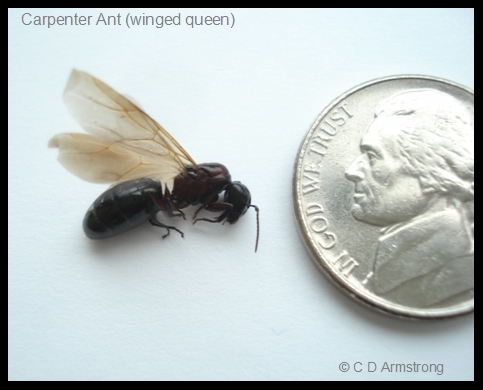
- Carpenter Ant (Winged Queen)

-
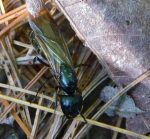
- Carpenter Ant (Winged Queen)
-
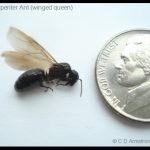
- Carpenter Ant (Winged Queen)
-
- Carpenter Ant (Winged Queen)

-
- Crickets (such as the Camel Cricket shown here)
-

- Earwigs

-

- Interior portion of ash bark showing the tunneling and brood chambers carved out by Eastern Ash Bark beetles (The egg galleries run perpendicular to the tree’s branch and/or trunk) (Easton, ME; 3/10/2022)

-

- Eastern Ash Bark Beetle (Hylesinus aculeatus) (July 21st, 2021; from firewood in Pittsfield, Maine) (with three phoretic mites hitching a ride on its back)

-
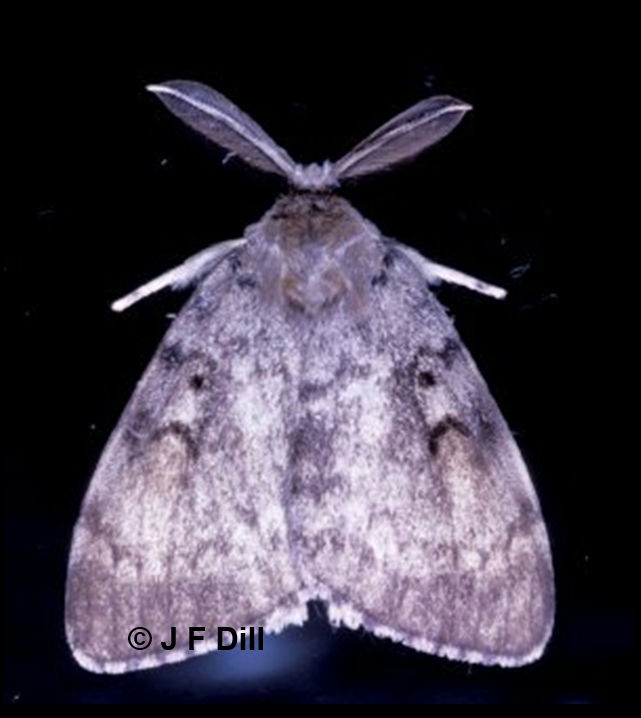
- Spongy Moth (Lymantria dispar) (male)
-

- Spongy Moth (female)

-
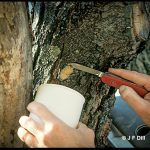
- Removing a Spongy Moth egg mass

-

- Species of Horntail (horntails also called wood wasps) (this one is the Pigeon Horntail, Tremex columba)

-
- House Centipede
-
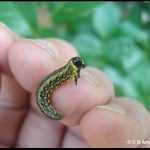
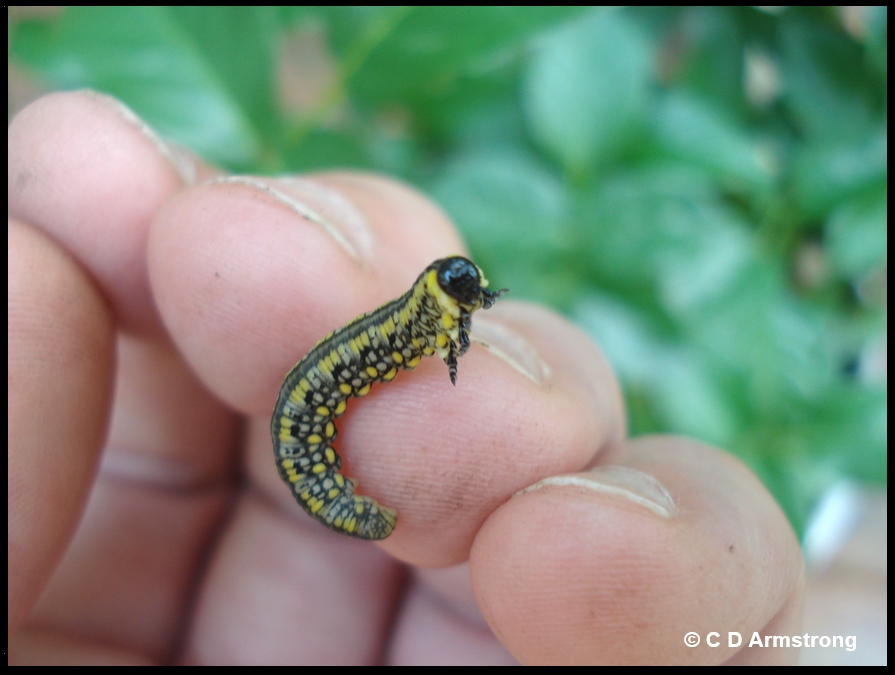
- Introduced Pine Sawfly larva (Diprion similis) (7/11/2015) (central Maine)
-
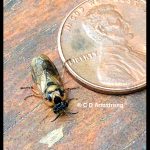
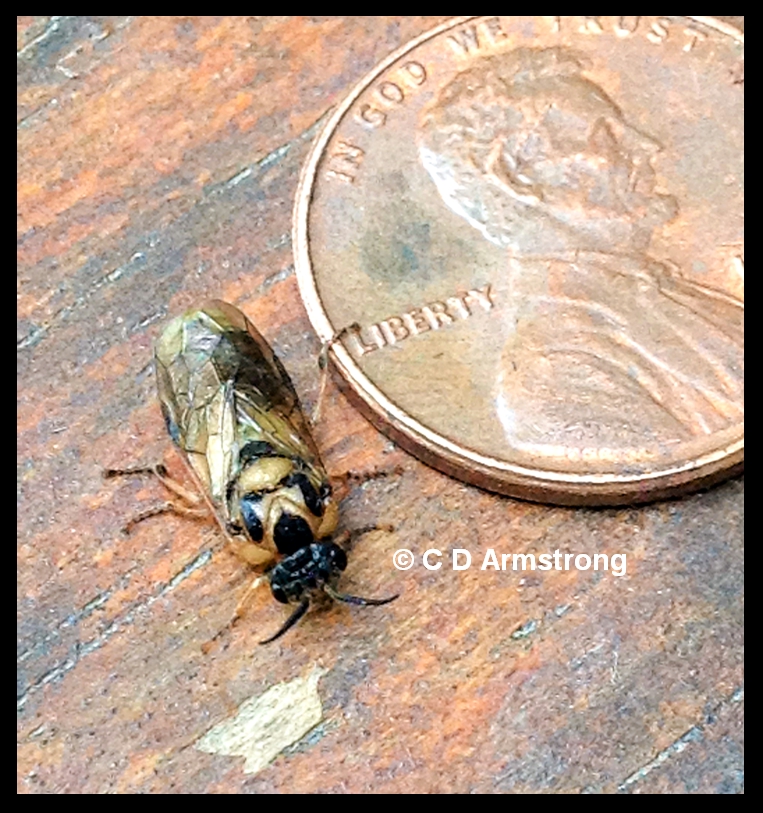
- Introduced Pine Sawfly adult (Etna, ME; 4/15/2020)
-

- Example of a Longhorned Beetle (so-named because of their very long antennae; this one shown here is a Roundheaded Apple Tree Borer)

-

- Metallic Wood-boring Beetle (Family Buprestidae)

-
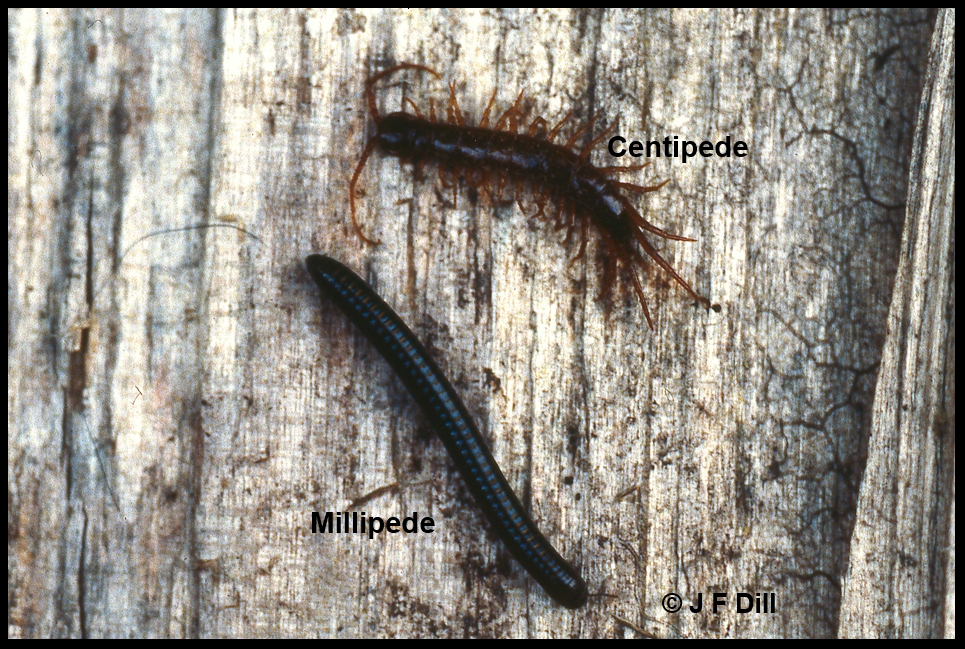
- Centipedes and Millipedes
-
-
Millipedes
(considered an ‘Occasional Household Invader’)
-
- Millipede
-

- Powderpost Beetle

-
- Sowbugs
-
- Sow Bug
-

- Northeastern Pine Sawyer (closer view)

-

- Northeastern Pine Sawyer (Monochamus notatus) (Etna, ME; 7/18/2015)

-

- Tanbark Borer / Violet Tanbark Beetle (Phymatodes testaceus) (Cape Elizabeth, ME; 5/4/2023) (Photo courtesy of MB)

-

- Whitespotted Sawyer Beetles (Monochamus scutellatus)

-

- Whitespotted Sawyer beetle (female)

-

- Whitespotted Sawyer Beetle (female); Photo by C. Armstrong

-

- A male Ectobius cockroach (likely a Tawny Cockroach, Ectobius pallidus) seen in Acadia National Park; Oct. 11th, 2009.

Firewood (On or Near):
- Bark Beetles
- Blood-colored Checkered Beetle (predators of woodboring insects) (BugGuide.net)
- Carpenter Ants
- Crickets
- Earwigs
- Eastern Ash Bark Beetles
- G**** Moth — find it now by its new name of Spongy Moth
- Horntails
- House Centipede
- House Crickets (most often in basements)
- Introduced Pine Sawfly
- Longhorned Beetles (and Roundheaded Borers) (Iowa State Univ.)
- Metallic Wood-Boring Beetles (Univ. of Minnesota Extension)
- Millipedes
- Pennsylvania Wood Roach
- Powderpost Beetles
- Sawyer Beetles
- Sowbugs (Univ. of Maryland / UMD Cooperative Extension)
- Spongy Moth
- Tanbark Borer / Violet Tanbark Beetle (often encountered when they emerge indoors from oak firewood) (BugGuide.net)
- Wood Roach
See also: Nuisance Wood Borers and Seed Insects in Homes (Univ. of Minnesota)
Wet or Damp Areas (including wet and rotting wood, damp books, etc):

-
- Blow Fly (genus Calliphora)
-

- A species of booklouse called the Larger Pale Booklouse (Trogium pulsatorium)

-

- Larger Pale Booklouse (Trogium pulsatorium), resting at the edge of a glass petri dish (closer view of the same specimen is shown in the adjacent image)

-
- Carpenter Ants (workers) (one of the workers is feeding on a drop of honey)
-
- Centipedes and Millipedes
-

- House Centipede

-
-
Millipedes
(considered an ‘Occasional Household Invader’)
-
- Millipede
-
- Crickets (such as the Camel Cricket shown here)
-
- Drain Fly (also called a Moth Fly)
-
- Earwigs
-

- Dark-winged Fungus Gnats (Family Sciaridae) captured on a yellow sticky card placed in the pot of a houseplant (they are drawn to light and also to the color of yellow)

-

- Fungus gnat larvae in a mushroom cap

-

- Fungus gnat

-
- A Horsehair worm that has emerged from its host cricket
-
- Horsehair Worm (these are not insects, of course)
-
- Mosquito (Ochlerotatus canadensis)

-
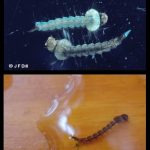
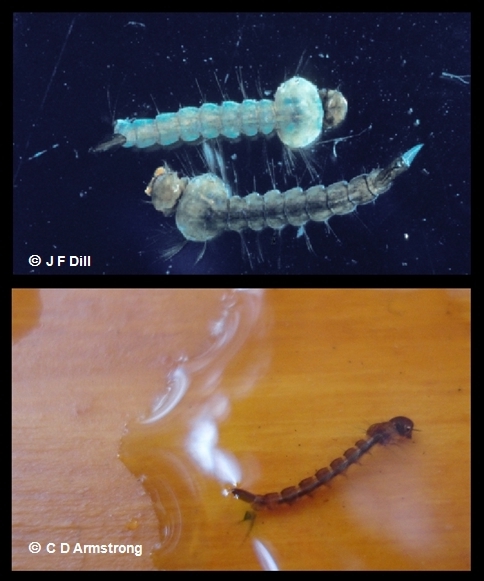
- Mosquito Larvae
-
- Silverfish (Family Lepismatidae)
-
- Four-lined Silverfish (Ctenolepisma lineatum)
-
- Sowbugs
Wet or Damp Areas (including wet and rotting wood):
- Ants
- Booklice
- Blow Flies
- Carpenter Ants (attracted to wet/rotting wood)
- Centipedes
- Crickets
- Drain Flies (also called Moth Flies) (around sewage or other wet areas)
- Earwigs
- Four-lined Silverfish
- Fungus Gnats
- Horsehair Worm
- House Centipede
- House Crickets (most often in basements)
- Millipedes
- Mites
- Clover Mites (Penn State)
- Mold Mites / Tyroglyphid Mites (Iowa State University)
- Grain / Flour Mites (University of Kentucky)
- Mosquitoes (Maine Forest Service) see also:
- Mosquito Biology (UMaine Extension)
- Mosquito Management (UMaine Extension)
- Insect Repellents (UMaine Extension)
- West Nile Virus (CDC)
- Preventing Eastern Equine Encephalitis (EEE) Virus in Maine
- Silverfish
- Sowbugs (Univ. of Maryland / UMD Cooperative Extension)
- Wood Roach
Potted Plants / Houseplants / Greenhouses:
-
- Aphids on Pepper Leaves

-
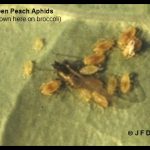
- Green Peach Aphids on broccoli

-
- Larger Pale Booklouse (Trogium pulsatorium), resting at the edge of a glass petri dish (closer view of the same specimen is shown in the adjacent image)
-
- A species of booklouse called the Larger Pale Booklouse (Trogium pulsatorium)
-
- Dark-winged Fungus Gnats (Family Sciaridae) captured on a yellow sticky card placed in the pot of a houseplant (they are drawn to light and also to the color of yellow)
-
- Fungus gnat larvae in a mushroom cap
-
- Fungus gnat
-

- Fungus gnat (closer view)

-

- Mealybugs (Family Pseudococcidae)

-

- Springtails (snowfleas) collected from a cranberry bog

-

- Closeup of a globular springtail (Order Symphypleona)

-

- Closeup of a Springtail

-

- Closeup image of a Sprintail

-

- Spider Mites (leaves with webbing are a telltale sign)

-

- Twospotted Spider Mites (Tetranychus urticae)

-

- Whiteflies (Family Aleyrodidae)

Potted Plants / Houseplants / Greenhouses:
- Aphids
- Booklice
- Fungus Gnats
- Leafminers (University of Florida)
- Mealybugs (on house plants) (Univ. of New Hampshire)
- Sowbugs (Univ. of Maryland / UMD Cooperative Extension)
- Springtails
- Thrips
- Whiteflies (University of Missouri)
- Non-insect Possibilities: Spider Mites / Two-Spotted Spider Mites | Cyclamen Mites (Univ. of Kentucky)| Broad Mites (Tennessee State Univ.)