
Bulletin 3110, Guidelines for Safe Seafood Consumption: Buying, Storing, Cooking and Seafood Allergies

By Gulsun Akdemir Evrendilek, Ph.D., Associate Extension Professor and Seafood Technology and Food Safety Specialist, The University of Maine Cooperative Extension.
Reviewed by Kate Yerxa, MS, RD, Extension Professor, EFNEP Coordinator, University of Maine Cooperative Extension and Kathy Savoie, MS, RD, Extension Professor, University of Maine Cooperative Extension
For information about UMaine Extension programs and resources, visit extension.umaine.edu.
Find more of our publications and books at extension.umaine.edu/publications/.

Seafood offers numerous health benefits, but ensuring its safety and quality requires careful attention from the point of purchase to preparation. This guide covers best practices for buying fresh seafood, selecting sustainable and traceable sources, and handling and cooking seafood properly to minimize risks, including the potential for allergic reactions. Seafood, like other perishable foods, carries a risk of foodborne illness from microorganisms, natural toxins, environmental contaminants, and allergens. Proper harvesting, handling, storage, and preparation are essential to ensure safety, especially for raw or partially cooked seafood. While state and federal agencies, fishermen, aquaculturists, retailers, processors, and restaurants work to maintain safety standards, consumers play a key role in preventing illness and allergic reactions by following proper handling techniques.
Seafood Sources in the U.S.
- Wild-caught seafood: harvested from oceans, lakes, and rivers.
- Farm-raised seafood: grown in ponds (catfish), recirculating tanks (tilapia, hybrid bass), or coastal waters (salmon, shellfish).
- Imports: many farmed and wild seafood products are imported into the U.S.
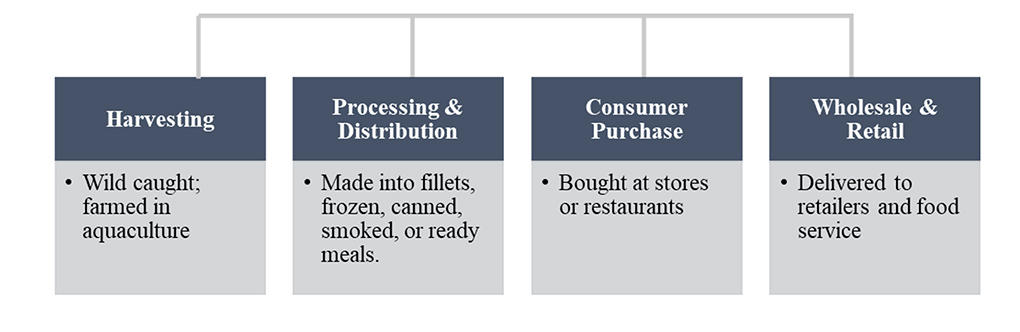
Ensuring seafood safety requires diligence at every stage of the supply chain, with consumers as the final safeguard through proper storage, handling, and cooking practices.
Allergens and Microbial Contamination
Understanding Seafood Allergies
Seafood allergies can be caused by both shellfish and fish. Shellfish include both crustaceans (shrimp, lobster, and crab) and mollusks (oysters, clams, scallops, mussels, squid, and octopus). Fish includes salmon, tuna, cod, halibut, and mackerel. If you think you have a seafood allergy and are allergic to either shellfish or fish (or both), contact your healthcare provider immediately to discuss options to diagnose the allergy. If you are allergic to shellfish or fish, the best way to prevent an allergic reaction is to avoid consuming or having cross-contact with food you are allergic to. To reduce the risk of exposure, it is important to read the ingredients list on food labels to identify if seafood is listed and double-check that your food has not been contaminated through cross-contact with the allergen during preparation. Carry an epinephrine auto-injector if you have seafood allergies, and make sure you work with your healthcare provider to develop an action plan in the event of an allergic reaction.
Microbial Risks in Seafood
Seafood can harbor bacteria such as Vibrio, Salmonella, and Listeria, which can lead to gastrointestinal issues and severe complications, particularly for vulnerable individuals. Viruses such as Norovirus and Hepatitis A, often from contaminated shellfish, cause similar symptoms and liver inflammation. Parasites like roundworms and tapeworms, found in raw fish, can be eliminated through proper cooking or freezing. Additionally, naturally occurring toxins like ciguatoxin and scombroid can cause gastrointestinal and neurological problems. Proper handling, cooking, and hygiene are crucial to minimize these risks.
Minimizing Microbial Risks and Ensuring Safe Seafood Consumption
To reduce microbial risks and ensure safe seafood consumption, it’s important to follow proper handling, storage, and cooking practices. Here are key steps to minimize microbial contamination, prevent cross-contamination, and safely consume seafood:
- Source Safely: buy from trusted suppliers and choose sustainable options.
- Store Properly: refrigerate below 40°F or freeze at 0°F.
- Cook Thoroughly: cook fish to 145°F and ensure shellfish shells open.
- Prevent Contamination: keep raw and cooked seafood separate.
- Maintain Hygiene: wash hands and sanitize surfaces/utensils.
- Avoid Cross-Contact: use separate tools for different foods.
Buying Seafood
Choosing the right seafood is the first step toward a healthy and safe dining experience. Use the following tips when purchasing seafood to ensure freshness, safety, and quality:
Selecting Fresh Fish and Shrimp
- Proper Storage: buy refrigerated or iced seafood from covered displays.
- Freshness Check: look for a mild scent; avoid fishy, sour, or ammonia odors.
- Visual Inspection: fish should have clear eyes, firm flesh, and red gills. Fillets should be firm and moist.
- Shellfish Quality: shrimp, scallops, and lobster should have clear, pearly flesh with minimal odor.
- Packaging Indicators: check time/temperature labels for proper storage.
- “Previously Frozen”: should still have a mild, fresh scent.
Selecting Shellfish
When purchasing fresh shellfish, follow these guidelines to ensure quality and safety:
- Label Check: ensure proper tags or labels confirming safety standards.
- Intact Shells: choose unbroken, undamaged shells.
- Tap Test (Clams, Oysters, Mussels): select tightly closed shells; a tap should cause them to close.
- Movement Check (Crabs, Lobsters): look for active leg movement.
Selecting Frozen Seafood
To ensure quality and safety when buying frozen seafood, follow these guidelines:
- Intact Packaging: select well-sealed packages.
- Minimal Frost: avoid packages with excessive frost or ice crystals.
- Solidly Frozen: ensure the seafood is firm and unbendable.
- MAP Packaging (Optional): consider MAP for enhanced freshness. Check the label for MAP details.
- Proper Handling: maintain correct temperatures during transport and storage.
How Long Can You Store Fish?
Proper storage of seafood is crucial for maintaining its quality and ensuring its safety:
Refrigeration
Store fresh seafood in the coldest part of the fridge at or below 40°F. Keep seafood on a tray to prevent contamination from any liquid drips. If seafood is consumed within 1 to 2 days, it can be stored in the refrigerator. Otherwise, it should be frozen immediately to preserve its quality.
Freezing
Wrap seafood tightly in moisture-proof paper, plastic wrap, or aluminum foil, and store it in the freezer. For optimal quality, use frozen seafood within 6 months. Frozen seafood remains safe indefinitely when stored at 0° or lower. However, for best flavor and texture, it’s recommended to consume frozen seafood within the following time frames:
- Cooked Fish: best quality when consumed within 3 months.
- Raw Fish: best quality when consumed within 3 to 8 months.
- Shellfish: for best flavor and texture, use within 3 to 12 months.
Cooked Seafood
Once cooked, seafood can be stored in the refrigerator for 3 to 4 days. Make sure it is placed in an airtight container to preserve quality.
Keep Seafood Cold for Food Safety
Seafood should never be left at room temperature for more than 2 hours to prevent bacterial growth. In hot weather (above 90°F), this time is reduced to 1 hour.
Canned Fish
Commercially canned fish, like tuna, offers a long shelf life and can be stored in the pantry for up to five years. However, it’s essential to always check the expiration date to ensure the best quality. For home-canned fish, it’s crucial to adhere to research-based, tested recipes from reputable sources such as the USDA and the National Center for Home Food Preservation. To maintain optimal safety and flavor, home-canned fish should be consumed within one year.
Safe Seafood Preparation
Thawing Seafood
For best results, thaw frozen seafood gradually in the refrigerator overnight or under cold (<70˚F) running water. Never thaw seafood at room temperature if it is not modified atmospheric packaged (MAP). For MAP-packaged products, follow the manufacturer’s recommended thawing instructions.
If a quicker method is needed:
- Cold Water Method: place the seafood in a sealed plastic bag and submerge it in cold water (<70˚ F), changing the water every 30 minutes.
- Microwave Method: use the “defrost” setting but stop the process while the seafood is still icy but flexible, ensuring it is cooked immediately after thawing.
Cooking Seafood Safely
To ensure seafood is safe to eat, it should be cooked to an internal temperature of 145°F. If a food thermometer is unavailable, check for these visual signs of doneness:
- Fish: flesh should become opaque and flake easily with a fork.
- Shrimp, Scallops, Crab, and Lobster: flesh should turn firm and clear.
- Clams, Mussels, and Oysters: shells should open during cooking; discard any that remain closed.
Avoid consuming spoiled seafood. Seafood that smells sour, rancid, fishy, or ammonia-like—either raw or cooked—should not be eaten. These odors become stronger when cooked, signaling that the seafood is unsafe.
Key Cooking Guidelines
- Prevent Cross-Contamination: to prevent cross-contamination, it’s essential to keep raw seafood completely separate from cooked and ready-to-eat foods. Thorough handwashing with soap and warm water for at least 20 seconds after handling raw seafood is crucial. Additionally, all surfaces, utensils, and cutting boards that come into contact with raw seafood should be cleaned with hot, soapy water to eliminate bacteria and prevent its spread.
- Cook Thoroughly: ensure seafood reaches an internal temperature of 145°F for safety. Fish should be opaque and flake easily, while shellfish should have fully opened shells.
- Avoid Overcooking: overcooking can negatively impact seafood’s texture, flavor, and nutritional value. Cook just until it reaches the correct temperature to maintain its quality.
Serving Seafood Safely
Seafood can be a delicious addition to your daily meals and special occasions such as buffets, picnics, and bag lunches. However, proper handling and temperature control are essential to prevent bacterial growth and ensure food safety.
Time and Temperature Safety
Never leave seafood at room temperature for more than 2 hours (or 1 hour if the temperature is above 90°F). Discard any seafood that has been left out for too long without proper temperature control.
Keeping Cold Seafood Safe
Refrigerate (40˚ F) chilled seafood until ready to serve. When serving cold seafood for an extended period, place the dish on a bed of crushed ice.
Keeping Hot Seafood Safe
Keep hot seafood heated until serving time. If not serving immediately, store it in small portions in the refrigerator and reheat when needed. When keeping hot seafood on display, use a heat source such as a warming tray, hot plate, or slow cooker to maintain a temperature of >140˚F.
Serving Seafood at Buffets
Serve hot seafood from chafing dishes or warming trays that maintain an internal temperature of 140°F or above. Prepare small platters ahead of time and store them in the refrigerator (40°F or below) or keep them warm in the oven at 200–225°F. Never add fresh food to a platter that has already been out for serving.
Seafood Safety for Picnics and Lunches
Keep perishables in a cooler with ice or freeze-pack inserts until serving. Ensure food is cold or frozen to the touch before placing it in a cooler or insulated bag. When packing a bag lunch, use ice cubes in a resealable bag or a small freeze pack to keep the food cold. Always store coolers or lunch bags in the coolest place possible—avoid direct sunlight or leaving them in a warm car.
By following these simple guidelines, you can enjoy seafood safely while maintaining its freshness and quality.
Extra Care for Special Seafood
Seafood is highly perishable and requires proper handling to ensure safety. Some seafood products need extra care due to their vulnerability to bacteria or unique processing methods.
Smoked seafood, lightly smoked for flavor rather than preservation, requires constant refrigeration. It remains fresh for 4–5 days in the fridge or 2–3 months frozen, and should exhibit a firm texture, glossy surface, and smoky aroma, free from dried blood or salt crystals.
Surimi seafood, made from cooked Alaskan pollock, is added near the end of cooking to heat through. It’s stored refrigerated for up to 14 days or frozen for 9–12 months, and should be moist and firm, with sanitary handling to prevent cross-contamination.
Value-added seafood, including battered, breaded, or pre-seasoned varieties, should be cold at purchase with adherence to sell-by dates and manufacturer’s instructions for storage and cooking.
Marinades must be used in refrigerated glass or plastic containers, with thorough cleaning to prevent cross-contamination, and never reused unless boiled to 165°F after contact with raw seafood
Seafood Inspection and Industry’s Role
The FDA regulates seafood safety under the Food, Drug, and Cosmetic Act by inspecting facilities, monitoring contaminants, and overseeing imports. Since 1997, its mandatory Hazard Analysis and Critical Control Point program (HACCP) has ensured safety from harvest to consumption. The Food and Drug Administration Model Food Code guides state and local agencies in enforcing food safety at retail establishments.
Sustainability and Traceability
Sustainably sourced seafood protects marine ecosystems and ensures future availability. Traceability guarantees seafood quality and safety by tracking its origin.
- Look for certifications from the Marine Stewardship Council (MSC) or the Aquaculture Stewardship Council (ASC) to ensure responsible harvesting and farming practices.
- Traceable seafood allows consumers to verify its origin and ethical production.
- Seek MSC and ASC certifications or ask suppliers about sourcing and practices for informed choices.
References
FDA. 2025. Selecting and Serving Fresh and Frozen Seafood Safely (retrieved from https://www.fda.gov/food/buy-store-serve-safe-food/selecting-and-serving-fresh-and-frozen-seafood-safely)
FoodSafetyGov. 2025. Safe Selection and Handling of Fish and Shellfish (retrieved from https://www.foodsafety.gov/blog/safe-selection-and-handling-fish-and-shellfish).
Hicks, D.T., 2016. Seafood safety and quality: The consumer’s role. Foods, 5(4), p.71. https://doi.org/10.3390/foods5040071
Maine Stewardship Council. 2025. https://www.msc.org/en-us/about-the-msc/faqs#:~:text=The%20MSC%20Fisheries%20Standard%20only,of%20the%20method%20of%20harvesting.
Information in this publication is provided purely for educational purposes. No responsibility is assumed for any problems associated with the use of products or services mentioned. No endorsement of products or companies is intended, nor is criticism of unnamed products or companies implied.
© 2025
Call 800.287.0274 (in Maine), or 207.581.3188, for information on publications and program offerings from University of Maine Cooperative Extension, or visit extension.umaine.edu.
The University of Maine System (the System) is an equal opportunity institution committed to fostering a nondiscriminatory environment and complying with all applicable nondiscrimination laws. Consistent with State and Federal law, the System does not discriminate on the basis of race, color, religion, sex, sexual orientation, transgender status, gender, gender identity or expression, ethnicity, national origin, citizenship status, familial status, ancestry, age, disability (physical or mental), genetic information, pregnancy, or veteran or military status in any aspect of its education, programs and activities, and employment. The System provides reasonable accommodations to qualified individuals with disabilities upon request. If you believe you have experienced discrimination or harassment, you are encouraged to contact the System Office of Equal Opportunity and Title IX Services at 5713 Chadbourne Hall, Room 412, Orono, ME 04469-5713, by calling 207.581.1226, or via TTY at 711 (Maine Relay System). For more information about Title IX or to file a complaint, please contact the UMS Title IX Coordinator at www.maine.edu/title-ix/.