
Bulletin #2075, Growing Globe Artichokes (Cynara scolymus L.) in Maine

Bulletin #2075, Growing Globe Artichokes (Cynara scolymus L.) in Maine (PDF for printing)
By Mark Hutton, Vegetable Specialist and Associate Professor of Vegetable Crops, and Peyton Ginakes, Research Associate in Vegetable Production, University of Maine Cooperative Extension
Reviewed by David Handley, Vegetable & Small Fruit Specialist, and Renae Moran, Tree Fruit Specialist, University of Maine Cooperative Extension
For information about UMaine Extension programs and resources, visit extension.umaine.edu.
Find more of our publications and books at extension.umaine.edu/publications/.
History and Uses

Artichokes originated in the Mediterranean region. It is believed that the artichokes eaten by the Romans and possibly the Greeks arose from cardoon, a close relative of artichoke grown for its fleshy stalks. During the 15th century, artichokes were present in their modern form in the Naples region of Italy. The production spread north to Venice and Florence. By 1548, growing artichokes had spread to France and then into England. The first report of artichokes in the United States was in 1806. By the mid-to-late 19th century, French and Italian immigrants were cultivating artichokes in Louisiana and California. California, particularly Monterey County, is now home to much of the commercial production in the United States.
The commonly eaten part of the artichoke is the immature flower bud (Fig. 2). Artichokes are consumed as a vegetable and can be prepared by steaming, boiling, braising, stuffing, baking, or grilling. When boiled or steamed whole, they are often eaten bract by bract, by scraping off the lower fleshy portions with one’s teeth. Inner bracts of less developed or smaller buds can be entirely edible. The receptacle, commonly referred to as the heart, is eaten after the removal of the inedible choke (what would otherwise mature into individual florets). Hearts can be canned or frozen and are often marinated. In Italy, a bitters-type liqueur is made from artichoke buds. Artichoke extracts are reported to have some beneficial health properties.
Botany

Artichokes are members of the Asteraceae family, which includes many cultivated and weedy species. Other well-known plants in this family include lettuces, chicories, sunflowers, asters, and thistles. The hallmark characteristic of these plants is that what might appear as a single flower is many smaller flowers (florets) on one seed head, each of which will eventually mature into a single seed; the sunflower is a typical example of this.
The artichoke plant is a perennial that is hardy in USDA Plant Hardiness Zone 7 and greater. The plant produces a rosette of leaves on a compressed stem, followed by the growth of one to several flowering stalks. Each flower stalk produces one terminal bud, two to three smaller secondary buds further down on the stalk, and several still smaller tertiary buds. It is not uncommon for plants to produce 10-20 buds in Maine, but it is important to note that the vast majority of these will be smaller than the 3 to 4-inch-wide buds typically found in grocery stores.
Commercially, artichoke plants are typically started from direct seeding, transplants, or crown divisions and are most often grown as perennials, as artichokes are best adapted to warm regions where this is feasible and production is more abundant. In Maine, artichokes are grown as annuals from transplants because they are not cold-hardy enough to survive Maine winters reliably. This requires artificial vernalization, wherein cool temperatures are provided to ensure first-year bud production. While the foliage of globe artichokes makes it an interesting ornamental plant, providing adequate vernalization is critical for crop production. Artichoke varieties differ in their chilling requirements, with most needing approximately 500 hours of exposure to temperatures between 35°F and 50°F for reliable bud production. Home gardeners can achieve vernalization of artichokes in one of three ways: stratification of seeds, placing young transplants into a cold chamber, or transplanting seedlings into the field early in the spring.
Seeding and Vernalization
Seedling production
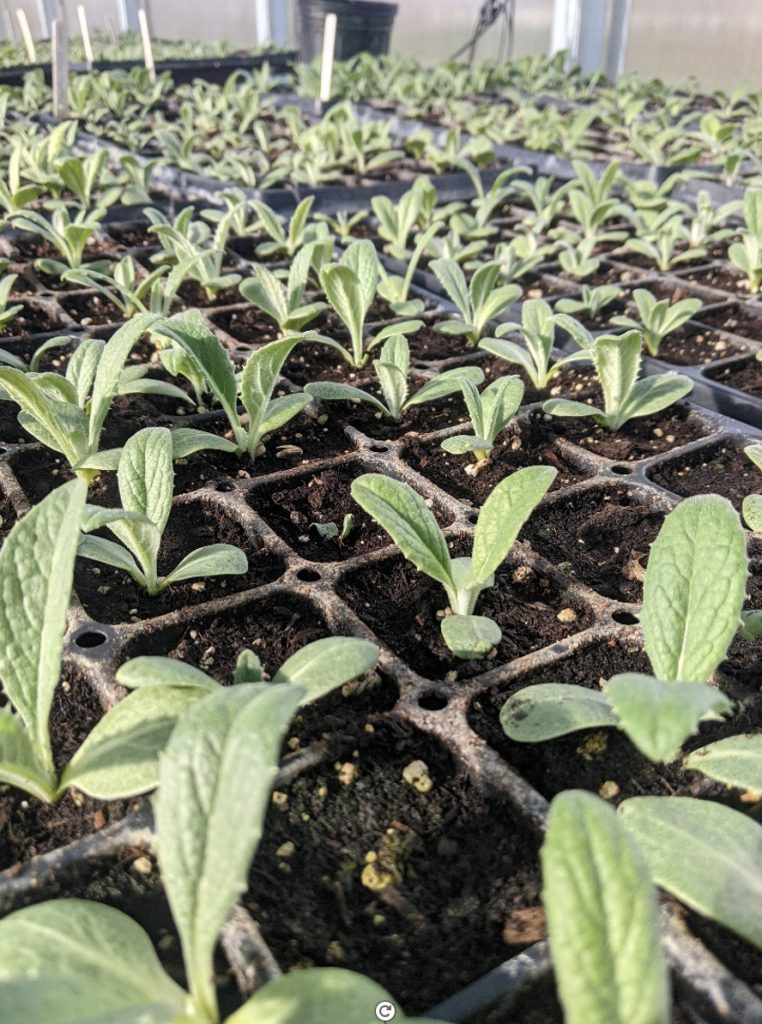
Seedlings should be grown in high-quality seed-starting mix. Sow seeds 6-12 weeks before the expected last spring frost. Seed can be sown into trays or pots and then transplanted into 2-3” peat pots, six-pack cells, or 50-cell flats after cotyledons fully expand. Alternatively, seeds can be sown directly into flats or peat pots. The downside of the latter is the high likelihood of ending up with empty cells due to poor germination, which wastes space and media. Placing trays on heat mats set to 70-80°F will speed germination. Following germination, seedlings should be grown at 75°F (day) and 65°F (night) in full sunlight. Avoid temperatures greater than 80°F, as high temperatures can cause de-vernalization of the plant, resulting in its continued vegetative state. Expect to take 6-8 weeks after germination to grow transplants with 4-6 true leaves. At this stage, the plants are ready to be vernalized. Harden the plants for two to three days before transplanting into the garden for natural vernalization once the risk of frost has passed. Or the plants can be subjected to an artificial vernalization treatment.
Seed stratification
Soak seeds in water for 2 days. After soaking, pack the seeds into moist sphagnum moss in an unsealed plastic bag and place the bag in the refrigerator for 4 weeks. Fine peat moss is not acceptable because it does not allow for adequate ventilation, resulting in increased seed loss due to rot. Following seed stratification, grow seedlings as described above.
Alternatives to seed stratification involve chilling young plants either through the use of a controlled environment or relying on natural environmental conditions. Seedlings are grown as described previously before exposing them to chilling temperatures.
Natural vernalization
Some researchers and growers have found that transplanting seedlings early in spring allows plants to accrue adequate chilling hours through cool ambient temperatures. However, this method requires some guesswork and is somewhat risky. The goal is to have seedlings ready to transplant into the field at a time when you can expect at least 500 continuous hours of temperatures between 35°F and 50°F. If temperatures are expected to be below 35°F, the young plants will need to be protected. There is no guarantee that enough chilling hours will accumulate. Cold frames may be used to combine hardening-off with vernalization, provided they are not allowed to overheat.
Controlled Vernalization
Controlled vernalization involves subjecting plants to cool temperatures in a controlled environment to ensure they accrue adequate chill hours at appropriate temperatures. This can be done early when plants have just two true leaves, or with field-ready transplants. The consideration with larger plants is that they require more space. Place seedling trays or pots into a chamber or refrigerator set at < 50°F for a minimum of 3 weeks (roughly 500 hours). Providing 12 to 13 hours of light a day using grow lights may improve vernalization and seedling health. Seedlings may need to be watered several times, but avoid overwatering. This method results in more reliable flowering rates and uniformity.
Cultivars
| Name | Description | Photo |
|---|---|---|
| Imperial Star | The first artichokes bred for annual production. Strong vigorous plants. Bracts are fairly spiny and the bud has a slightly conical shape. High-yielding. Organic seed available. | 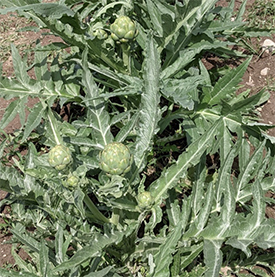 |
| Imperial Star Purple | Lower yielding than Imperial Star. Purple coloring is very subtle and often absent, but fairly attractive. Larger buds are not as attractive. Organic seed available. | |
| Colorado Star | Purple-tinted spiny bracts whose color intensifies with cooler weather. Bracts are loosely arranged on conical buds. Fair yield. Low chill requirement for quick vernalization.May be discontinued or difficult to obtain seed. | 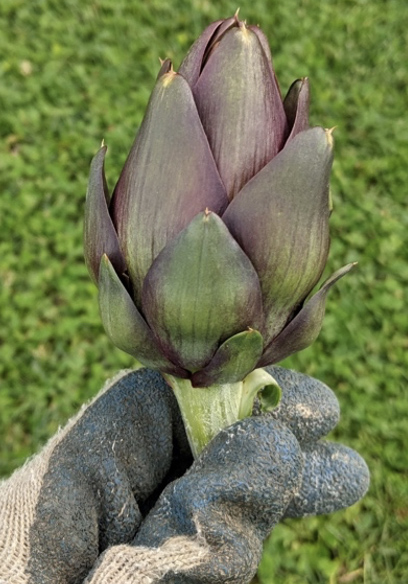 |
| Green Globe Improved | Older standard variety. Similar in appearance to Imperial Star, but more variable. Excellent yields. Spiny. Bud uniformity can vary plant to plant and even on a single plant. Bracts can be pointy and jagged and tend to splay open prematurely. | 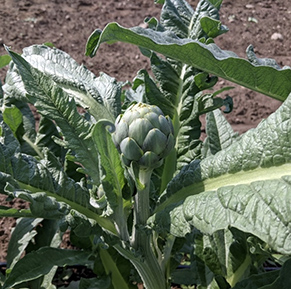 |
| Tavor | Strong, vigorous plants. Uniform round buds are very attractive with tight, relatively spineless bracts. Very good yield potential on par with Green Globe Improved. In our trials, it seems too de-vernalize readily. Organic seed available. | 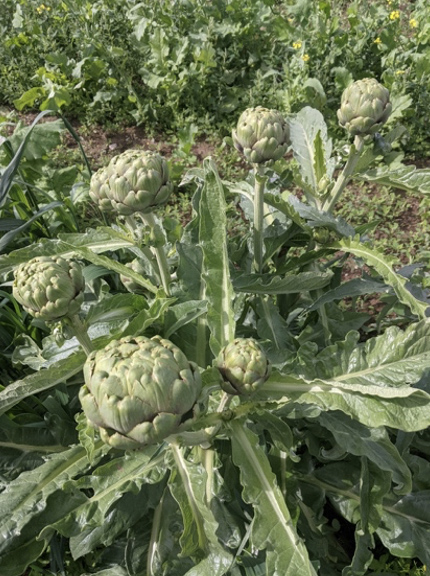 |
| Wonder | Hybrid variety. Good yield of smaller, variably shaped buds that are slightly elongated than round. Like Tavor, it de-vernalizes easily, so it is especially important to vernalize adequately in spring. Organic seed available. |  |
| Romanesco | Heirloom variety. Occasional rosy tint at top of bracts in cool temperatures. In one trial year, Romanesco was less vigorous than other varieties. Productive, but buds tend to be small. | 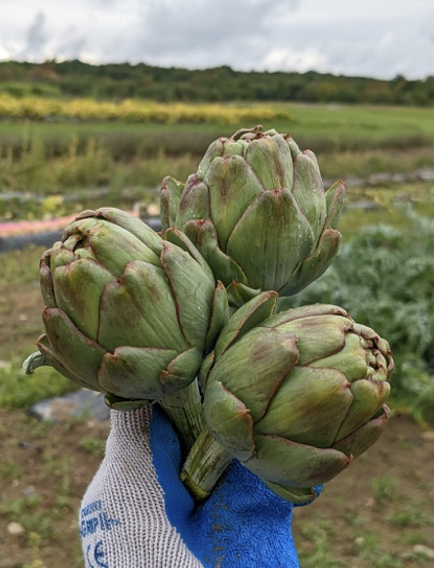 |
| Violetto | Deeply purple tinted spiny bracts whose color intensifies with cooler weather. Extremely spiny. Bracts are loosely arranged on buds ranging from conical to vase-like shape. More refined appearance than Colorado Star, but with greater vernalization requirements and generally lower yields. |  |
Site Selection and Fertility
Artichokes will do well in most soils provided they are well-drained. Plants have a taproot and therefore benefit from deeper tillage. Fertilizer applications should be based on soil testing recommendations for a general mixed vegetable garden. A general guideline is to add approximately 10 pounds of 10-10-10 or an organic equivalent per 100 row feet, providing one pound of nitrogen per 100 row feet. Artichokes will also benefit from side-dressing with a water-soluble liquid fertilizer or a granular high-nitrogen fertilizer, such as calcium nitrate (1 tablespoon per plant), around the base of the plants, 3-4 inches away from the stem.
Mulches aid artichoke production by helping to reduce weed pressure, preserving soil moisture and nutrients, and, in the case of organic mulches (such as straw) or reflective plastic mulches, they may keep soil temperatures cooler. While black plastic is known to warm the soil and potentially cause de-vernalizing temperatures, adequate vernalization in spring may overcome this adverse effect.
Annual artichoke plants can exceed three feet in diameter and grow four to five feet tall by late summer/early fall. The distance between rows of artichokes should be at least four feet to ensure adequate airflow and space for working around the plants, which may be spiny. Space plants two feet apart within rows. Artichoke plants and flowering buds are quite showy, even before they send up flower stalks. Consider using them as focal points in perennial or annual flower beds provided there is sufficient space, and they are accessible for harvesting.
Artichokes will require 1-2 inches of water per week. Plants prefer their soil to be evenly moist and do not tolerate periods of drought. Even though plants have a tap root, the bulk of the root system is fairly shallow, so frequent watering may be beneficial.
Container Production
It is possible to grow artichokes in large containers. Five-gallon pails or similar-sized containers will work well with a lightweight soilless growing medium. Containers should be placed in bright sunny locations, but with only moderate midday direct sunlight, since this may warm the soil to excessively high temperatures. Light colored containers may also help maintain cooler soil temperatures. Other important considerations for growing in containers are supplying sufficient water and fertility. It may be necessary to water the plants daily and fertilize them every week. One advantage to using containers is that it may be possible to overwinter the plant. In the fall, just after a hard frost, cut back and remove all vegetation. Containers should be stored in a dark location at a temperature of 32-35°F. Place containers back outside approximately two weeks before the expected last frost.
Harvest

Harvesting in Maine typically begins in late July or early August and continues until a hard frost. Harvest firm buds before the bracts start to open. When the buds begin to soften and bracts loosen, this indicates the artichoke is maturing, and the eating quality will be reduced. The extra-large primary buds seen at the grocery store are few. However, plants can produce two or three smaller secondary buds that still reach a diameter of three or more inches.
Additionally, there can be many still smaller tertiary buds that are excellent for canning or freezing. These tend not to develop chokes, and only a few tough outer bracts need to be removed before the entire bud is ready to eat. Buds are cut from the plant, leaving two to three inches of stem, using sharp garden clippers. Cutting the stems on an angle may help reduce the spread of disease. Wearing gloves will not only protect your hands from spines, but also from the plant’s unpleasant, sticky sap. Harvested buds can be stored in the refrigerator for 2-3 weeks. Storing artichokes at temperatures below 32°F will result in cold damage, which appears as bract browning.
Weeds, Insects, and Diseases
Weed Control
Young, small artichoke plants are not very competitive with weeds. They will benefit from keeping the nearby area plant-free from weeds. Later in the season, artichokes are very effective at shading out weeds. If growing spiny cultivars, it may be prudent to use a mulch to reduce time spent hand-weeding around the plant.
Insect Pests
We have experienced problems with thrips, aphids, stink bugs, and tarnished plant bugs in our research trials in Monmouth. It is essential to regularly scout for both thrips and aphids as these insect populations can increase rapidly. Aphids can be found on the underside of leaves, and their cast skins and honeydew will appear on the surface of the plastic mulches, if in use (Fig. 5). Aphid feeding on leaves can result in the development of sooty mold and reduce plant vigor. The timely application of insecticidal soap or labeled insecticides may be necessary. Habitat plants that attract beneficial insects, or the release of beneficial insects, may be helpful.
Thrips and tarnished plant bugs can cause twisted, malformed leaves and bracts. They can also feed on bract stems, resulting in unattractive brown lesions. Occasionally, tarnished plant bug feeding results in unsightly blistering on bracts. Stink bugs feed at the base of developing buds, where they affect tissue development, resulting in claw-shaped buds with bracts growing around the injury (Fig. 6). In severe infestations, crop yields can be significantly diminished if left uncontrolled.

Figure 5. Aphid infestation on the underside of an artichoke leaf (small, light-yellow spots). Note the cast aphid skins and honeydew on the plastic mulch. 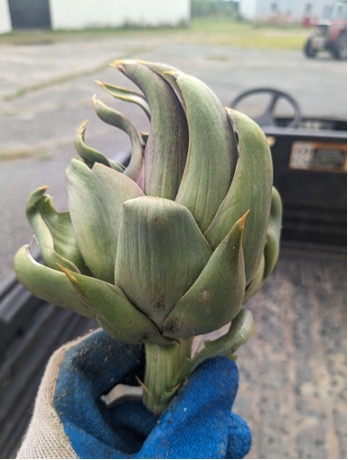
Figure 6. Malformed bud resulting from stink bug feeding.
Diseases of Artichoke
We have experienced losses from two diseases in our trials: gray mold and Verticillium wilt. Gray mold is by far the most common and destructive disease we have observed.
Gray Mold
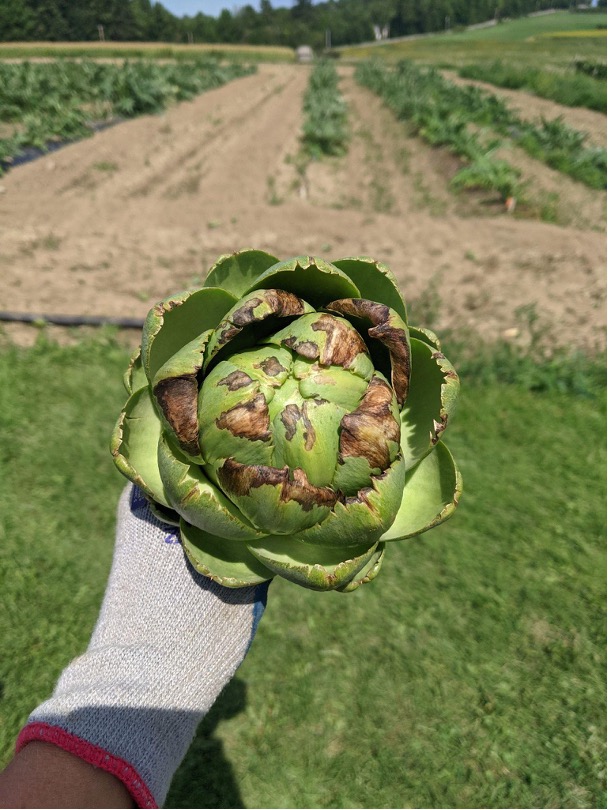
Gray mold (Botrytis cinerea) is a fungus that can infect and cause damage to nearly every plant in the garden. The fungus is saprophytic and resides in dead plant tissue; airborne spores of this disease are always present. Cool, wet, or humid weather provides favorable conditions for this disease to develop. Prolonged periods of these conditions can result in crop loss when too much foliage dies.
Botrytis rot typically begins at injury sites, including scrapes, tears, abrasions, insect feeding sites, and harvest or pruning cuts. Botrytis can also attack dying or dead tissue and then spread to healthy tissue. Symptoms of infection on leaf and bract tissue include a water-soaked appearance that eventually turns black or brown (Fig. 7). The area may or may not develop a grayish black, moldy appearance.
Botrytis infection of buds makes them unappealing for consumption. The disease may be present on harvested buds but not be visible until after some time in storage.
Cultural control of the disease can be enhanced through good sanitation and cultural practices. Increasing plant spacing and orienting rows to promote air movement and leaf drying can help reduce most foliar diseases. Diseased leaves should be removed and destroyed to slow the spread of disease. Making angled cuts when harvesting buds will prevent water from pooling on the cut surface, speeding the healing of the wound.
Verticillium Wilt
Verticillium wilt (Verticillium dahliae) symptoms include wilting and subsequent leaf yellowing. Often this appears on only a lengthwise portion of the plant, as it spreads through the plant’s vasculature, but it may eventually spread to the entire plant. Under some conditions, the plant may not wilt but instead become stunted. If you suspect Verticillium wilt, examination of the crown or roots for brown, discolored vascular tissue can confirm its presence.
The strain of Verticillium that infects artichoke also infects lettuce and strawberry. Therefore, avoid following those crop families in your crop rotation plans and avoid planting artichokes in areas where the disease has been a problem in the past. Artichokes will thrive after being planted in succession with brassica crops, such as broccoli or cauliflower. The cultivar Green Globe Improved is reportedly more resistant to this disease than other annual cultivars.
Contact Information
Mark Hutton
Vegetable Specialist and Assistant Professor of Vegetable Crops
University of Maine Cooperative Extension
Highmoor Farm
mark.hutton@maine.edu
207.933.2100
Peyton Ginakes
Fruit and Vegetable Researcher
University of Maine Cooperative Extension
Highmoor Farm
peyton.ginaked@maine.edu
207.933.2100
Information in this publication is provided purely for educational purposes. No responsibility is assumed for any problems associated with the use of products or services mentioned. No endorsement of products or companies is intended, nor is criticism of unnamed products or companies implied.
© 2025
Call 800.287.0274 (in Maine), or 207.581.3188, for information on publications and program offerings from University of Maine Cooperative Extension, or visit extension.umaine.edu.
In complying with the letter and spirit of applicable laws and pursuing its own goals of diversity, the University of Maine System does not discriminate on the grounds of race, color, religion, sex, sexual orientation, transgender status, gender, gender identity or expression, ethnicity, national origin, citizenship status, familial status, ancestry, age, disability physical or mental, genetic information, or veterans or military status in employment, education, and all other programs and activities. The University provides reasonable accommodations to qualified individuals with disabilities upon request. The following person has been designated to handle inquiries regarding non-discrimination policies: Director of Equal Opportunity and Title IX Services, 5713 Chadbourne Hall, Room 412, University of Maine, Orono, ME 04469-5713, 207.581.1226, TTY 711 (Maine Relay System).