
4-H Tick Project
Overview | Instructions for Participants | In the News|Get Started|FAQ|

Developed in 2022, the 4-H Tick Project originated as a community science project made possible through partnerships between 4-H Youth Development, UMaine Cooperative Extension Tick Lab, Maine Forest Tick Survey, and Learning Ecosystems Northeast. The project provides youth an opportunity to explore ticks and tick-borne diseases, which is a connected story of climate, ecosystem change, and public health.
K-12 educators interested in teaching about ticks in Maine are encouraged to participate in data collection and tick education activities. Tick education materials are available through Cooperative Extension county offices.
The way the project works:
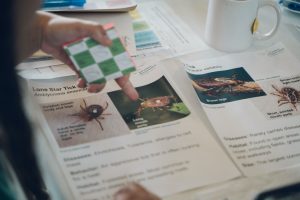
Educators conduct tick drags with youth participants to collect tick specimens in their local area, with the option to complete data collection forms. Educators may submit ticks to the UMaine Diagnostic Research Laboratory Tick Lab for identification and disease testing, which contributes to the lab’s Tick Surveillance program. Through the 4-H Tick Project, youth are engaged in real-world science and data exploration, while learning about public health awareness and personal safety outside.
For more tick education materials, visit the Gulf of Maine Research Institute’s Learning Resource Hub for their Unit: Ticks, Tick-Borne Disease, and Climate.
What we provide:
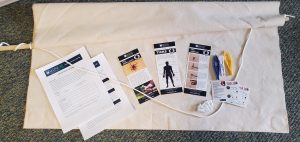
- Tick Collection Supplies (tick drag, collection vials, data sheets, tweezers, safety checklists)
- Instructional video and written protocol for how to conduct a tick drag
- Tick spoons and ID cards
- Educational resources to facilitate engaging experiences with youth to learn about ticks in Maine
*Materials are available at select County Extension Offices.*
How to Collect Ticks Using a Dragcloth

In the News
- We Don’t Want Them to Be Afraid
- That Kid Found a Tick!
- Students Capture, Identify, and Study Ticks in Maine
- 4-H Collaboration Uses Ticks to Teach Kids About Ecosystems and Public Health
- Kids in Maine are Learning Skills to Identify Ticks and Tickborne Diseases
Interested?
Contact your local County Cooperative Extension office for more information.
Frequently Asked Questions
What do I need to return to the project organizer?
At the end of the project, we need tweezers, binders, a measuring wheel, magnifiers (x3), and the drag cloths. You can keep all the other materials such as tick spoons, ID cards, etc.
What if we can’t drag for the entire 20 minutes?
No worries at all. Conduct the drag sample for as long as you can, and record the time on the datasheet. All data counts!
Why can’t we wear insect repellent while collecting?
Insect repellent can easily transfer to the drag cloth, and may also repel ticks in your surroundings while walking. Wearing insect repellent means you will not collect an accurate number of ticks. We recommend wearing light colored clothing to reduce mosquito densities around you and to easily see ticks that crawl on your clothes. If it is not possible to avoid repellent, please try not to get any on the drag cloth and make a note of it on your datasheet.
How do I know if I am capable of seeing and finding small ticks?
If you are worried you are unable to see ticks on the drag cloth, refer back to your tick ID card to refresh your mental search image. If you can see the ticks on the ID card, you should be able to see them on the drag cloth.
How do I find GPS location?
To find your GPS location and record it on the datasheet, use a smartphone or handheld GPS. If using Google Maps, GPS location is displayed in the bar at the top of the screen when you drop a pin on your location. To drop a pin, press and hold until the red location icon appears. You can record your location to five or six decimal places. For example: 44.572424 x -68.455491. GPS can be recorded in whatever format works best for you, decimals or degrees.
The University of Maine System (the System) is an equal opportunity institution committed to fostering a nondiscriminatory environment and complying with all applicable nondiscrimination laws. Consistent with State and Federal law, the System does not discriminate on the basis of race, color, religion, sex, sexual orientation, transgender status, gender, gender identity or expression, ethnicity, national origin, citizenship status, familial status, ancestry, age, disability (physical or mental), genetic information, pregnancy, or veteran or military status in any aspect of its education, programs and activities, and employment. The System provides reasonable accommodations to qualified individuals with disabilities upon request. If you believe you have experienced discrimination or harassment, you are encouraged to contact the System Office of Equal Opportunity and Title IX Services at 5713 Chadbourne Hall, Room 412, Orono, ME 04469-5713, by calling 207.581.1226, or via TTY at 711 (Maine Relay System). For more information about Title IX or to file a complaint, please contact the UMS Title IX Coordinator at www.maine.edu/title-ix/.