

Master Gardener Volunteers Newsletter ~ Hancock and Washington Counties ~ October 2025
Table of Contents
Save the Dates/ Triple Chick Farm / Sweet Haven Farm Tour / Winterize Your Garden / Book Club News / Upcoming Webinars!
Dates to remember!
October 6 Master Gardener Volunteer (MGV) Advisory Meeting
October 13 Holiday ~ Office Closed
October 17 25/26′ MGV Class Starts
October 23 Annual Meeting – Hancock County Extension ~ open to all
November 3 MGV Advisory Meeting
November 12 & 13 Extension All Staff/All Organization Conference – office closed
November 13 Save the Date – MGV Fall Gathering – Details TBD
Greetings Master Gardener Volunteers!
Fall is here, the traffic is lighter, and the leaves are brighter.
Celestial Events in October
This year, the Hunter’s Moon and Harvest Moon both occur on Oct 6th at 11:47 pm. The Hunter’s Moon is named for the season when hunters would prepare for the coming winter, and the clear, post-harvest fields made it easier to spot game animals. It is the first Supermoon of 2025 and will appear bigger and brighter than usual, since the Moon is at its closest point to Earth (aka the perigee).
Step outside after sunset, look toward the eastern horizon, and enjoy the view!
The Orionid meteor shower peaks this year on October 21-22, visible from late night to dawn, with the Moon out of the way for a dark sky viewing experience. Meteors appear to radiate from the constellation Orion, but the best viewing area is a dark patch of sky about 30-40 degrees away. The shower is produced by dust and ice from Halley’s Comet, and the resulting meteors are some of the fastest, reaching speeds of 41 miles per second.
It has been a busy and challenging season for all gardeners, especially given the dry weather and the insatiable deer. But the MGVs Persevered! We had two terrific field trips in July and August. Pictures and articles below. But we’re not done yet! Coming up, dates to be announced: Four Season Farm field trip; a workshop on Knots (not Knotweed) for Gardeners led by Bob Murphy, who spent his career in Technical Theatre on Broadway and around the world and can tie a lot of knots; and a workshop on Building Bee Hotels led by MGV Terry Van Praet, who has raised bees for many years. The workshops will most likely happen in October and November. Stay tuned! Our trip to the UME Integrated Pest Management will happen next Spring.

Additionally! Send your project photos to sue.baez@maine.edu
And most importantly, remember to please report your MGV hours!
Triple Chick Farm
By Lynne Altvater, MGV
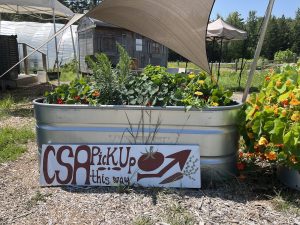
The Master Gardener Volunteers headed to Triple Chick Farm on July 29th for a behind-the-scenes tour of their operation. Our group was well-represented and included a few community CSA members who share in the bounty come harvest time.
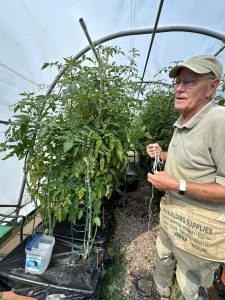
Meeting in Peace Corps Nepal in 2015, Anna and Adam Perkins started co-managing the farm in the fall of 2021. Anna led us through the 7-acre property that includes 2 ½ acres of crop production on that hot summer morning. We passed rows of sunflowers, corn, herbs, kale, and broccoli, but the highlight was the tomato crop. Hoop houses, tunnel,s and elaborate watering and trussing systems adorned a good portion of this operation. Anna notes that early tomatoes are their discriminator, with some tomato vines reaching 100 feet in length. It became apparent fairly quickly that the focus was on this prolific crop!
7-8 full-time gardeners are employed at the peak of the growing season. We ended the tour in their packing area, a cool building with deep sinks and crates to wash and prepare produce for the farm stand and outside deliveries.
Thanks to all attendees, whose participation makes our Continuing Education program worthwhile. Photos courtesy of Lynne Altvater, MGV
-

- Photo credit: Lynne A, Volunteer
-

- Photo credit: Lynne A Volunteer
-

- Photo credit: Lynne A Volunteer
-
- Photo credit: Lynne A Volunteer
Sweet Haven Harvest for Hunger Farm

By Betsy Adams, MGV
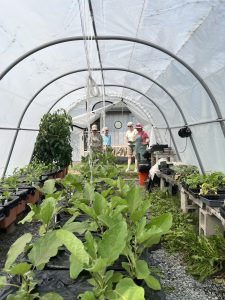
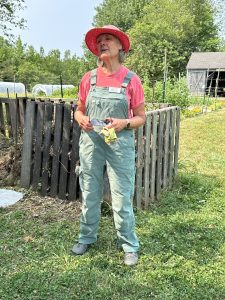
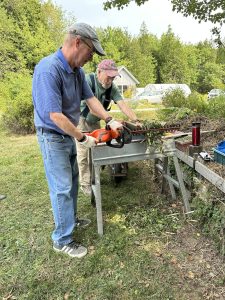
The Master Gardeners Volunteers were invited back to Dorcas Carrow’s Sweet Haven Farm in Seal Cove again this summer on August 5th, and we all thoroughly enjoyed our visit. There were more beds and hoop houses to see this year, and gorgeous vegetables. Everything that is grown on the farm is delivered every week to limited-income housing sites, which are all part of Harvest for Hunger. In some cases, clients receive personalized bags of produce so they only receive what they like to eat.
Most of the volunteers who work on the farm have been coming there for many years. It is a passionate, devoted group. Everything starts from seeds, including the pollinator plants at each end of every bed. Plants are grown in hoop houses, raised beds, field gardens, and Earth Boxes. They make their own compost, which is handled by Tom McIntyre and Frank Hague, who have come up with some very innovative ways to handle yards and yards of compost.
We were blessed with a beautiful day this year and saw the dedication of the volunteers in action. All of the work is done on three volunteer days a week. The work starts every year in mid-May and continues until the end of October. The volunteers are involved in every aspect of vegetable production, including seed starting, soil preparation, transplanting, direct seed sowing, maintenance, harvesting, and, of course, weeding and watering. The gardens use only organic pest control and soil management. Photos courtesy of Lynne Altvater
-
- Photo credit: Lynne A, Volunteer
-

- Photo Credit: Lynne A., Volunteer
-
- Photo Credit: Lynne A, Volunteer
-

- Photo credit: Lynne A, Volunteer
-
- Photo credit: Lynne A, Volunteer
-
- Photo Credit: Lynne A, Volunteer
Winter Gardening Checklist: How To Care For Winter Plants And Plan For Spring
By Lauren Landers ~ MGV
I live in chilly Maine, where the growing season is relatively short and the winter winds blow long. But no matter where you live, there are plenty of winter gardening tasks to keep you occupied ‘til spring. From ordering seeds to pruning trees, this winter garden checklist will help you protect your winter plants and prepare for the spring growing season to come!
Order Seeds
Ordering seeds is, hands-down, my favorite winter garden task! It’s 1 part planning and 2 parts creativity, and it gives you a chance to explore new plants and cultivars you didn’t get around to planting last season.
Most seed companies send out their seed catalogs from December to January and seeds are usually shipped out in late winter or just in time for indoor seed sowing.
Prep Your Grow Room
While you wait for your vegetable, herb, and flower seeds to arrive, double-check that you have all the seed-starting supplies you need for indoor sowing. If you’re reusing pots and plant labels, remember to sterilize those tools with a 10% bleach solution to ensure no pathogens are left over from the previous growing season. For added space, I usually start indoor seeds on a shelving unit that I put up in winter and take down when I transplant the seedlings outdoors in spring.
Cold stratifying native plants outdoors, like milkweed, in winter ensures pollinators have plenty to eat when summer comes!
Winter Sow Native Plants and Long Season Crops
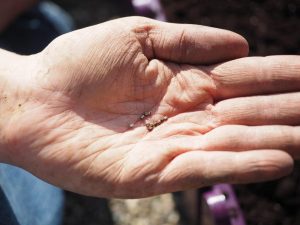
Most seeds are started indoors in early spring or outdoors later in the season when temperatures are sufficiently warm. But long-season crops, like onions, shallots, and artichokes, are typically started inside in mid-winter to ensure they have enough time to mature before the harvest season. Mid-winter is also a good time to cold stratify native plant and wildflower seeds, like milkweed, which you can winter sow outdoors.
Plan for Spring
Ordering seeds is just one way to prepare for spring. But you can also use the winter months to sketch out new garden beds, order bare root perennials and trees, make DIY garden art, craft bird houses or dead hedges for wildlife, or source needed supplies for your spring garden. I’ve been keeping a garden journal for a few years now, and I go over my journal notes in winter to decide what worked during the previous growing season and what changes I’d like to make in the new year.
Adjust Cloches and Plant Covers
If you have any plants growing under cover, keep a watchful eye on them through the winter months and adjust the winter coverings as needed. I always recommend not wrapping the top of plants like hydrangeas with burlap in winter, as burlap coverings can get heavy when they’re covered in snow! If you’re using burlap in this way, shake heavy snow off your plants as soon as you can to avoid broken stems and branches, and make sure plant cloches don’t topple over in strong winds.
Do Some Winter Pruning
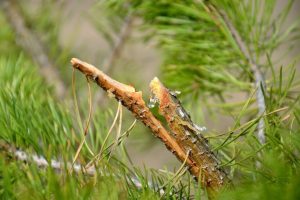
Most plants should not be pruned in winter since pruning in cold weather can make plants more susceptible to cold damage (and it can remove hiding spots that pollinators need!) However, late winter to early spring is the best time to prune most trees, including many of our favorite fruit trees and deciduous trees that flower on old wood. If any of your plants sustain winter damage, feel free to prune away those broken stems in winter as well.
Clean Garden Tools
I recommend thoroughly cleaning garden tools before packing them away in the fall. But if your autumn chores got away from you and you didn’t get a chance to clean your tools earlier, you can clean and polish up your pruners, shovels, and rakes in winter too!
- For general cleaning, I brush off extra dirt with a stiff brush and rinse stuck-on mud away with Castile soap. Tools should be thoroughly dried before storage to prevent rust!
- For rust issues, I usually soak my tools in a vinegar mixture (1 part vinegar to 1 part water) overnight and then rub the rust away with steel wool.
- For disinfecting, I spray my tools with rubbing alcohol or soak them in a 10% bleach solution. Just be sure not to mix bleach, rubbing alcohol, or vinegar together.
- For protection, I wipe mineral oil over the metal parts of my tools after cleaning them to keep the rust away. You can also apply linseed oil to wooden handles to keep the wood supple and prevent cracking.
Test Your Soil
Like cleaning tools, I like to test my garden soil in the fall, but you can test it in winter too! A good rule of thumb is that garden soil should be tested about once every 3 years to make sure your soil is healthy and that soil nutrients haven’t become depleted over time. You can find information here – Soil Testing Lab
Feed the Birds
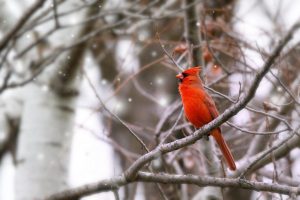
It’s harder for wildlife to find food and water in winter, which is why I like to turn my garden into a winter oasis for birds and other wildlife. To this end, I offer an array of bird seed to attract different birds, and I put out a heated bird bath to ensure the birds that visit have access to fresh water. If you’re crafty or want to get little ones involved with feeding the birds, try making some DIY bird feeders by rolling pinecones in peanut butter and bird seed and hanging them around your garden with a bit of biodegradable twine!
Watch for Pests
Rodents are usually more active in winter when food resources are scarce, so it’s a good idea to take extra precautions to make sure your garden, potting shed, and home are rodent-proof. If you keep outdoor chickens or feed wild birds, be sure to stow feed away at night in rodent-proof containers and consider making your own DIY rodent-proof chicken feeders, too. I find that removing food resources is a very effective way to discourage rodent activity, and I never use poison baits as these products can travel up the food chain and harm non-target animals, like owls and foxes.
Tend Houseplants
When the snows pile up high, it’s much harder to work in the garden — but that doesn’t mean you need to stop growing! I personally grow a lot of houseplants, and I keep my green thumbs busy by tending them in winter. However, as any plant parent can tell you, houseplant care changes quite a bit through the seasons.
Although houseplants still need water and light during the winter months, most plants don’t need as much water at this time of the year, and winter fertilizer is rarely necessary. Indoor air is a lot drier in winter, too. But you can keep your plants from developing crispy leaves by adding a humidifier or pebble tray.
Rest Up
Of course, one of the best things about winter is that it encourages us to rest a bit more and get cozy. Although you can do some winter gardening, this slow season is a great time to catch up on some garden reading and replenish your energy for the growing season to come. After all, there will be much to do when spring returns, and resting now will ensure you have plenty of energy for all that spring planting!
Master Gardener Book Group
has resumed, and we have a wonderful and varied roster of books to read this year. We meet at 9:00 am on the third Thursday of the month at the Moore Center on State Street in Ellsworth on the 2nd floor in the Art Room. We welcome everyone! So please consider joining us. Contact Jane Ham, jdham48@gmail.com, for more info or to be put on the email list. Below is the list of books we are reading.
October 16 – To Speak for the Trees: My Life’s Journey From Ancient Celtic Wisdom to a Healing Vision of the Forest, by Diane Beresford-Kroeger, 2019, 283p.
Canadian botanist, biochemist, and visionary Diana Beresford-Kroeger’s startling insights into the hidden life of trees have already sparked a quiet revolution.
November 20 – The Serviceberry: Abundance and Reciprocity in the Natural World by Robin Wall Kimmerer, 2024, 124 p.
A bold and inspiring vision for how to orient our lives around gratitude, reciprocity, and community, based on the lessons of the natural world.
(No meeting in December)
January – Birding to Change the World: A Memoir, by Trish O’Kane, April 2025, 384 p.
In this uplifting memoir, a professor and activist shares what birds can teach us about life, social change, and protecting the environment.
February – Pilgrim at Tinker Creek, by Annie Dilliard, 1975, 302p.
Pilgrim at Tinker Creek is the story of a dramatic year in Virginia’s Blue Ridge Valley. Annie Dillard sets out to see what she can see. What she sees are astonishing incidents of “mystery, death, beauty, violence.” It won the 1975 Pulitzer Prize for General Nonfiction, and in 1998, it was included in the Modern Library‘s list of 100 Best Nonfiction Books.
March – Raising Hare, by Chloe Dalton, 2025, 317p.
A moving and fascinating meditation on freedom, trust, loss, and our relationship with the natural world, explored through the story of one woman’s unlikely friendship with a wild hare.
April – Notes on the Landscape of Home, by Susan Hand Shetterly, 2022, 197p.
In this collection of elegant, spare, and often passionate essays, Shetterly explores what it is to live in a Down East coastal town, and to pay attention, over time, to what it offers of land, water, wildlife, and community. She takes her cue from Henry David Thoreau and Wendell Berry, who advocate for the virtues of staying in one place, believing that we learn more about the world as we delve deeper into the landscape of home.
May – Bring book suggestions for Fall 2026-Spring 2027
Check out Extension’s upcoming webinars:
- Oct 6th, 6pm: Passion, Patience & Product: Starting a Native Plant Nursery. Register here to watch live or receive a link to the recording.
- Oct 7th, 6pm: Growing Native Plants from Seed presented by Pamela Hargest, our MGV coordinator for Cumberland County! Register here to watch live or receive a link to the recording.
Remember to take lots of pictures of your gardening projects and fellow master gardener volunteers!
Send them Sue Baez at sue.baez@maine.edu for use in the Recognition Event video
This newsletter gets sent to over 150 people every month. Do you know an MGV who doesn’t receive the newsletter and would like to? Let us know! MGVnewsletterinput@gmail.com
Thank you from the Newsletter Committee
Betsy Adams, Lynne Altvater, Pier Carros, Nicole Gurreri, Jane Ham, Lauren Landers, and Nancy Pietrulewicz