
Cutworms
Cutworms, in spite of the name, are not ‘worms’ at all, biologically speaking, but are actually a kind of hairless caterpillar that turn into moths upon completion of their development. As larvae, they generally hide during the day, and come out at night to feed, safe from most predators and from the heat of the sun. They often start eating the first part of an acceptable host plant that they encounter, which is often the stem, resulting in the plant (especially a seedling) being ‘cut’ straight through; hence the name cutworm. Cutworms are categorized as surface, climbing, army or subterranean. Because of their many similarities, it is often difficult to tell one species of cutworm from another. However, there is variation in life cycles. In Maine, many cutworms have only one generation per year, although some can produce two generations. Corn, peppers, tomatoes and beans seem to be their favorite food, but they will attack many kinds of plants.
-

- A cutworm larva, and a young corn stalk that has been ‘cut’ due to the cutworm’s feeding injury

-
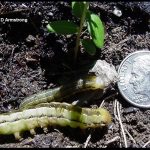
- Pair of False Armyworm cutworms (Xylena nupera) (a noted cranberry pest)

-

- A cutworm curled up for protection

-

- Cutworm on a pepper plant

-

- Cutworm larva inside a potato

-

- Variegated Cutworm larva (Peridroma saucia) inside a potato

Additional Information:
- Cutworms (our UMaine Extension publication)
- Cutworms (University of Minnesota Extension)
- Variegated Cutworm / Pearly Underwing (BugGuide.net)