
Maine Home Garden News – September
In This Issue:
- September Is the Month to . . .
- Fall Learning Opportunities
- Collecting Native Perennial Seeds: A How to Guide for Beginners
- UMA Community Garden Profile
- Annual Obsolete Pesticide Disposal Program
- Maine Forest Service Insect and Disease Conditions Report
- Backyard Bird of the Month: Fish Crow
- Maine Weather and Climate Overview
September Is the Month to . . .
By Jennifer Cappello-Ruggiero, Horticulture Professional
We will get to the chores in the garden, but before we do I would like you to do something that requires no heavy lifting. Sit in your garden and listen. Listen to what it is telling you, because when we come right down to it, isn’t a garden a relationship? Hasn’t it been our emotional support through it all? The garden has been there when we are sad or grieving, as well as when we celebrate, during a garden party or tour, or when we bring a new plant home from the nursery.
We speak to our gardens while we work in them, and in turn they tell us what they need. We know these plants; we have met with them day after day. We miss them when we take a much needed rest during the winter months, but get ready to greet them again like visiting friends or family (which they are) when they arrive again. Walking the garden to see just that little glimmer of green that gives us the hope that the land will reawaken and we will be part of it with old friends (and new)! As gardeners we have always known the physical, mental, and emotional rewards of being a gardener, and science has confirmed this—the outcomes are measurable.
So now let’s turn with undivided attention to what we have created, not on our own but as a community. For this will inform all we need to know about the chores that lie in store.
In addition to what your garden has conveyed to you, here are some September garden tasks.
Take a garden walk with your camera and notebook to help capture the transition of the fall garden to the upcoming spring garden. Jot down the things you are going to leave for the spring: dividing, transplanting, pruning. We convince ourselves that we will remember everything, but I suggest giving yourself a jump start and making notes now. Keep notes on the plants you purchase so you can easily access information about their maintenance needs; bloom timing; as well as potential pest and disease issues. With identification phone apps this is easier than ever before: apps such as Picture This will store the names of the plants in your garden so you can reference as needed.
Maine’s changing climate can affect bloom times, amount of bloom, stature and overall plant vigor. Over time you may see patterns of certain plants not thriving while others may withstand the changes beautifully. Keep notes from year to year and look for resilient plants that may be good candidates for division and transplanting and may even replace the plants that are struggling. Generally spring and summer-blooming perennials should be divided in the fall while fall-blooming perennials should be left to divide in the spring.
I suggest writing a note of the modifications or adjustments you mentally noted as you worked in the garden during the season. Or, you may prefer to take pictures of the items you want to address. That’s a great idea, but I recommend uploading the pictures in a separate folder or online “notebook” so that you can quickly find the photos when you want them.
Don’t want written notes or a folder of plant pictures? Place a short garden stake with a colored ribbon next to a plant that needs to be transplanted, pruned, or otherwise maintained as a direct reminder of the chore at hand. Go with whatever method works for you, so that you will be able to tackle the tasks that you set your sights on for the season.
If you have an existing meadow, now is a good time for an annual mowing. This will help disperse seeds, reduce weeds, and determine areas where overseeding may be done. Mowing before it gets too cold will help assure that pollinators and other wildlife do not establish this area for overwintering only to find that their habitat is removed by late-season mowing. Of course, this also means providing bramble piles, leaves, and plant material for overwintering in other areas of the garden.
Thinking of creating a meadow or new planting bed? Now is the perfect time for lasagna gardening. Place some uncoated cardboard over turf, a weeded area, or other area that you have earmarked for a new planting, and then wet it down and cover with a few inches each of aged compost and mulch. This will eliminate the existing vegetation in this area and provide you with a new planting bed. I would not recommend using kitchen scraps in the layering, as it attracts wildlife and can create more work than you planned on.
This method may also work with select invasive plants, but most invasives require more time and attention to remove. Should you intend to plant where invasives currently exist, create a management plan through well-informed research. Research-based resources, such as the fact sheets linked in the Maine Natural Areas Program invasive plant photo gallery, offer species-specific information for managing plants in our region. Most eradication efforts will require several seasons of work before you see results.
Before you know it the leaves will be falling from the trees. It is great to “leave the leaves,” but you should have a plan in mind before they are on the ground. Depending on how many trees you have and how large your garden beds are, you may be able to rake them into your beds and call it a day. I have far more leaves than room in the beds, however, so I need to think about alternatives for keeping the leaves on the property. I create a small fenced pen that allows them to break down over time without blowing over to my neighbors’ yard. This also provides bedding for overwintering garden inhabitants. Think about adding leaves to your compost bin or placing them in paper yard waste bags until the spring. Using a mower to shred the leaves can speed up decomposition and improve moisture movement through the layers, since whole leaves can form dense mats. However, shredding may also harm insects that are sheltering among the leaves. As you decide how to manage them, weigh the benefits of faster breakdown against the potential impact on garden wildlife and consider leaving some leaves unshredded if you can.
Fall is the optimal time to plant new trees and shrubs because the soil temperature is still warm, while the air temperatures are cool. Flowering has ended or is waning, and all the plant’s energy can go into root growth. Irrigation is extremely important at this time to help those roots along. Deep waterings once or twice a week are best, using soaker hoses or the garden hose to water directly at the root zone of the plant. The first two years of a new planting are the most important time for supplemental irrigation to help those roots establish.
Surprised by how tall some of your plants grew? Some of these plants may be candidates for shearing or the “Chelsea chop,” which refers to cutting back the plant early in the season to minimize its height and stagger the bloom times. Others might benefit from staking with brush next season. Take note of the tallest plants and spend some time over the winter researching which ones should be cut back, which should be staked and best timing for each method.
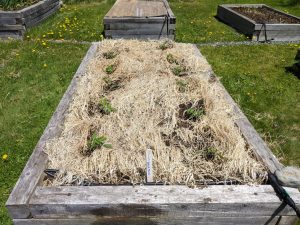
For areas of your vegetable garden that are not slated for succession planting, now is a good time to sow a cover crop. Cover crops can reduce soil erosion, minimize weeds, and provide your bed with organic matter (also known as “green manure”) for next growing season. In addition to field peas and oats, mentioned as cover crop options in last month’s “to do” list, winter rye is another popular option for fall planting. Avoid seeding rye heavily; if it’s too dense, it will be difficult to incorporate the winter-hardy plants into the soil by hand next spring. Follow the seeding rate recommended on the package. This is also a good time to apply a layer of compost, if needed.
Want to extend your growing season? Like to propagate plants by cutting or seed sowing? September is the perfect time to build a cold frame, which will help house and acclimate your seedlings or cuttings while protecting them from wildlife and severe weather. A cold frame will also provide the protection needed for small cool-weather crops that can be started earlier or harvested later.
Has it been three years since your last soil test? Then it’s the perfect time to submit a sample. You can determine your fertilizer needs for next season and can prepare accordingly. Spring is the best time to fertilize your garden. For raised beds, there is a tendency to apply too much compost over time, raising the level of organic matter beyond optimum conditions. A soil test can inform your decision to top coat your fall beds with compost. Fall is also a good time to top up your mulch, which helps protect plant roots and insulate the soil for the winter.
If you have not already ordered bulbs for fall planting, sit down with your favorite beverage and a treat to accompany you on a journey through the bulb catalogs you have been stacking up on the counter. Think about timing of bloom, color, and possible early season pollinator support. One of the nice aspects of spring flowering bulbs is that even if you do not have full-day sun exposure during the growing season, planting areas under deciduous trees may receive sufficient sun exposure for early bloomers.
Fall Learning Opportunities
Expand your gardening knowledge with these fall programs:
Whether you’re a beginner or experienced gardener, our fall webinars offer practical, expert-led guidance:
- Sept 16: Growing Great Garlic – Learn how to plant, grow, and store your own garlic.
- Sept 23: The Late Season Garden – Reflect on your season and prep for next year.
- Oct 7: Growing Native Plants from Seed – Start your own native perennials.
- Oct 14: Beginner’s Guide to Composting – Create, maintain, and put your own compost pile to use.
Looking for something more in-depth?
- Maine Horticulture Apprentice Training – A flexible online learning plus hands-on apprenticeship experience for current or aspiring horticulture professionals. Registration opens September 22nd at noon.
- Maine Gardener Training – The same comprehensive training as the Master Gardener Volunteer program, without the volunteering requirement. Registration opens September 29th at noon.
And don’t miss our Pollinator-Friendly Gardening course: perfect for creating a garden that supports bees, butterflies, and beyond.
Collecting Native Perennial Seeds: A How-To Guide for Beginners
By Pamela Hargest, Horticulture Professional
Collecting seeds from native perennials can be a rewarding and meaningful experience. It not only deepens your connection with local ecosystems but also supports native plant restoration and biodiversity. However, it’s important to remember that seeds serve as a crucial food source for wildlife and play a vital role in natural plant reproduction. Always do your research and approach seed collection responsibly.
This guide focuses on native perennials that produce dry seeds, which are typically easier for beginners to collect.
Research Before You Collect
Identify and Learn About Your Plants
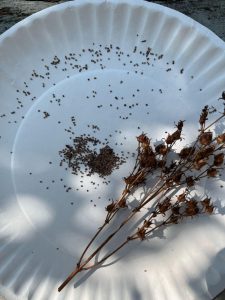
Start by identifying the native perennials from which you plan to collect seeds. Research key details such as:
- When they flower and produce seeds
- What the seeds look like when mature
- How the seeds are dispersed naturally
- Whether the plant is listed as endangered or threatened
Consider observing your target plants for a full growing season. Keep a journal or calendar to track flower and seed development, this will help you time your collection efforts more effectively in the following year.
Check Legal and Conservation Status
Make sure the plants you’re targeting are not listed as rare, threatened, or endangered by referencing the following resources:
Get Permission
If the plants are not on your property, always seek permission from the landowner. Avoid collecting seeds from public lands, such as local, state, or national parks, unless permitted. Pro Tip: Begin your seed-saving practice on your own property to build experience.
Prepare for Collection
Mark Plants for Seed Collection
Use garden tags or markers to identify plants during the growing season.
Protect Seeds From Wildlife
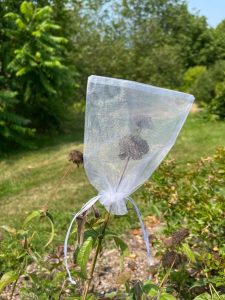
Some species produce abundant seeds (e.g., asters), while others produce smaller quantities. To prevent wildlife from eating the seeds before you collect them, consider covering seed heads with mesh bags or similar materials, but only for the plants you intend to harvest.
Gather Tools and Supplies
- Pruners or scissors
- Gloves
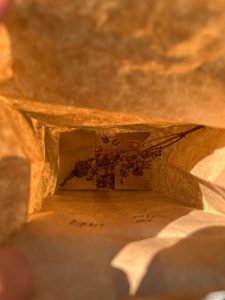
- Paper bags (various sizes)
- Permanent marker for labeling
Collect Seeds
Timing is Key
Most perennial seeds are ready for harvest 6–8 weeks after blooming. Look for signs of dryness and maturity which varies by species, but mature seeds typically come loose easily and may rattle inside pods or heads.
Harvest Method
Cut mature seed heads and place them upside down in paper bags. Avoid overcrowding the bags as good airflow helps prevent mold and supports further drying. Label each bag with the Latin name, collection date, and location.
Drying Period
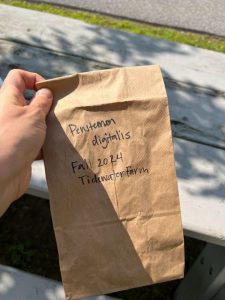
Store the bags in a cool, dry location for up to two weeks to allow seeds to finish drying.
Clean Seeds
Set Up Your Workspace
Use a shallow, light-colored tray or baking sheet with raised sides to prevent seeds from scattering.
Clean One Species at a Time
Each plant may require a different cleaning technique. For example:
- Mint family seeds often shake out easily when the seed head is turned upside down.
- Aster family seeds may need gentle agitation in a bag with coins to separate the seed from the pappus* (the fluffy material that aids in seed dispersal).
*Removing the pappus is not always necessary, especially if seeds will be planted soon.
Remove Debris
Strip away stems, leaves, chaff (outer coverings), and other unwanted plant material. Multiple rounds of cleaning may be needed for full separation.
Store Seeds Properly
Use coin envelopes or small paper packets for storage. Clearly label each envelope with:
- Latin name
- Collection location
- Date of collection
Store envelopes in a cool, dry, and dark place, safe from insects or rodents.
By following these steps, you’ll not only improve your seed-saving success but also contribute to preserving native plant diversity for years to come.
UMA Community Garden Profile
By Rita Buddemeyer, Penobscot County Master Gardener Volunteer (originally from Hancock County)
Among the many Maine garden projects of substance is one that was initiated with the aim of offering sustenance for veterans’ health. The 2015 partnership between AmeriCorps VISTA and the Bangor campus of University of Maine at Augusta set solid roots in the center of campus. It continues to prosper as regional connections have been cultivated to assure robust growth of the project’s broadened aims.
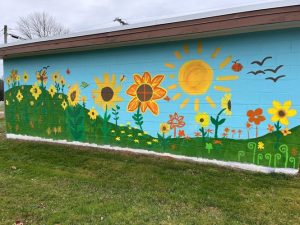
Dr. Kate Corlew, a psychology professor and Master Gardener Volunteer, has led the garden efforts since 2016. With special interest in building community among students, their families, and the area, her focus includes and expands upon the original targeted population. Through the student garden club, planting beds are tended so the harvest can be shared and special events can blossom. Brown bag lunches, family days, seed giveaways, sunflower art, etc., add fascinating color and stir expanded participation.
Aurelia Maietta, a garden and food security intern, notes that community gardening is indeed engaging. Student retention and success are significant offshoots of the project as are the polished skills of teamwork, which transfer to all fields. Communing with nature also stirs creativity as evidenced by the garden club logo, motto, signage, and songs. It’s not just green beans but most significantly human beings that grow in the garden.
Credit for the continued flourishing may be shared by numerous entities who provide materials, work crews, new ideas, and a shared spirit of enthusiasm for growing community while fighting hunger. This Penobscot County Master Gardener Volunteers project through University of Maine Cooperative Extension is a hardy and heartening example of collaboration. Find the UMA Community Garden at Bangor online to enjoy views of their work as you learn about their history and accomplishments over the past decade.
Annual Obsolete Pesticide Disposal Program
The Board of Pesticides Control (BPC) and the Department of Environmental Protection provide citizens with a responsible, free solution to their obsolete pesticide problem. Once a year, these agencies collect obsolete pesticides brought to sites across Maine. The materials are then shipped to out-of-state disposal facilities. All types of pesticides and adjuvants are accepted, including banned pesticides and pesticides that have become caked, frozen or otherwise rendered unusable. The program is available to homeowners as well as non-corporate farmers and greenhouse operators.
- 2025 Obsolete Pesticides Collection Program Poster (PDF) Programs typically take place once a year in October. Pre-registration is required and collections are held at four sites across the state in Portland, Augusta, Bangor, and Presque Isle. More information about the program may be found below. Event dates, times, and locations are subject to change, and only registered participants will be notified of this information upon acceptance into the program. Registrants may apply at any time, but will typically be contacted about the program in August and September.
If you need to immediately dispose of a pesticide, please contact your local Department of Environmental Protection. Additionally, many local municipalities hold household hazardous waste programs during the summer months where residents may dispose of many different kinds of household hazardous wastes. Contact your local town office to learn more about local events near you. See options for disposal for more information.
The Maine Annual Obsolete Pesticide Program is only offered once per year in October for Maine residents. This program does not accept commercial waste, only pesticides and adjuvants used for homeowners, family-owned farms and nurseries, and gardeners. Commercial entities, including commercial applicators, are responsible for pesticide waste through their own hazardous waste contractor. BPC cannot provide emergency disposal of hazardous waste.
How to Participate
1. Registration Form Instructions (for October 2025)
○ Option 1: Online Registration Form: Fill out all of your information on your browser, no downloads or emails needed.
○ Option 2: Registration Form as fillable PDF: Open the file, fill in the information, and
■ either save it to your hard drive, attach it to an e-mail, and send it to pesticides@maine.gov or
■ or print it out, and mail it to the BPC (mailing address on the form)
○ Option 3: Registration Form as Word file: Open the file, fill in the information, and
■ either save it to your hard drive, attach it to an e-mail, and send it to pesticides@maine.gov or
■ or print it out, and mail it to the BPC (mailing address on the form)
○ Option 4: Request paper copy: Contact the BPC (207-287-2731, or the e-mail address above) to have a copy of the form mailed to you.
2. On the registration form, identify the common name of the pesticide active ingredients shown on each product’s label. Common names are often listed on the front of the label followed by the chemical name. If the active ingredient is not listed, or is unreadable, please describe the product using the brand name, EPA registration number, or any other identifying information you can find on the label. Unidentified products without labels or markings should also be described in as much detail as possible.
3. Store obsolete pesticides properly until the next annual collection drive. The BPC will contact you several weeks prior to that drive to inform you of your local collection date and location. Can’t make an upcoming drive? No problem…the BPC will keep your name on file for the next collection.
4. After your inventory form is received, the BPC will mail a map and instructions 10 days before your collection date.
5. Bring your obsolete pesticides to the assigned site. Once there, stay in your vehicle and present shipping papers to officials. They will direct you to place obsoletes in an appropriate receptacle.
If you are unable to make the October collection, try other options for disposal instead.
Maine Forest Service Shares Latest Insect and Disease Conditions Report
The Maine Forest Service and their partners deserve praise for delivering another informative and timely Forest and Shade Tree Insect and Disease Conditions report for August 2025. Their in-depth updates are essential reading for anyone who cares about the health of Maine’s forests and shade trees, from backyard gardeners to woodland managers.
This month’s report, found online here, captures a complex picture of Maine’s forest health, shaped by warmer, drier-than-average weather and widespread drought conditions affecting nearly 80 percent of the state. Highlights include a detailed recap of the aerial survey season showing increased impacts from beech leaf disease, red pine scale, and white pine needle damage across much of Maine. Readers will also learn about current insect activity including browntail and hickory tussock moths, as well as disease developments and invasive plant concerns such as how ATVs can spread invasive seeds into undisturbed forestland. With field workshops, forest pest updates, and prevention tips, this edition is a must-read. We highly encourage readers to explore the full report and consider subscribing for future updates.
Backyard Bird of the Month: Fish Crow
By Maine Audubon Field Naturalist Stacia Brezinski
The Fish Crow is a bird you have most likely seen, but may have never noticed. It is a distinct species of crow, yet it often associates with the ubiquitous American Crow, and the two species are almost indistinguishable in appearance. If you’re lucky, you’ll see the two next to one another and might notice the Fish Crow’s smaller size, smaller bill, and shorter-legged look. If you’re really lucky, it will say something. Fish Crows sound like an American Crow with a very stuffy nose. That nasally call is the only reliable way to tell the two species apart in the field, but thankfully they’re pretty chatty during the breeding season. Their range has been expanding in Maine since the 1970s.
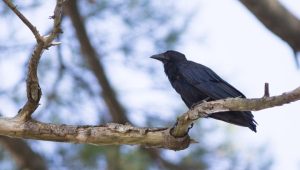
There is surprisingly little research on these birds despite their stable (and in places like Maine, growing) populations, as well as their close proximity to humans. They’ve adapted very well to environments dominated by our species, and some live quite an urban lifestyle, feeding from dumpsters and landfills. As the name suggests, they specialize in foraging on the coast. They like to stick close to the water line, grabbing crabs, marine invertebrates, insects, and turtle eggs. They also predate the nests of other birds, just like their larger counterparts. This is raising concerns about their impact on breeding birds as the species’ range expands.
Fish crows, like other corvids, are extremely social outside of the breeding season, often roosting in large groups and cooperating with American Crows to mob predators. The jury is out on their migration habits, but it’s believed that, although they vocalize less and are therefore less detectable, Fish Crows may stay in much of their breeding range throughout the winter, concentrating around areas with the most food. There’s a special kind of dopamine rush that comes with picking out a Fish Crow call; listen for their nasally “cah” in coastal areas in Maine.
Maine Weather and Climate Overview
By Sean Birkel, Assistant Extension Professor, Maine State Climatologist, Climate Change Institute, Cooperative Extension University of Maine
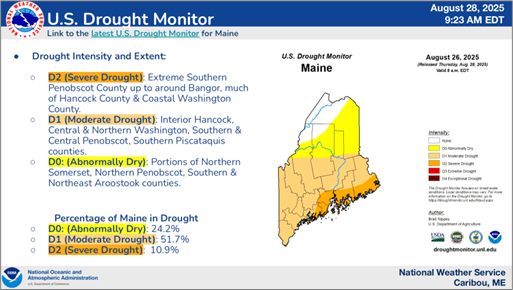
August began with a cool wave and a couple chilly mornings, but temperatures increased throughout the second week, culminating in a heat wave between the 10th and 13th with daytime highs ranging the low to high 90s statewide. With insignificant rainfall and increasing precipitation deficits since June, this intense heat increased evapotranspiration and further reduced soil moisture, contributing to the rapid development of moderate drought conditions across the southern third of Maine and expansion of abnormal dryness to the north. Temperatures for the remainder of August were cool to moderate overall, but sunny skies, low humidity, and lack of soaking rain led to further dryness expansion, including the development of severe drought across the Midcoast and Downeast.
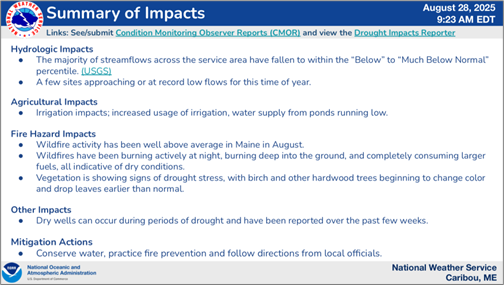
The latest NOAA forecast and outlook products show above normal temperature and near normal precipitation, suggesting limited opportunity for drought relief at least through early September. See the U.S. Drought monitor map and impact summaries below provided by the National Weather Service. Local weather forecasts are available from weather.gov.
Additional Resources:
Maine Dry Well Survey – Maine Drought Task Force
Wildfire Danger Report – Maine Forest Service
Drought.gov summary information for Maine
Northeast Drought Early Warning System Dashboard
Additional climate and weather data and information is available on the Maine Climate Office website.
Do you appreciate the work we are doing?
Consider making a contribution to the Maine Master Gardener Development Fund. Your dollars will support and expand Master Gardener Volunteer community outreach across Maine.
Your feedback is important to us!
We appreciate your feedback and ideas for future Maine Home Garden News topics. We look forward to sharing new information and inspiration in future issues.
Subscribe to Maine Home Garden News
Let us know if you would like to be notified when new issues are posted. To receive e-mail notifications, click on the Subscribe button below.
University of Maine Cooperative Extension’s Maine Home Garden News is designed to equip home gardeners with practical, timely information.
For more information or questions, contact Kate Garland at katherine.garland@maine.edu or 1.800.287.1485 (in Maine).
Visit our Archives to see past issues.
Maine Home Garden News was created in response to a continued increase in requests for information on gardening and includes timely and seasonal tips, as well as research-based articles on all aspects of gardening. Articles are written by UMaine Extension specialists, educators, and horticulture professionals, as well as Master Gardener Volunteers from around Maine. The following staff and volunteer team take great care editing content, designing the web and email platforms, maintaining email lists, and getting hard copies mailed to those who don’t have access to the internet: Abby Zelz*, Annika Schmidt*, Barbara Harrity*, Kate Garland, Mary Michaud, Michelle Snowden, Naomi Jacobs*, Phoebe Call*, and Wendy Robertson.
*Master Gardener Volunteers
Information in this publication is provided purely for educational purposes. No responsibility is assumed for any problems associated with the use of products or services mentioned. No endorsement of products or companies is intended, nor is criticism of unnamed products or companies implied.
© 2023
Call 800.287.0274 (in Maine), or 207.581.3188, for information on publications and program offerings from University of Maine Cooperative Extension, or visit extension.umaine.edu.