
Multicolored Asian Lady Beetles (and some others we have in Maine)
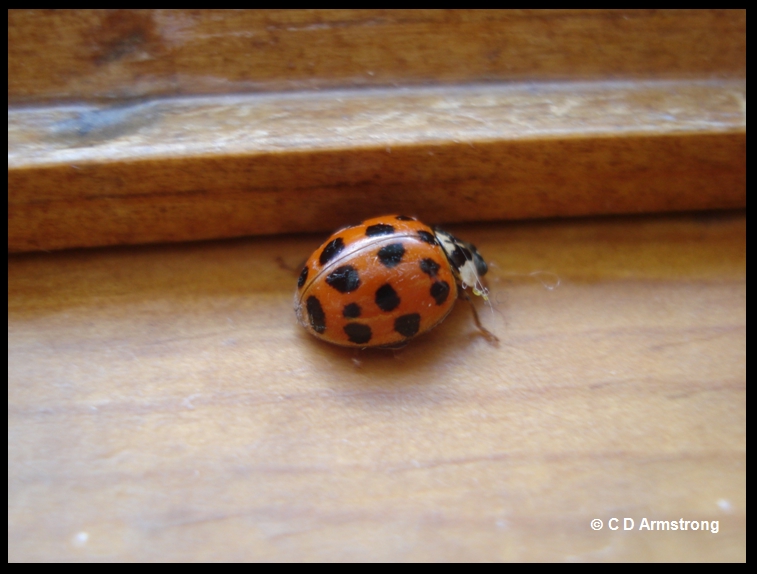 The Multicolored Asian Lady Beetle* (Harmonia axyridis), is a common ladybug that can become a household nuisance each fall in cold climates–in New England, for example–when adults begin seeking out warm locations to spend the winter. It is inherently a beneficial insect, and one which has frequently been deliberately released in the U.S. (beginning as long ago as 1916) for the purpose of controlling harmful plant pests such as aphids, mites, scale insects, etc. They can pose a legitimate nuisance, though, when confronted with large numbers of them indoors, and their secretions can stain furniture, curtains, blankets, rugs, etc. They do not breed, lay eggs, or feed inside the home, however, and they are not structurally-damaging.
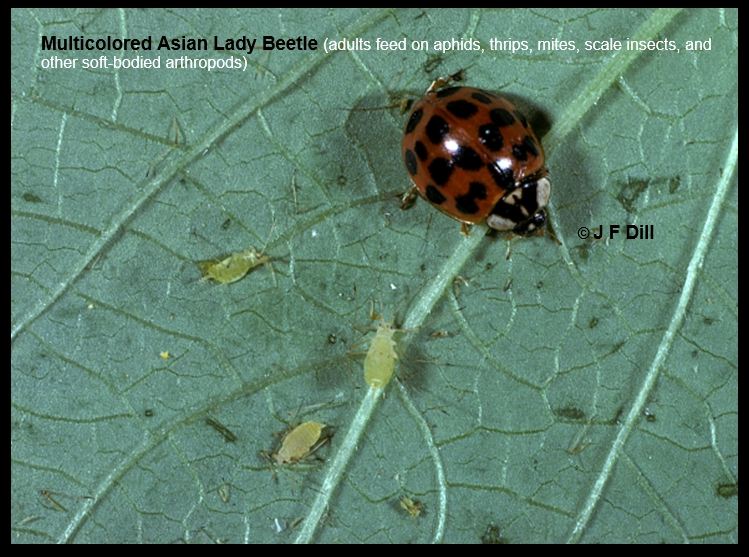
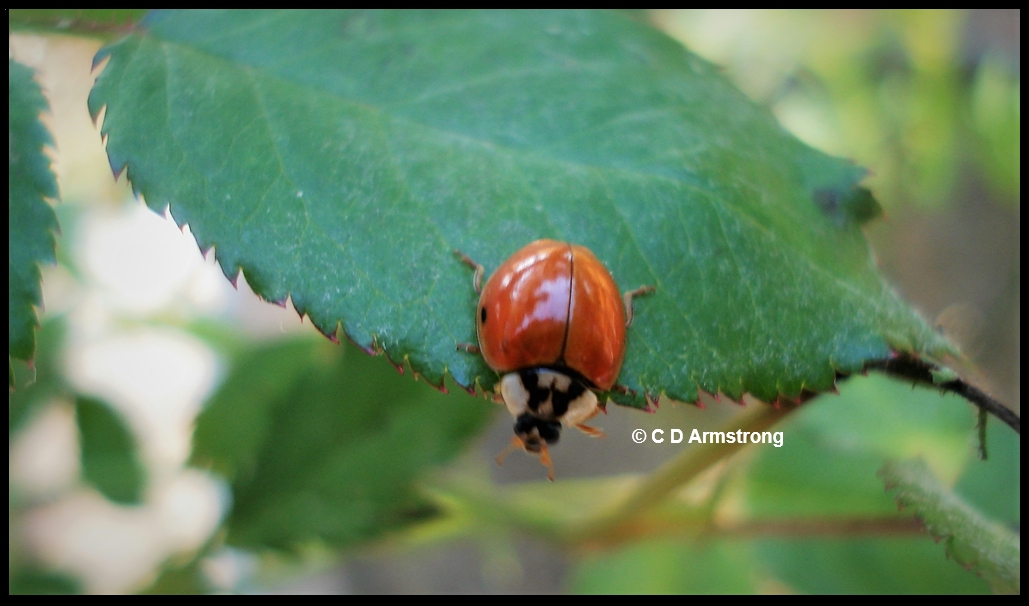
As the name suggests, the Multicolored Asian lady beetle exhibits a great many color forms. However, outside its native area of eastern Asia, one finds them primarily showing only one of three basic color types: red or orange with black spots, black with four red spots, and black with two red spots. The form with anywhere from zero to 19 spots–known as the succinea form—is the most common form that we have here in Maine. They have reddish-brown legs and are noticeably brown on the underside of the abdomen.
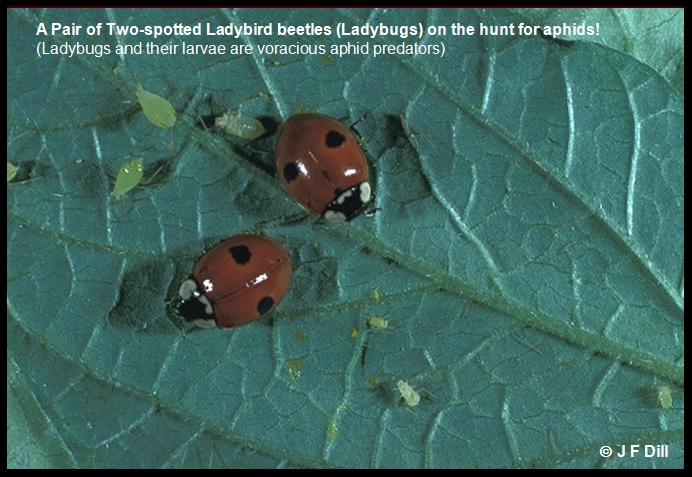
Three similar species are the Seven-spotted Lady Beetle (Coccinella septempunctata) whose wing covers are spotted in a 1-4-2 pattern, the Two-spotted Lady Beetle (Adalia bipunctata) with orange wing coverings and just a single black spot apiece, and the Convergent Lady Beetle (Hippodamia convergens), which has 13 spots at most and white lines that ‘converge’ behind the head. The Twice-stabbed Lady Beetle (Chilocorus stigma), is found in most of the US and Canada and is very aptly named by virtue of its pair of blood-red spots it possesses on its back (see photo below).
-
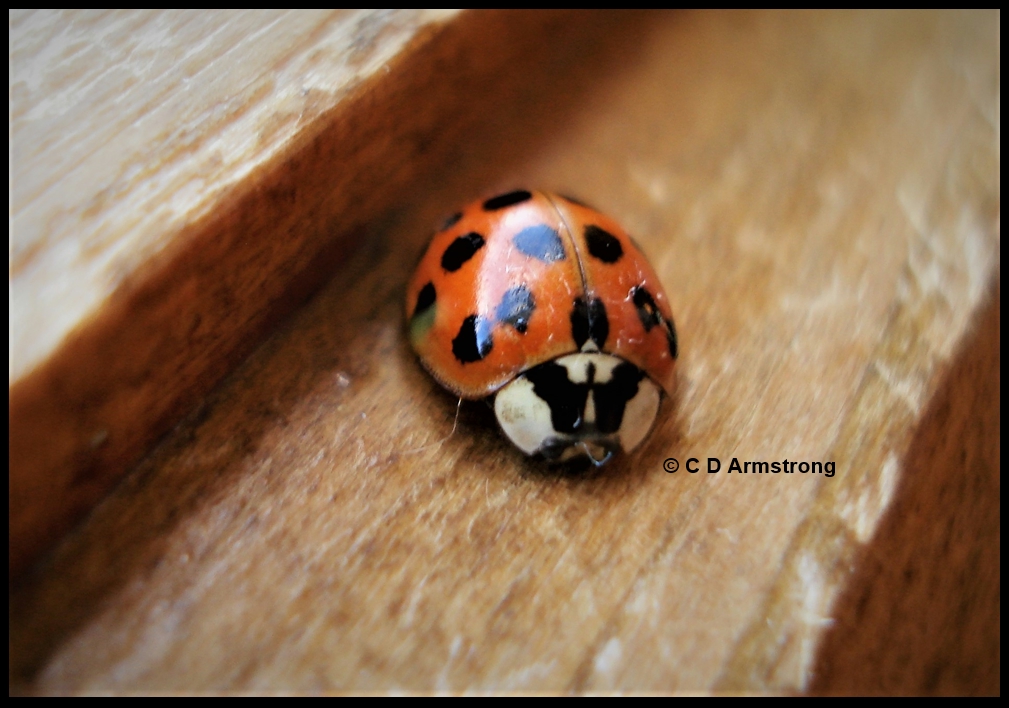
- Multicolored Asian Lady Beetle — ID Tip: The large, black ‘W’ pattern that can be seen just behind the head is a handy way of identifying the Multicolored Asian Lady Beetle from other types of ladybugs.
-
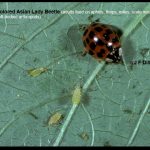
- Multicolored Asian Lady Beetle (adults feed on aphids, thrips, mites, scale insects and other soft-bodied arthropods)
-
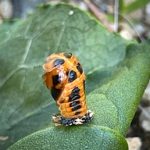
- Multicolored Asian Lady Beetle (pupal stage) (Harmonia axyridis) (Alfred, ME; 6/30/2025) (Photo courtesy of Judee Meyer)

-
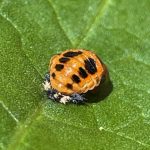
- Multicolored Asian Lady Beetle (pupal stage) (Harmonia axyridis) (Alfred, ME; 6/30/2025) (Photo courtesy of Judee Meyer)

-
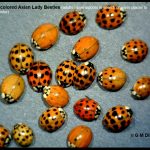
- Group of Multicolored Asian Lady Beetles (adults move indoors in search of warm places to spend the winter)

-
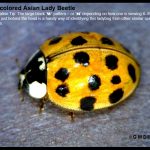
- Multicolored Asian Lady Beetle

-
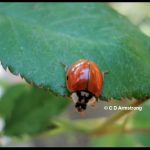
- Multicolored Asian Lady Beetle on a rose leaf
-
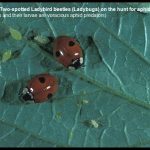
- Two-spotted Lady Beetles (aphid predators) (Adalia bipunctata)
-
- Convergent Lady Beetle (Hippodamia convergens) (voracious aphid predator; used commercially in biological control programs)

-
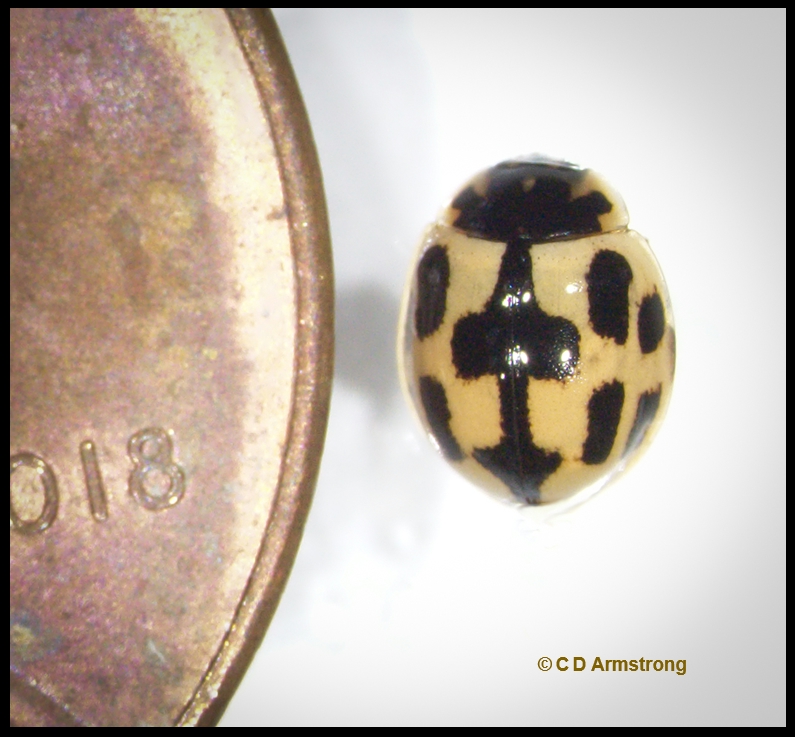
- Fourteen-spotted Lady Beetle (Propylea quatuordecimpunctata) (Westbrook, ME; 6/30/2025)
-
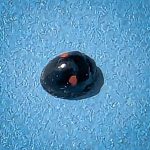
- Twice-stabbed Lady Beetle (Chilocorus stigma) (native) (Bangor, ME; 6/17/2025) (Photo courtesy of Steven Hunt)

Additional Information and Photos:
- Lady Beetles (University of Kentucky)
- Multicolored Asian Lady Beetle*
- Multicolored Asian Lady Beetle (USDA)
- Multicolored Asian Lady Beetle (Ladybug) (Penn State)
- Multicolored Asian Lady Beetle [pdf] (Cornell)
- Life Cycle (Collage of Photos) (Wikipedia)
- Adult Pattern Variations (Photo) (Wikipedia)
- Some other ladybug species found in Maine and beyond:
- Convergent Lady Beetle (native to our continent) (BugGuide.net)
- Fourteen-spotted Lady Beetle (adventive and widespread in eastern North America) (BugGuide.net)
- Seven-spotted Lady Beetle (native to Europe & East Asia but also found throughout North America; first introduced to North America many times between 1956 and 1971 with the intention of biological control of aphids. While those initial attempts were unsuccessful, a population was discovered in New Jersey in 1973, thought to be an accidental introduction, ironically) (BugGuide.net)
- Twice-stabbed Lady Beetle (native to our continent but not found west of the Sierra Nevada) (BugGuide.net)
- Two-spotted Lady Beetle (native to our continent) (BugGuide.net)
*The Multicolored Asian lady beetle goes by a long list of other names as well: Multivariate Lady Beetle, Southern Lady Beetle, Japanese Lady Beetle, Asian Lady Beetle, Halloween Lady Beetle [so named because the adults begin moving indoors typically in October], Harlequin Ladybird Beetle, Pumpkin Ladybird Beetle, and Pumpkin Ladybug.