
Syrphid Flies (Flower/Hover Flies)
Syrphid flies (Family Syrphidae) are also known as flower flies or hover flies because they visit flowers to feed on nectar and pollen, often hovering in place while doing so. The adult flies are not predaceous, but many species of syrphid fly larvae are, preying on plant-sucking insects such as aphids, scale insects and thrips. The larvae of some other species feed on decaying plant and animal matter. Syrphid flies are therefore beneficial. Predaceous species of syrphid fly larvae help to suppress aphid infestations, as each larva is capable of consuming hundreds of aphids during its larval development.
Many syrphid flies exhibit Batesian mimicry by impersonating bees and wasps, such as those belonging to the genera Syrphus and Helophilus, to name but a few.
-
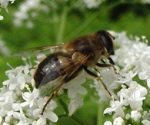
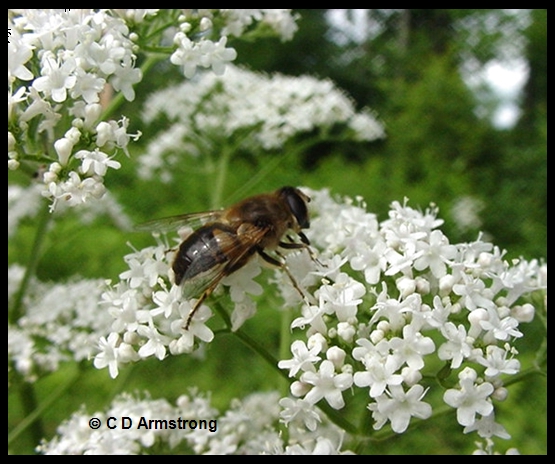
- Common Drone Fly (Eristalis tenax) (a species of syrphid fly that mimics a honey bee drone)
-
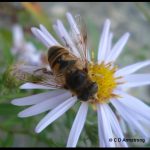
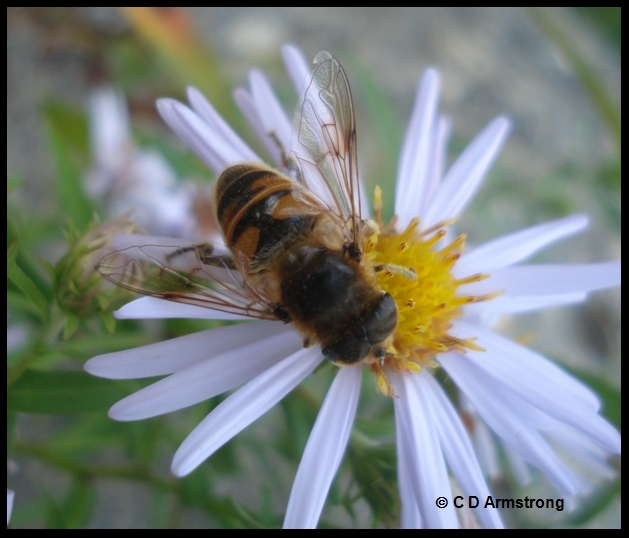
- Common Drone Fly (Eristalis tenax) (Drone fly is sometimes written as one word: Dronefly)
-
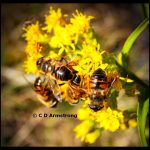
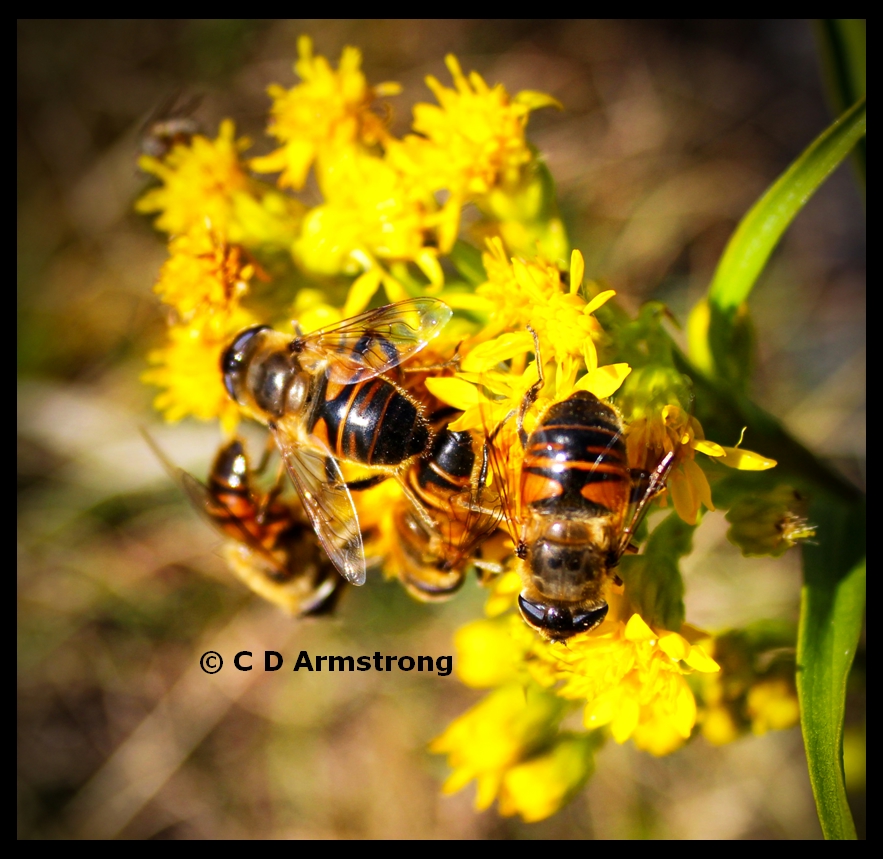
- A cluster of Common Drone Flies feeding on pollen of narrow-leaved goldenrod flowers at Schoodic Point in Acadia National Park; 10/10/2017
-
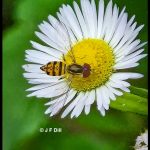
- Eastern Calligrapher (Toxomerus geminatus) (their larvae feed on a variety of aphids and mites) (Old Town, ME; 7/12/2025)

-
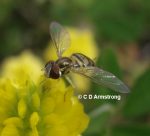
- Margined Calligrapher (Toxomerus marginatus) feeding on pollen and/or nectar from a hop clover flower; 7/7/2008 (their larvae feed on aphids, thrips, and small caterpillars)
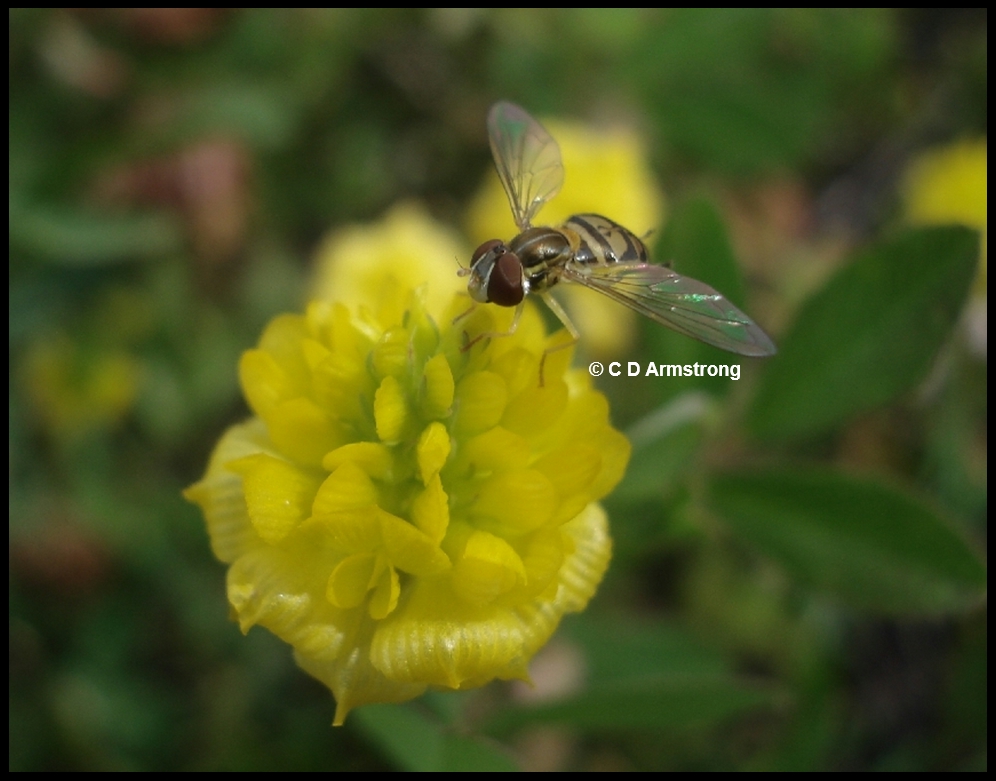
-
- Margined Calligrapher (Toxomerus marginatus)
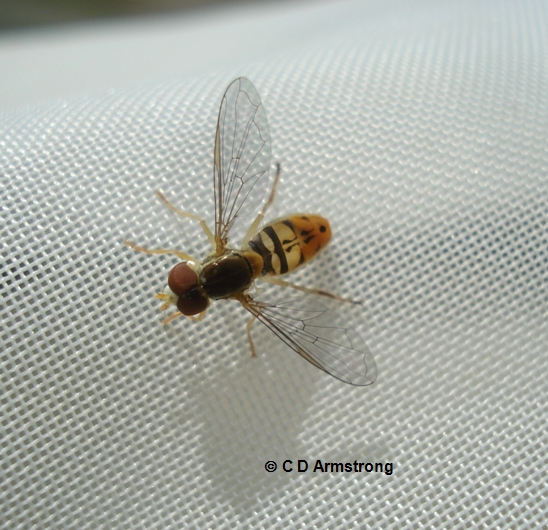
-
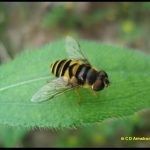
- Transverse-banded Flower Fly (Eristalis transversa) (another example of a species that mimics bee/yellowjacket patterning)

-
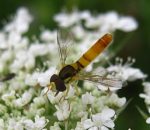
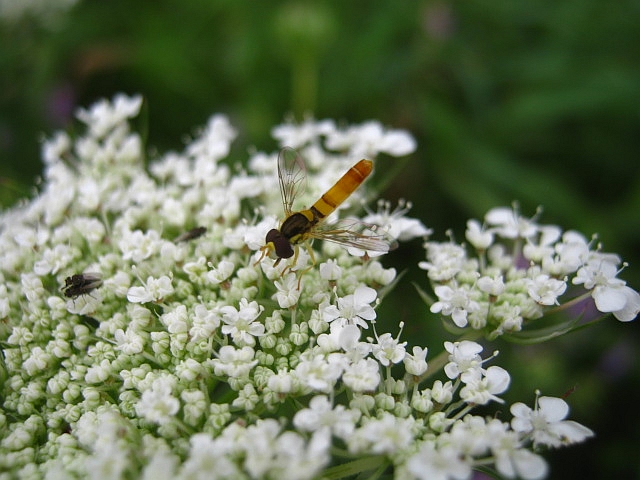
- Tufted Globetail (Sphaerophoria contigua) (Photo courtesy of Dana Wilde from Unity, ME) (mid July, 2013)
-
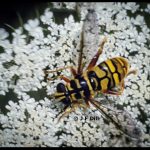
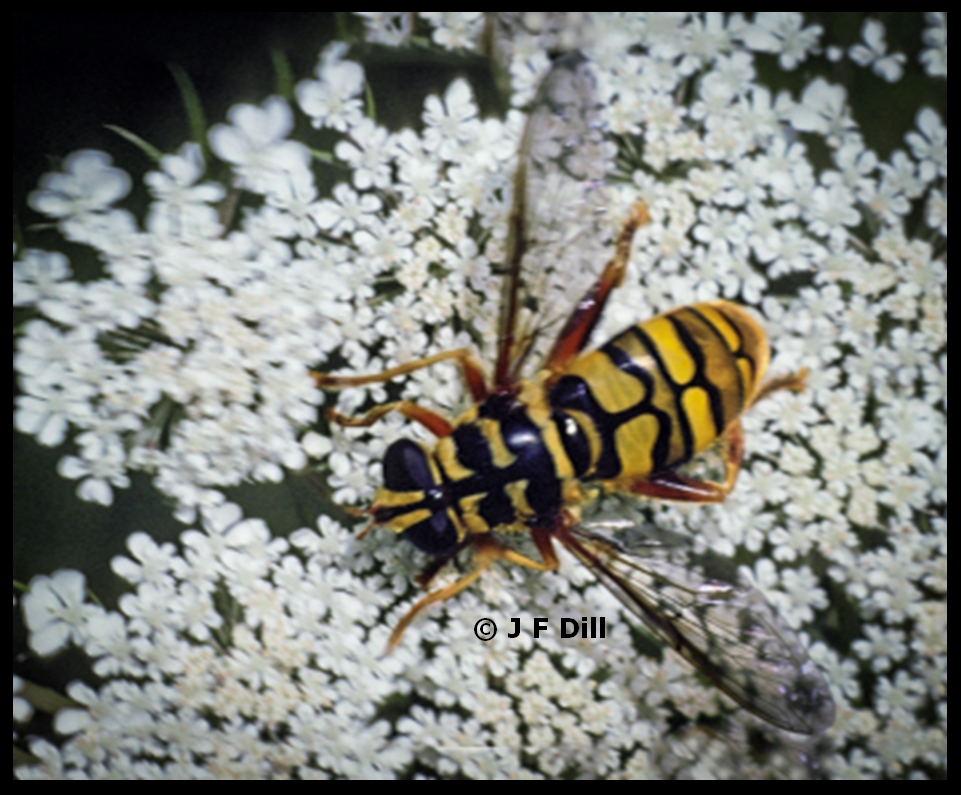
- Virginia Giant Hover Fly / Yellowjacket Hover Fly (Milesia virginiensis) (a good yellowjacket mimic; feeding on Queen Anne’s Lace pollen)
Additional Information:
- Syrphid Flies/Flower Flies/Hover Flies (Washington State University)
- Drone Flies (BugGuide.net)