Food Systems and Food Security
Selected Readings and Content
UMaine Extension Bulletins & Factsheets
- Five Steps to Food Safe Fruit and Vegetable Gardening (Word)
- Food for ME: Citizen Action for Community Food Recovery
- A Donor’s Guide to Vegetable Harvest, Bulletin #4303
- A Food Pantry Wish List, Bulletin #4304
- Food for Your Community: Gleaning and Sharing, Bulletin #4301
- Food Safety for Food-Pantry Donations, Bulletin #4302
- Steps to Organizing Your Community Garden, Bulletin #4300
- Storing Fresh Garden Produce (Word)
UMaine Extension Videos
- Video: How Farmers’ Markets Can Donate Food to Maine Harvest for Hunger (YouTube)
- Video: How to Donate Food to Maine Harvest for Hunger (YouTube)
- Video: Maine Harvest for Hunger (YouTube)
- Video: Maine Harvest for Hunger: IDEXX Adopt a Garden Program (YouTube)
- Video: Maine Harvest for Hunger: Yarmouth Community Gardens (YouTube)
- Video: Maine Harvest for Hunger: York County (YouTube)
- Video: What is Maine Harvest for Hunger? (YouTube)
Websites
Additional Resources
- Maine Policy Review, Margaret Chase Smith Policy Center
- Maine Food Atlas
- Maine Food Councils
- Maine Network of Community Food Councils
Food Systems Tools, courtesy of the Nourish Initiative, www.nourishlife.org
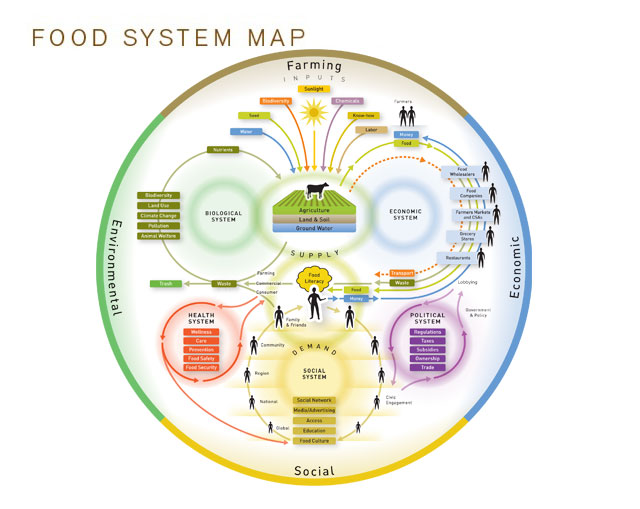
Nourish Food System Map Description:
The map below shows the connections of the food system and the systems that affect it. Biological, economic, health, political, and social systems all affect the supply and demand of food.
- Download the Nourish Food System Map, 18” x 24” poster (PDF)
- Download the Nourish Food System Map, 11″ x 14″ poster (PDF)
- Download the Nourish food system map 8.5″ x 11″ poster (PDF)
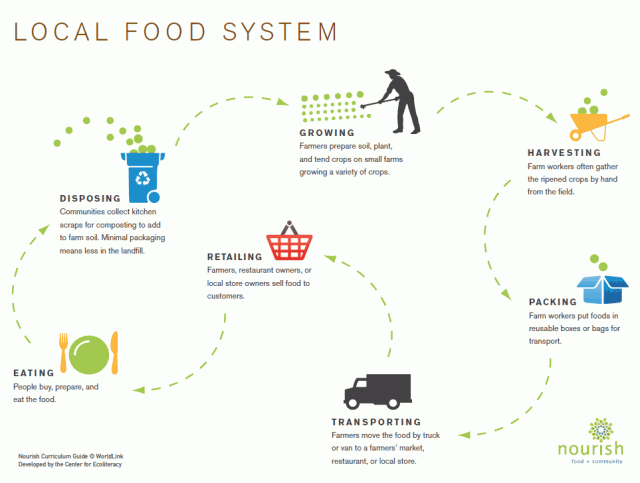
The Local Food System diagram shown below illustrates a continuous loop that food travels. Farmers grow crops, farm workers harvest the crops, farm workers pack the foods in reusable boxes or bags for transport, farmers move the food by truck r van to a farmers market, restaurant, or local store, farmers, restaurant owners, or local store owners sell food, people buy, prepare and eat the food, communities collect kitchen scraps for composting to add to farm soil, and the cycle begins again when it goes to farmers to prepare soil, plant and tend crops.