
Spotted Wing Drosophila Alert — August 1, 2025
David Handley, Vegetable and Small Fruit Specialist; James Dill, Pest Management Specialist, Phil Fanning, Assistant Professor of Agricultural Entomology, Christina Howard, Maine New Farmers Project Manager
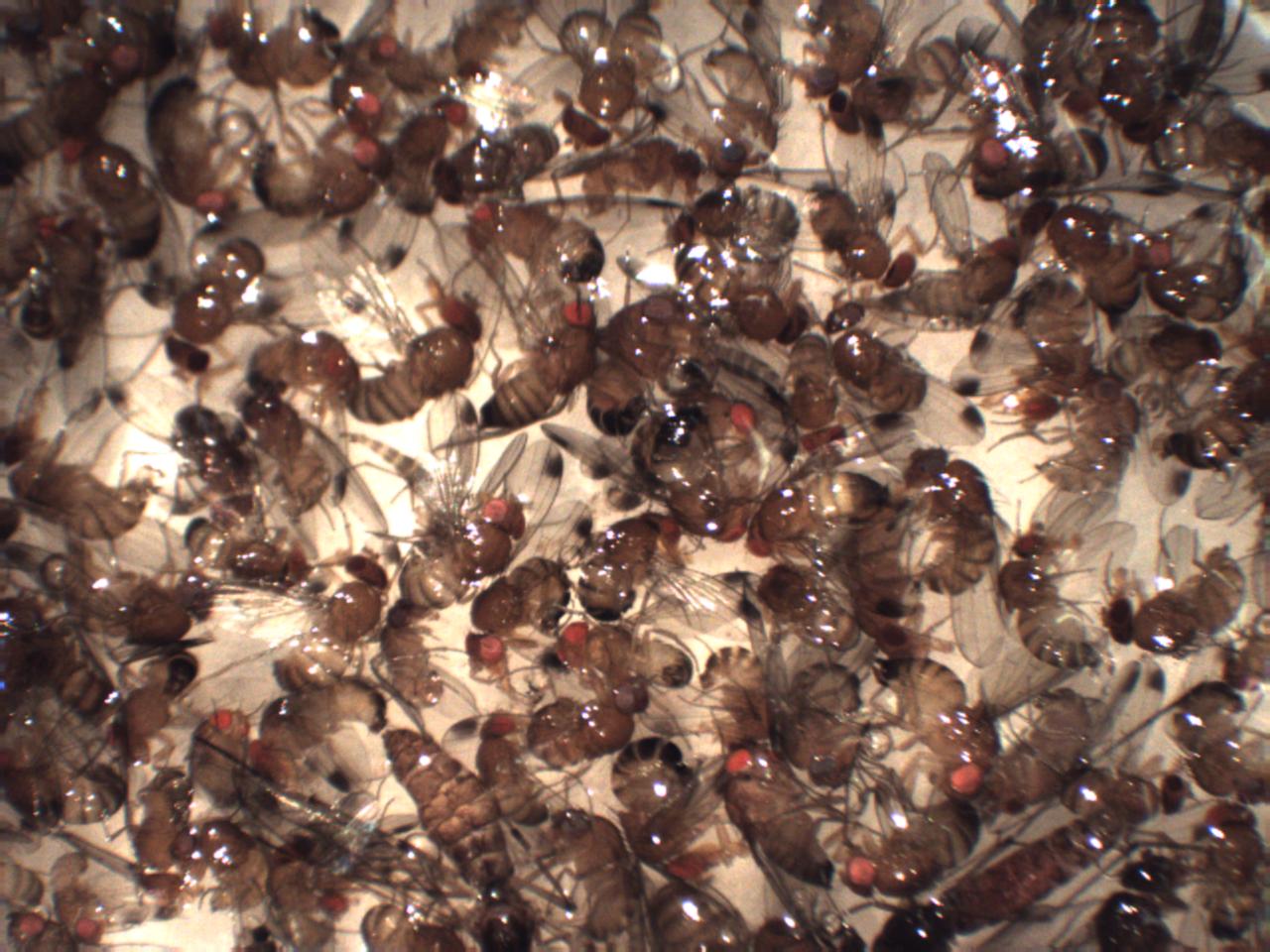
Spotted wing drosophila fruit fly numbers have increased at most our trapping sites in Southern Maine this week (see table below). Populations are over the recommended spray threshold (4/ trap/week) at nearly all sites. The continued hot, dry conditions are likely keeping populations from increasing at a faster pace, as we would normally expect when plenty of ripe fruit is available. At present, a 7-day spray schedule on ripening fruit should be adequate to prevent infestation by larvae. Higher populations of flies may require a shorter spray interval as the season progresses.
If you are growing raspberries, blackberries and/or blueberries, you should be managing spotted wing drosophila on any fruit that is presently ripening and/or being harvested to prevent infestation.
For more information on identifying spotted wing drosophila (SWD) and updates on populations around the state, visit our SWD blog.
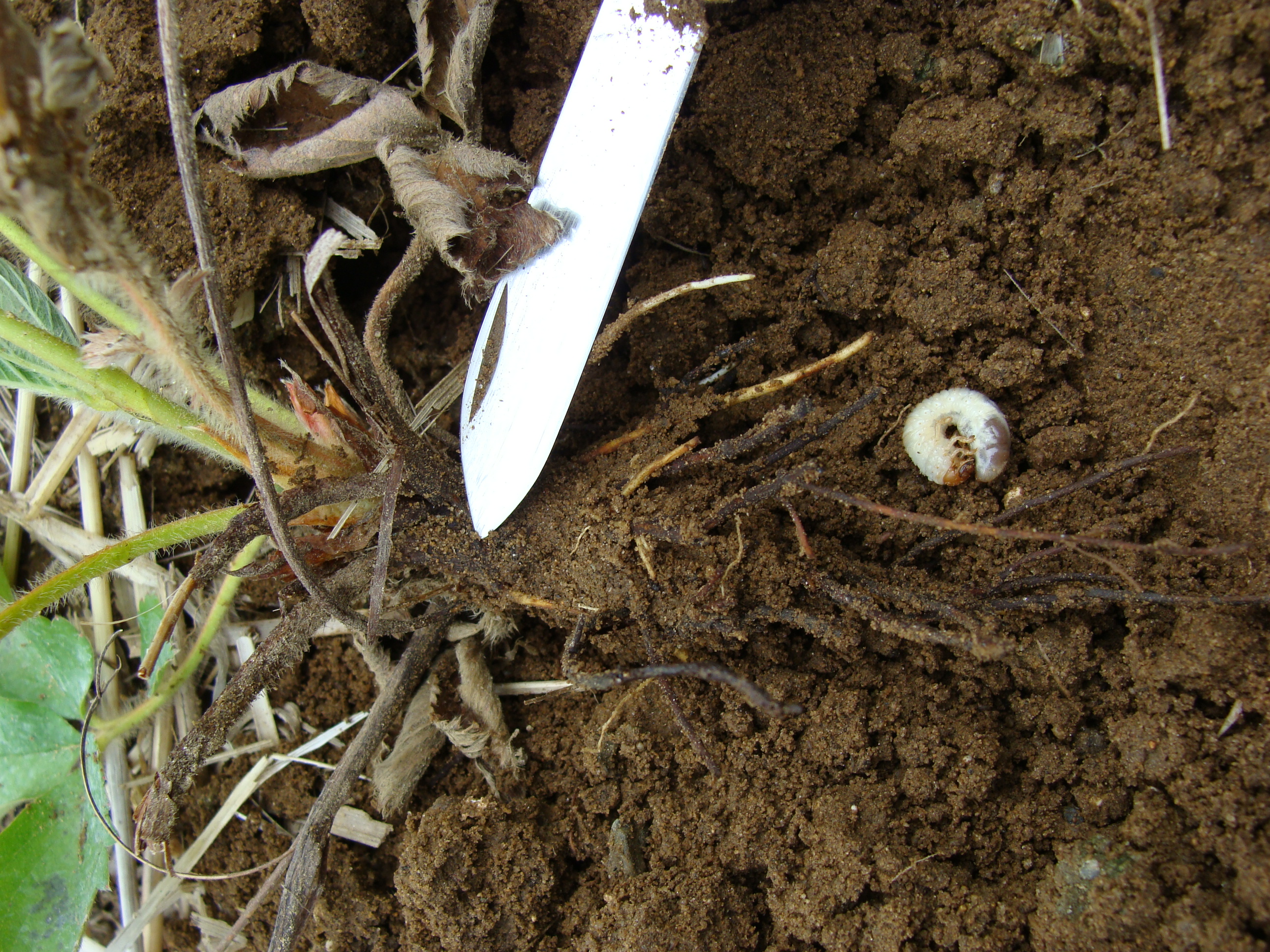
White grubs are the larvae of several species of scarab beetles, including June beetles, rose chafers, Japanese beetles, Asiatic garden beetles and European chafers. Several of these species have been very prevalent this year, so we may expect grub problems to be more common next spring and summer. The beetles lay their eggs in June and July and the grubs feed on the roots of strawberries, raspberries and blueberries from July through mid-September. Affected plants will be stunted and wilted and may die during dry periods. Pulling up plants reveals that roots have been chewed off about an inch below the soil line. Sifting through the soil below the plants may reveal the whitish crescent-shaped grubs which can range in size from 3/8 inch to almost 1 ½ inches long, with six legs near the head and a swollen rear-end. The two most effective periods to treat plantings for grubs are in the spring prior to when they pupate (May) and in the late summer when the next generation is actively feeding (late August). Materials should be applied with plenty of water to moist soil to be sure they reach the root zone. Materials currently registered for control of grubs include Platinum® and Admire Pro®. Parasitic nematodes can also provide control of grubs and should be applied with similar timing. Nematodes are very sensitive to ultraviolet light and dehydration and must be applied with lots of water. See the New England Small Fruit Management Guide for sources of parasitic nematodes.
Other IPM Web Pages
Michigan State University Spotted Wing Drosophila
Penn State University Spotted Wing Drosophila Overview
University of New Hampshire SWD Weekly IPM Reports
David T. Handley
Vegetable and Small Fruit Specialist
Highmoor Farm
P.O. Box 179
Monmouth, ME 04259
207.933.2100
UMaine Extension Diagnostic Research Lab
Pest Management Unit
17 Godfrey Drive
Orono, ME 04473
1.800.287.0279
| Town | SWD weekly trap catch 7/11/25 | SWD weekly trap catch 7/18/25 | SWD weekly trap catch 7/25/25 | SWD weekly trap catch 8/1/25 |
|---|---|---|---|---|
| Wells | 4 | 9 | 3 | 65 |
| Springvale | 46 | 6 | 17 | |
| New Gloucester | 14 | 42 | 37 | 94 |
| Cape Elizabeth | 56 | 101 | 16 | 67 |
| Bowdoinham | 8 | 43 | 45 | 21 |
| Mechanic Falls | 11 | 1 | 0 | 0 |
| Monmouth | 1 | 3 | 2 | 37 |
Where brand names or company names are used it is for the reader’s information. No endorsement is implied nor is any discrimination intended against other products with similar ingredients. Always consult product labels for rates, application instructions and safety precautions. Users of these products assume all associated risks.
The University of Maine System is an equal opportunity institution committed to nondiscrimination.