
Sweet Corn IPM Newsletter No. 12 — September 19, 2025
Last Issue for 2025
PEST PRESSURE LOWER IN LATE SEASON CORN
Corn Earworm and Fall Armyworm Numbers Fall as Dry Conditions Continue
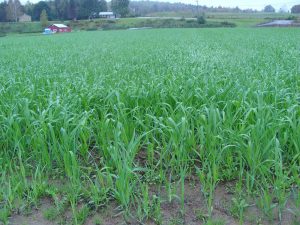
This will be the final issue of the Sweet Corn IPM Newsletter for the 2025 season. I would like to thank all of the growers who participated in the program this year, and our IPM scouts, including Marianne Renaud, Christina Howard and Sean McAuley. Special thanks to Stephanie Wright for editing and mailing the newsletter and updating our webpage and blog. We will be sending you an evaluation form for our newsletter and the Corn IPM Program this fall. Please fill it out and let us know how you use the information we provide and how it impacts your pest management decisions. This information will help guide the future direction of this program.
Situation
As the sweet corn season winds down, there has been no relief from severe drought conditions, and with cooler nights and shorter days, development of late corn has been slow, and supply remains spotty. Pest pressure has been moderate to low this week, as the weather patterns have not favored any increase in insect activity. The forecasts are not calling for any significant weather changes in the near future.
Corn earworm: Moth numbers were low at all locations this week, with the exception of Cape Elizabeth and Wells. No sprays were recommended in Biddeford, Dayton, Monmouth and Oxford; A six-day spray interval on any silking corn remaining was recommended for Bowdoinham, Wayne and one Wells site; a four-day spray interval was recommended for Cape Elizabeth and one Wells site.
Fall armyworm: Moth counts in pheromone traps only exceeded the control threshold (3) for silking corn in Cape Elizabeth, Wayne, and one Wells site. All sites are under a spray schedule for earworm so no additional sprays were recommended.
Western Bean Cutworm: No moths were caught this week.

Annual end of corn season checklist:
- Plow down corn stalks and stubble to destroy overwintering larvae of European corn borer.
- Plant a cover crop, such as winter rye, to prevent soil erosion and to add organic matter to the soil.
- Take a soil test to determine if lime or other nutrients should be applied.
- Rotate your crops next season to prevent pests from building up in any one location.
- Evaluate your weed management results; What worked well and what didn’t? Which weeds were the biggest problems? How can you improve control?
- Clean and winterize spray equipment, put away and properly store any unused pesticides.
Vegetable and Small Fruit Growers Twilight Meeting: Bell Farms Inc. in Auburn, Maine is hosting the meeting on Friday, October 3 at 5:00 p.m. For more information, contact the Maine Vegetable and Small Fruit Growers Association.
Sincerely,
David T. Handley
UMaine Extension Vegetable & Small Fruit Specialist
Highmoor Farm
P.O. Box 179
52 U.S. Route 202
Monmouth, ME 04259
207.933.2100
UMaine Extension Diagnostic Research Lab
Pest Management Unit
17 Godfrey Drive
Orono, ME 04473
1.800.287.0279
| Location | CEW Moths | FAW Moths | Recommendations / Comments |
|---|---|---|---|
| Biddeford | 1 | 2 | No spray recommended |
| Bowdoinham | 2 | 1 | 6-day spray interval recommended for silking corn |
| Cape Elizabeth | 25 | 62 | 4-day spray interval recommended for silking corn |
| Dayton | 1 | 0 | No spray recommended |
| Monmouth | 1 | 2 | No spray recommended |
| Oxford | 0 | 0 | No spray recommended |
| Wayne | 3 | 8 | 6-day spray interval recommended for silking corn |
| Wells I | 2 | 18 | 4-day spray interval recommended for silking corn |
| Wells II | 3 | 0 | 6-day spray interval recommended for silking corn |
* Moths damaged by rodent, exact count not possible
CEW: Corn earworm (Only fresh silking corn should be sprayed for this insect.)
ECB: European corn borer
FAW: Fall armyworm
| Moths caught per week | Moths caught per night | Spray Interval |
|---|---|---|
| 0.0 to 1.4 | 0.0 to 0.2 | No spray |
| 1.5 to 3.5 | 0.3 to 0.5 | Spray every 6 days |
| 3.6 to 7.0 | 0.6 to 1.0 | Spray every 5 days |
| 7.1 to 91 | 1.1 to 13.0 | Spray every 4 days |
| More than 91 | More than 13 | Spray every 3 days |
Thresholds apply only to corn with exposed fresh silk. Lengthen spray intervals by one day if maximum daily temperature is less than 80°F.
European Corn Borer Thresholds
Whorl stage: 30% or more of plants scouted show injury.
Pre-tassel-silk: 15% or more of plants scouted show injury.
Silk: 5 or more moths caught in pheromone traps in one week.
IPM Web Pages:
Explore Integrated Pest Management in Maine — UMaine
Integrated Pest Management — UMass Amherst
Where brand names or company names are used, it is for the reader’s information. No endorsement is implied nor is any discrimination intended against other products with similar ingredients. Always consult product labels for rates, application instructions and safety precautions. Users of these products assume all associated risks.
The University of Maine System is an equal opportunity institution committed to nondiscrimination.