
Strawberry IPM Newsletter No. 3 — May 28, 2026
Tarnished Plant Bug Active in Strawberry Fields
Spider Mite Populations Higher in Most Fields This Week
Situation
Early strawberry varieties are now past full bloom in much of southern and midcoast regions of the state. Midseason varieties are nearly in full bloom. Generally, it takes 20-25 days for fields in full bloom to reach harvest stage. Some fields did require frost protection last week, and there is still a slight risk of frost ahead for cold spots in the coming days. Plants have shown a lot of growth in the past week, responding well to a few warm days and early fertilizer applications.
New Plantings: New strawberry beds are now being planted with dormant crowns. Generally, for a new matted row planting, a preplant fertilizer such as 10-20-20 should be incorporated at a rate of 300-400 lbs per acre, unless your most recent soil test recommends a different rate or balance. Be sure the transplants receive adequate water after transplanting, as many areas of the state are still quite dry for this time of year. Herbicides that can be used at transplanting include Spartan®, Devrinol®, Sinbar® and Satellite Hydrocap®. Read the product labels thoroughly to determine which chemistry best matches the weed problems in your field and follow all rates and precautions to avoid injury to the young strawberry plants. See the New England Small Fruit Management Guide for more information:
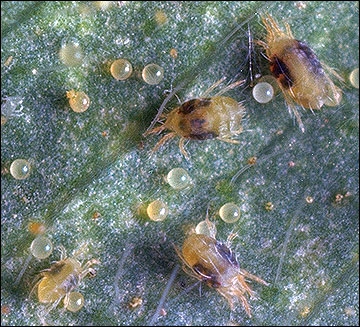
Two-spotted spider mites: Mite populations have increased significantly in most fields this week, with all but one field we scouted over the threshold of 25% of leaves infested. If you haven’t yet checked for mites in your field, now is the time to scout. Collect 60 fully expanded leaves from around the field and look carefully for mites on the undersides. Use a hand lens with 10-20X magnification to help identify the mites. If 20 or more leaves have any mites, a spray to manage them is recommended. Make sure your sprayer is delivering enough gallonage and pressure to reach the undersides of the leaves. Chemical control options for two-spotted spider mites include Acramite®, Portal®, Nealta® Savey®, Zeal®, Vendex®, Oberon®, Brigade®, and Danitol®. Predatory mites such as Neoseiulus fallacis are commercially available and can be released into infested fields to help manage two-spotted spider mite populations. Results with this technique have been inconsistent in the northeast, and it may not provide adequate control if used alone.
Strawberry bud weevil: Clipper damage has not been over threshold in any of the fields scouted this week. Most early varieties in the southern part of the state are now beyond the development stage where clipper can cause significant damage. Once the majority of buds have opened (i.e. full bloom) clipper will not lay eggs and clip buds. Keep scouting later blooming varieties for damage that are still in the bud to early bloom stage. The control threshold for clipper injury is more than 1.2 clipped buds per two feet of row. Insecticide options for clippers include Brigade®, Bifenture®, Danitol®, Sevin XLR Plus® and PyGanic®.
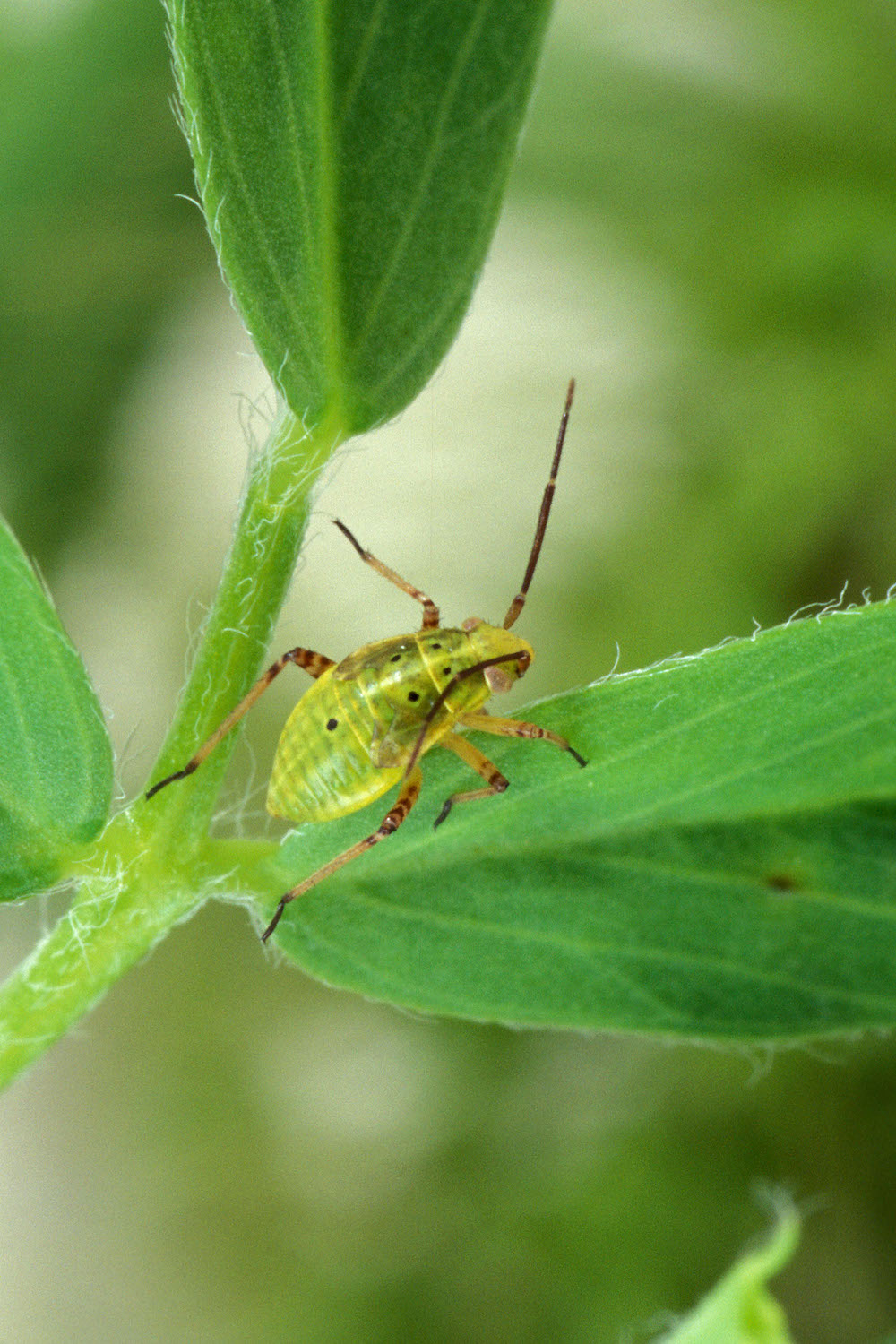
Tarnished plant bugs: The first plant bug nymphs of the season were found this week in a field in full bloom. The nymphs are now very small, first and second instars, bright green and very active. No fields are over threshold yet, but it is important to scout regularly for them once the nymphs are found, as populations can build up very fast. The threshold for plant bug nymphs is 4 or more flower clusters infested per 30 sampled. Tap the flower clusters over a plate or tray to knock nymphs off to make them easy to identify. Insecticide options for tarnished plant bugs include malathion, Assail®, Brigade®, Bifenture®, Dibrom®, Danitol®, Closer® and PyGanic®.
Cutworms in Strawberry Fields: We have found a few fields with cutworm injury this week. Although the injury has been slight, checking your fields for cutworm damage is recommended. Cutworm larvae spend the daylight hours in the soil or under the mulch and emerge at night to feed on strawberry leaves and flowers, commonly during the bloom period. Cutworms are small caterpillars with smooth skin and a range of colors, including green, gray and brown. They chew large, ragged holes in the leaves and sometimes feed on the yellow center of the flowers, called the receptacle, chewing a large groove in it. The remaining portion of the receptacle may grow around the damaged tissue resulting in berries with large creases or folds. Keeping weeds out of your fields can help reduce cutworm problems. Pre-bloom insecticide sprays for clipper may also provide control of cutworms.
Thrips are tiny, slender, cigar-shaped insects that feed on strawberry flowers and fruit. These insects are often overlooked because they are very small and hide within the flowers. Damage from thrips is most often seen as dullness, bronzing and cracking of the fruit surface as a result of feeding. Light infestations cause negligible damage and often go unnoticed but yield reductions of over 80% have been reported from heavy thrips damage. Adult thrips are yellowish brown, 1/16 inch long, and have narrow wings that are fringed with hairs. Although the correlation between numbers of thrips and strawberry damage is not well understood, control is probably only warranted if populations exceed 8-10 thrips per blossom. Thrips do not generally overwinter well in Maine and are rarely a significant problem. However, there have been a few cases of severe damage in the past. Insecticide applications should be timed to avoid killing pollinators. Dibrom®, Assail® and Radiant® are currently registered for controlling thrips.
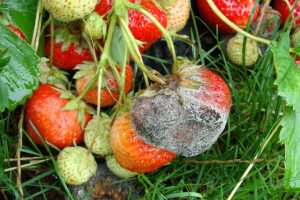
Gray Mold: Most strawberry fields have received at least one fungicide targeting gray mold. Typically, two to three sprays of fungicide during bloom are recommended to provide good protection. Fungicide choices for control of gray mold in strawberries include: Topsin M® + captan, captan + Elevate®, Captevate®, Switch®, Scala® and Pristine®. Remember to alternate fungicides with different modes of action for resistance management purposes.
Leather rot (Phytopthora cactorum) If any field has a history of leather rot, a fungicide targeting this disease should be applied at bloom. Most fungicides that offer control of gray mold will not control leather rot, so either a tank mix or separate application will be required. Products recommended for control of leather rot include: Aliette®, Prophyt® and Phostrol®.
If you have questions about the Newsletter, please give us a call at 207.933.2100 or send an e-mail to: david.handley@maine.edu.
Spring Growers’ Twilight Meeting
The Maine Vegetable & Small Fruit Growers Association will be having a Spring Twilight Meeting on Thursday, June 4, at 5:30 pm at Clark’s Farm, 65 Boynton Schoolhouse Rd., Jefferson. The Farm boasts PYO strawberries and a wide variety of vegetables sold through their Farm Market.
New England Small Fruit Management Guide
A new edition of this guide is in the works and should be available soon. In the meantime, you can access the latest information through the online version. Visit the New England Small Fruit Management Guide for more detailed pest information.
The best way to manage strawberry pests is to scout your own fields regularly and often. You should begin to scout as soon as flower buds emerge from the crowns and continue to monitor the plantings one or two times per week up until harvest.
Sincerely,
David T. Handley
Vegetable & Small Fruit Specialist
Highmoor Farm
P.O. Box 179
Monmouth, ME 04259
207.933.2100
Pest Management
17 Godfrey Drive
Orono, ME 04473
1.800.287.0279
Where brand names or company names are used, it is for the reader’s information. No endorsement is implied nor is any discrimination intended against other products with similar ingredients. Always consult product labels for rates, application instructions and safety precautions. Users of these products assume all associated risks.
University of Maine Cooperative Extension is an equal opportunity institution and provider committed to nondiscrimination. For more information, visit extension.umaine.edu/nondiscrimination.