
Strawberry IPM Newsletter No. 4 — June 5, 2026
Tarnished Plant Bugs in Strawberry Fields
Bacterial Angular Leaf Spot Found in Fields Irrigated for Frost Control
Situation
A few ripe berries were picked off of an early field in southern Maine this week that was under rowcovers this spring. Fields in the midcoast region should be ready for harvest in about two weeks. Overall, most fields scouted this week look good. Some fields are quite dry and growers are irrigating to push berry size and reduce plant stress. Insect and disease pressure have mostly been moderate, but growers should continue scouting, especially for tarnished plant bug and bacterial angular leaf spot (see below).
Two-spotted spider mites: Mite populations were mostly lower in fields this week, with only one site over the threshold of 25% of leaves infested. Continue checking for mites in your field, as populations can expand very quickly, especially under warm, dry conditions.
Strawberry bud weevil: Clipper damage has not been over threshold in any of the fields scouted this week. At this point in the season, only very late blooming varieties are likely to be impacted by clippers. The control threshold for clipper injury is more than 1.2 clipped buds per two feet of row.
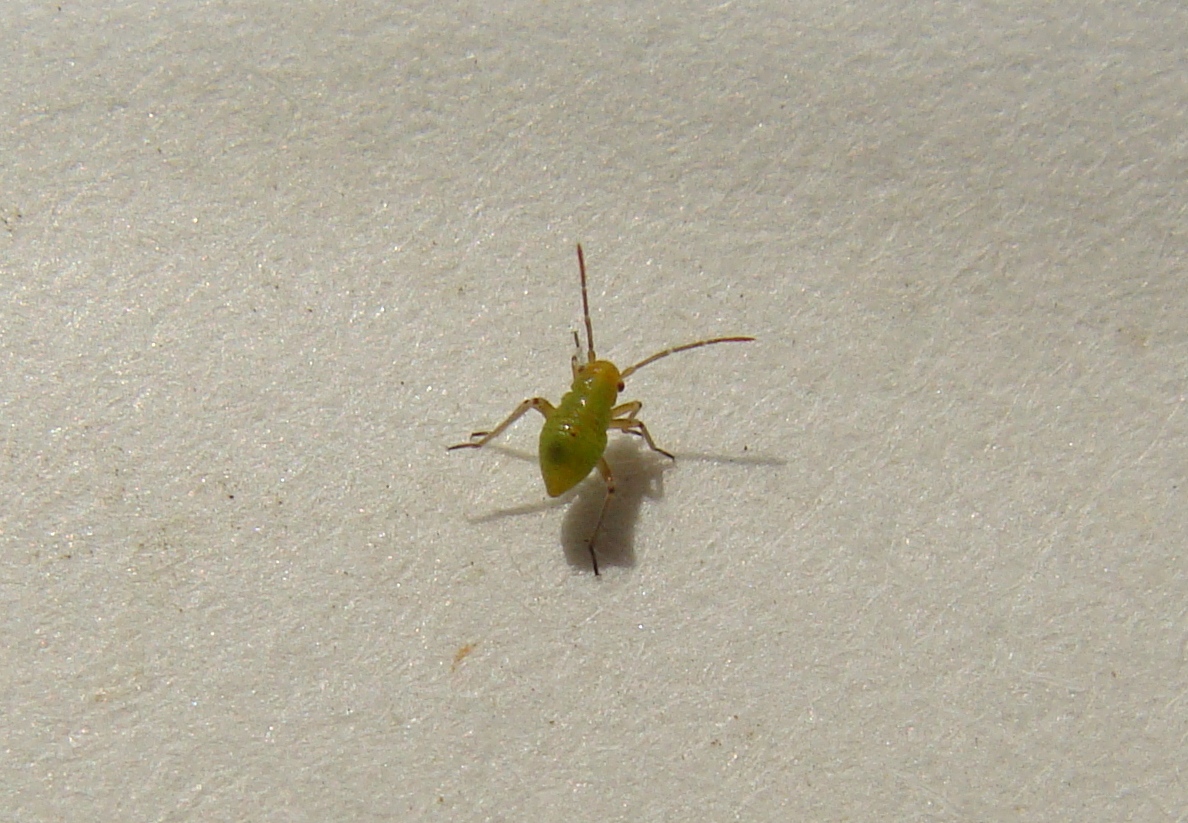
Tarnished plant bugs: Nymphs were more prevalent in strawberry fields this week, with adults and first and second instar nymphs found in most locations. Highest counts were from fields in full bloom or just beyond. Three fields were over the threshold of four or more flower clusters infested per 30 sampled. The nymphs are very small, bright green and very active. It is important to scout regularly for them once the nymphs are found, as populations can build up very fast if left unchecked.
White grubs: We have found more fields being damaged by white grubs this week. Plants that are stressed from sizing their fruit load are more likely to look weak and wilted as the feeding of the grubs weakens the plants’ ability to take up water. Infested plants are stunted and often wilt during the heat of the day. It is too late to apply an effective insecticide for grubs in most fields (e.g. Admire requires a 14-day preharvest interval), so growers should try to relieve the plants stress by keeping fields well-watered as the fruit size up and ripen. Treatment for grubs can be applied after harvest and bed renovation.
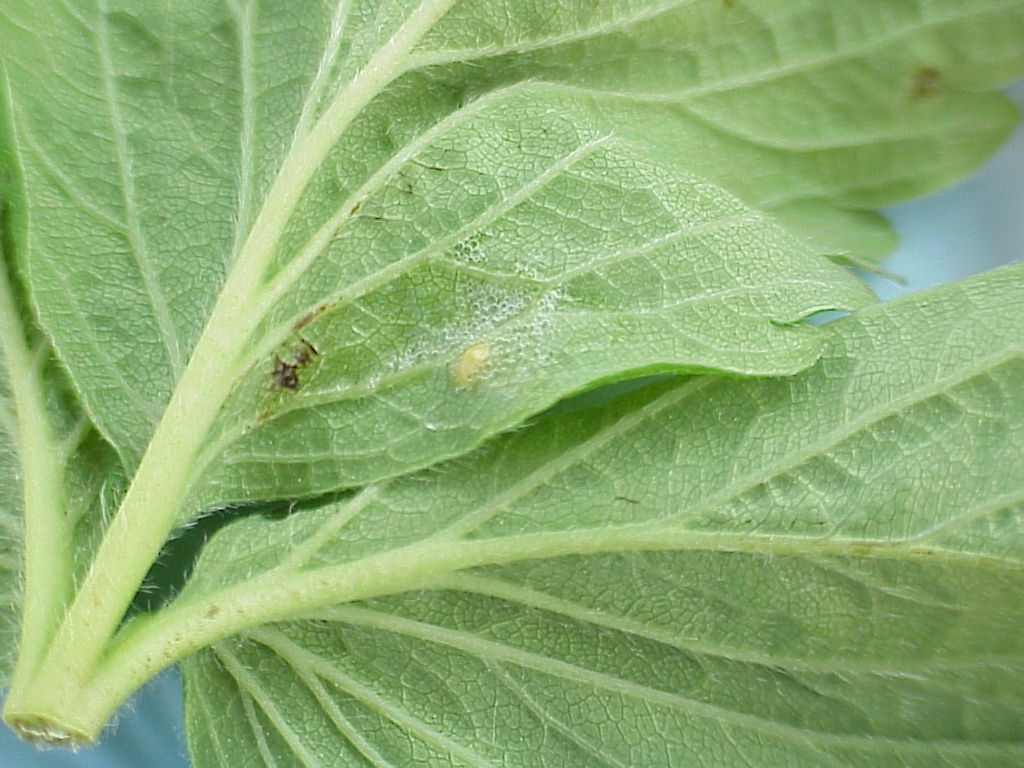
Spittle bugs: The first spittlebugs of the season were found this week. The frothy spittle masses appear on the leaf stems (petioles), just below the leaflets. These typically start showing up around bloom. Although these spittlebugs don’t pose a significant threat to the plants, the frothy spittle they cover themselves with creates an annoyance for pickers. Adult spittlebugs are about ¼ inch long and bright green when they first emerge but later turn dull yellow or brown. Spittlebugs overwinter as eggs and the nymphs emerge in late May. You should start to scout for spittlebugs during bloom. Randomly inspect five one square foot areas per field every week. Spread the leaves and inspect the leaf bases, leaf stems, and flower stems looking for the white, frothy spittle masses. Spittlebugs tend to be a greater problem in weedy fields. Pesticides currently registered for spittlebug control include Provado®, Danitol® and Brigade®.
Slugs may be a problem in some fields this season. Although they tend to be worse in wet springs, especially if they follow a wet fall. Moist conditions and thick mulch tend to encourage the presence of slugs. Slugs usually feed at night, leaving large holes and tunnels in ripening fruit. Baits such as Deadline® and Sluggo® offer some control of slugs but should be used prior to fruit ripening. Pay close attention to label instructions and precautions. Baits should also be applied to the fields in mid-September if slugs have been a problem, to reduce egg-laying.
Gray Mold: Fields that are now beyond bloom may not require more fungicides to prevent gray mold if two to three applications were made during the bloom period. However, if a field receives more than an inch of rain or overhead irrigation before the field is ready for harvest, another protective fungicide application should be considered. Remember to alternate fungicides with different modes of action for resistance management purposes.
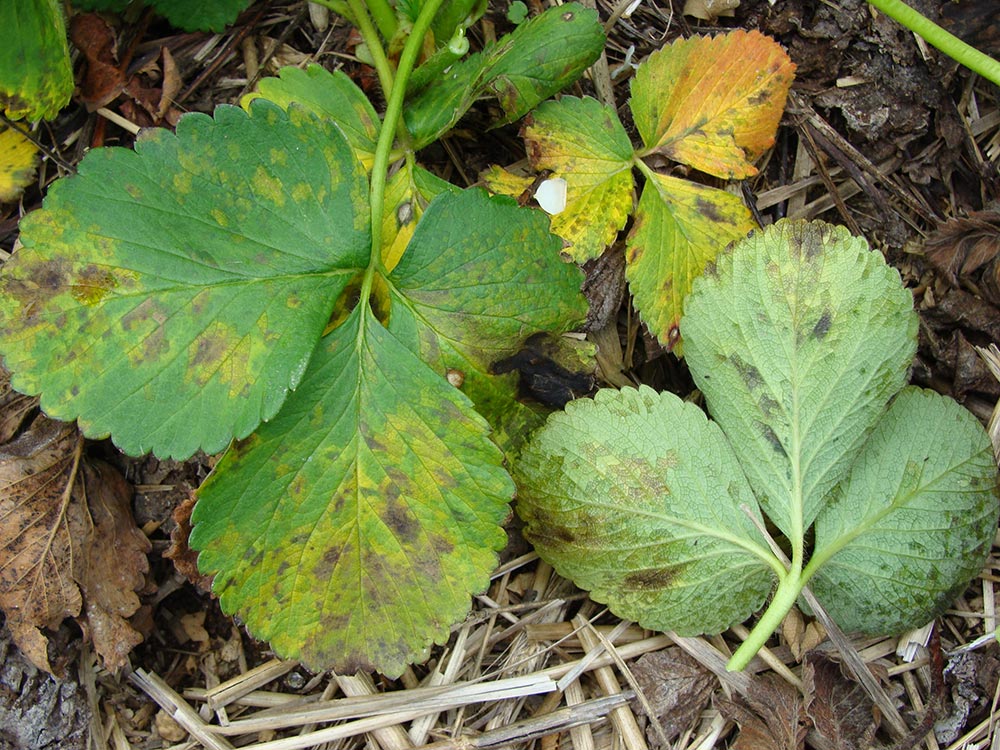
Angular Leaf Spot: We have found symptoms of this bacterial disease in a couple of fields this week. It tends to show up when fields have been irrigated repeatedly for frost control, as it gets established under cool, wet conditions. It is characterized by small water-soaked spots on the undersides of the leaves, which may turn yellow or black. The spots will exude a gray, gummy spore mass, with spreads the spores through splashing water or equipment moving through the field. The symptoms start on the lower leaves but spread throughout the foliage when spores are splashed up by rain or irrigation water. Infections can cause blackening of the berry stems and caps. Hydrogen dioxide (OxiDate®) may have some activity against angular leaf spot when used on strawberries. Be sure to get good coverage of the undersides of the leaves.
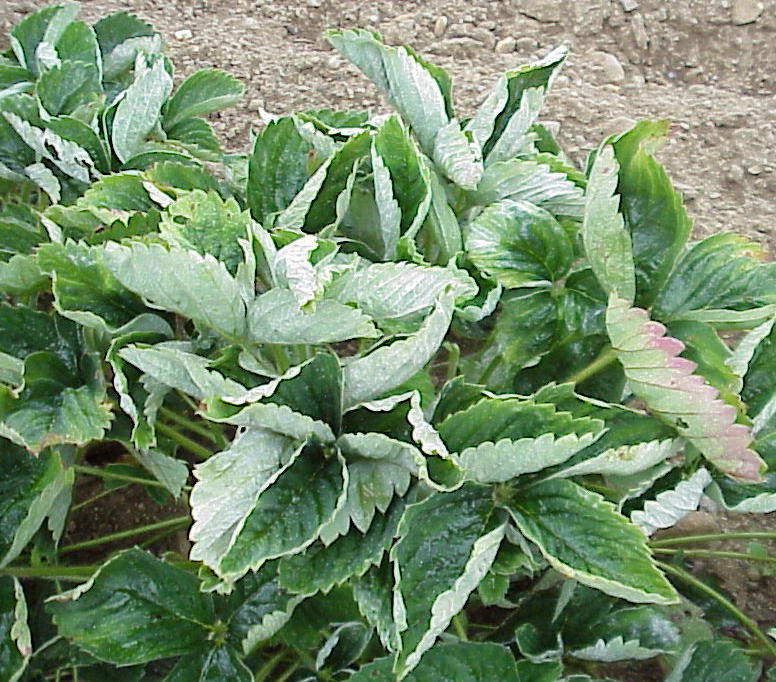
Powdery Mildew: Periods of humid weather can often stimulate symptoms of powdery mildew on strawberry plants. The most obvious indication of this fungus disease is the upward curling of the leaves. Purple or reddish blotches, and/or white, powdery growth may be observed on the undersides of the leaves. Mildew infections weaken plants and can reduce yield the following year. Captan, Topsin-M®, Pristine®, Cabrio®, Quintec® and Procure® are presently registered to control powdery mildew.
Neopestalotiopsis Leaf, Fruit, and Crown Rot of Strawberry: This is a relatively new fungal disease which can be devastating to new strawberry plantings. It may cause a leaf spot, fruit rot and/or a crown rot, the latter leading to the death of the plants. Occurrence of this disease has most commonly been traced to infected nursery stock. Growers typically notice plants wilting and collapsing a few weeks after planting. This has been most problematic in southern states using plug plants, but there have been infections found in plantings established with dormant crowns in the northeast. If you suspect you have this problem in a planting, a sample should be sent to our Plant Disease Diagnostic Clinic for verification. Information on sending a plant sample can be found on the website.
For a detailed article, with colored photos, on the problem go to PennState Extension’s website for Neopestalotiopsis.
If you have questions about the Newsletter, please give us a call at 207.933.2100 or send an e-mail to: david.handley@maine.edu.
New England Small Fruit Management Guide
A new edition of this guide is in the works and should be available soon. In the meantime, you can access the latest information through the online version. Visit the New England Small Fruit Management Guide for more detailed pest information.
The best way to manage strawberry pests is to scout your own fields regularly and often. You should begin to scout as soon as flower buds emerge from the crowns and continue to monitor the plantings one or two times per week up until harvest.
Sincerely,
David T. Handley
Vegetable & Small Fruit Specialist
Highmoor Farm
P.O. Box 179
Monmouth, ME 04259
207.933.2100
Pest Management
17 Godfrey Drive
Orono, ME 04473
1.800.287.0279
Where brand names or company names are used, it is for the reader’s information. No endorsement is implied nor is any discrimination intended against other products with similar ingredients. Always consult product labels for rates, application instructions and safety precautions. Users of these products assume all associated risks.
University of Maine Cooperative Extension is an equal opportunity institution and provider committed to nondiscrimination. For more information, visit extension.umaine.edu/nondiscrimination.