
Integrated Pest Management (IPM) for Wild Blueberry
Importance of IPM
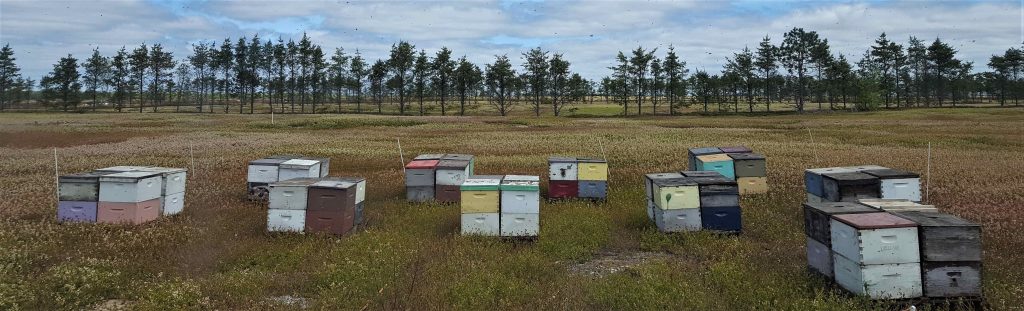
Integrated pest management aims to prevent outbreaks rather than treat infestation through a combination of cultural, mechanical and chemical techniques. IPM tactics should embody all available management options to reduce or maintain pest populations at a tolerable level without complete eradication of the pest.
The combination of techniques is key.
The continual use of a single chemical can lead to resistance in pest populations creating a more difficult situation to manage. Check out the NRCS Program: Integrated Pest and Pollinator Management
The IPM Approach:
- Scout and Monitor for early detection.
- Properly identify the plant stage prior to taking action.
- Properly identify the pest prior to taking action.
- A pesticide application should target a susceptible life stage.
- Develop a response method – specific to the pest and population level.
- Record response methods for future reference.
- Use predictive models when possible.
- Use the economic threshold in deciding when chemical management is necessary.
- Use chemical management only when there are no other means of control (mechanical or cultural).
Weather and Crop Modeling Tools
Past, Present, and Future Weather:
Fruit and Vegetable Crops
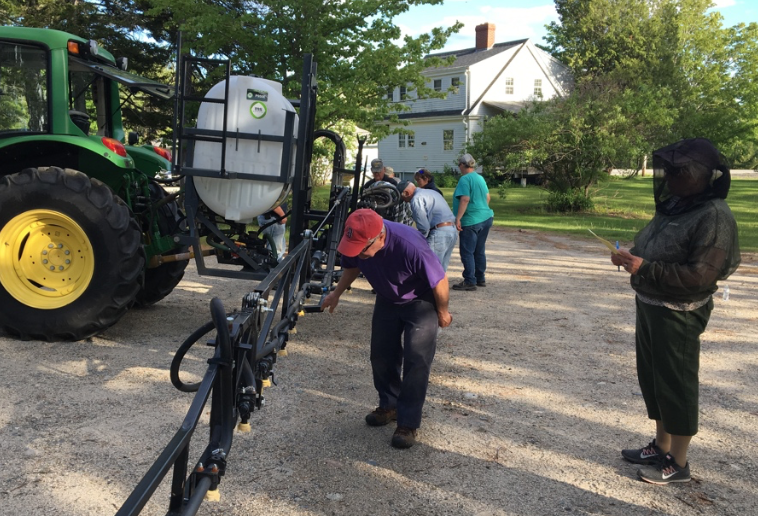
Boom Sprayer Calibration

Pollinator Insects

Agrinet
Login: BB
Password: Grower
An organism should NOT be classified or treated as a pest until it really is one.
— Wild Blueberry Pesticide Applicators Guide
Identification and Management, By Pest
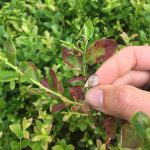
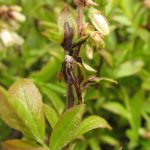
Crop and Pest Tracking

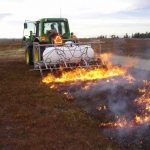
Reducing Inputs

Information in these publications is provided purely for educational purposes. No responsibility is assumed for any problems associated with the use of products or services mentioned. No endorsement of products or companies is intended, nor is criticism of unnamed products or companies implied.